

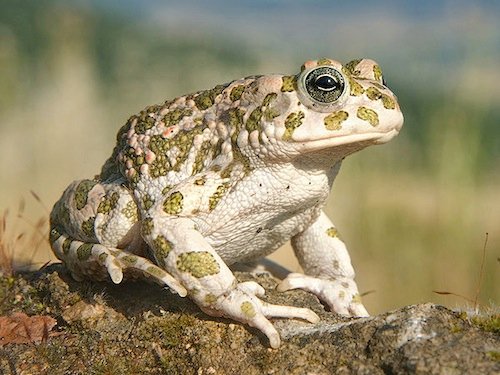
Egyptian Toad for Sale
€49,99
Egyptian Toads for Sale are an interesting choice for amphibian enthusiasts, admired for their distinctive green markings, textured skin and fascinating insect-hunting behaviour.
Also known as the European Green Toad in the reference listing, this species requires a secure enclosure, suitable temperatures, carefully managed humidity, clean water and a varied diet of live feeder insects.
Explore our Egyptian Toad selection, check current availability and confirm the exact species and care requirements before purchasing.
Egyptian Toad for Sale – Discover the Fascinating European Green Toad
Discover our Egyptian Toad for Sale listing and explore a fascinating amphibian known for its distinctive appearance, adaptable nature and interesting feeding behaviour. Commonly associated with the European Green Toad, this species is an intriguing choice for amphibian enthusiasts looking to learn more about the diversity of toads and their specialised care requirements.
The Egyptian Toad is identified as Bufo viridis in the reference listing. This is an older scientific name commonly associated with the European Green Toad, which is now generally classified as Bufotes viridis. Confirm the exact identification of the specimen with the supplier before purchasing.
Known for its contrasting greenish markings, mottled skin and sturdy body, the European Green Toad is adapted to a range of environments, including relatively dry habitats and areas with seasonal rainfall. Its natural behaviour, insect-based diet and distinctive appearance make it an interesting species to observe in a properly maintained enclosure.
Before buying an Egyptian Toad, it is important to understand its environmental requirements, feeding habits, long-term care needs and legal status. A secure enclosure, suitable temperature, appropriate moisture levels, clean water and a varied diet of suitable feeder insects are essential parts of responsible amphibian keeping.
Explore the Egyptian Toad for Sale listing to check current availability and specimen details. Prepare the habitat in advance and confirm the animal’s scientific identification, origin and shipping eligibility before placing an order.
Egyptian Toad Characteristics
- Common name: Egyptian Toad; also associated with the European Green Toad.
- Scientific name in the reference listing: Bufo viridis.
- Currently used scientific name: Bufotes viridis, subject to confirmation of the specimen’s identity.
- Animal group: Amphibians.
- Family: Bufonidae.
- General appearance: Sturdy body, textured skin and contrasting greenish markings.
- Natural habitat: Varies across its broad geographical range, including open, relatively dry environments and areas near seasonal water.
- Diet: Primarily insects and other small invertebrates.
- Activity: Often more active during cooler periods and at night, depending on environmental conditions.
- Housing: Secure terrestrial enclosure with suitable hides, substrate and a shallow water dish.
- Environmental needs: Species-appropriate temperatures, moisture levels, ventilation and access to clean water.
- Handling: Minimise handling because amphibian skin is sensitive to contaminants.
- Availability: Subject to current stock, supplier confirmation and destination restrictions.
Individual characteristics may vary according to age, sex, geographical origin and the exact species supplied.
Why Choose an Egyptian Toad?
Distinctive Green and Dark Markings
The European Green Toad is recognised for its contrasting greenish patches against a lighter background. The markings can vary between individuals, creating distinctive patterns across the back and limbs.
This natural colouration makes the species particularly interesting to observe and helps distinguish it from many other commonly kept toads.
Fascinating Amphibian Behaviour
Toads display a range of natural behaviours, including exploring their surroundings, seeking shelter, burrowing and hunting live prey.
Observing these behaviours provides an opportunity to learn about amphibian adaptations and how environmental conditions influence activity.
Adaptation to Varied Environments
The European Green Toad occurs across a broad geographical range and is associated with a variety of habitats, including open landscapes and areas with seasonal rainfall.
Its ability to occupy different environments is an interesting feature of its natural history. However, this adaptability does not eliminate the need for appropriate captive conditions.
Natural Insect-Hunting Behaviour
Egyptian Toads of this type are primarily insectivorous. Their diet can include suitable crickets, small cockroaches and other appropriately sized invertebrates.
Providing nutritious feeder insects supports a suitable feeding routine and allows the toad to display natural hunting behaviour.
An Interesting Choice for Amphibian Enthusiasts
For keepers interested in observing terrestrial amphibians, the Egyptian Toad offers a distinctive alternative to more familiar pet frogs.
Prospective owners should research the exact species and ensure that its environmental requirements, adult size and long-term care needs are compatible with their experience and available space.
Physical Appearance and Identification
Correct identification is important because common names such as Egyptian Toad can be applied inconsistently in the pet trade.
Body Shape
The European Green Toad has a relatively sturdy body, short limbs and textured skin typical of many terrestrial toads.
Its build is suited to movement across the ground and sheltering in suitable substrate or natural cover.
Colouration
The species is known for greenish patches or blotches against a lighter background, often accompanied by darker markings.
Colouration varies between individuals and can be influenced by age, condition and natural variation.
Skin Texture
The skin is typically textured, with raised areas and glands characteristic of toads.
Amphibian skin is sensitive to chemicals and contaminants, so unnecessary handling should be avoided.
Adult Size
Adult size depends on the precise species and geographical population.
For the European Green Toad, a general reference range of approximately 5–9 cm in snout-to-vent length is reasonable, although some individuals may fall outside this range. Snout-to-vent length is measured from the tip of the snout to the rear of the body, excluding the legs.
Ask the supplier for the current size of the individual being offered and confirm its scientific identification before using measurements to plan the enclosure.
Natural Habitat and Behaviour
Understanding the natural environment of the European Green Toad helps explain its captive care requirements.
Geographical Distribution
The European Green Toad is associated with parts of Europe, North Africa and western and central Asia. Its precise distribution depends on the taxonomic classification used.
The name Egyptian Toad should not be taken as proof that an individual originated in Egypt. Ask the supplier for documented provenance where available.
Open and Relatively Dry Habitats
Unlike some forest-dwelling amphibians, European Green Toads can occupy relatively open habitats, including grasslands, semi-arid areas and disturbed landscapes.
They may shelter beneath stones, within soil or in other protected spaces to avoid unfavourable environmental conditions.
Seasonal Activity
Activity is influenced by temperature, rainfall and local conditions. The toad may be more active during cooler periods or after rainfall, when prey availability and moisture conditions are favourable.
In captivity, periods of hiding or reduced activity should be assessed in the context of temperature, feeding, seasonal behaviour and the animal’s general condition.
Breeding Behaviour
Like many toads, European Green Toads reproduce by laying eggs in water. Breeding activity is influenced by environmental conditions and access to suitable aquatic habitats.
Breeding should not be attempted without understanding the species’ requirements and the relevant legal considerations.
Egyptian Toad Enclosure Setup
A well-prepared enclosure is essential for the animal’s welfare. The exact setup should reflect the confirmed species rather than relying solely on its common name.
Enclosure Size
Choose a secure, horizontally oriented enclosure that provides enough space for movement, feeding and hiding.
For a single adult confirmed as a European Green Toad, an enclosure measuring approximately 60 × 30 × 30 cm (length × width × height) can serve as a provisional starting point. A larger enclosure is preferable where space allows.
The final dimensions should account for the individual’s size, activity and habitat requirements.
Secure Lid and Ventilation
Use a firmly fitted lid to prevent escapes.
Provide suitable ventilation while maintaining the environmental conditions required by the species. Check access openings and enclosure fittings regularly.
Substrate
Use suitable, chemical-free substrate that allows natural movement and provides access to sheltered areas.
Depending on the enclosure design, a mixture of suitable soil and other amphibian-safe materials may be appropriate. Avoid fertilisers, pesticides, sharp particles and substrates that can cause impaction if swallowed.
Provide sufficient substrate depth for the animal to shelter or partially burrow where appropriate.
Hiding Places
Include secure hides, cork bark and other suitable cover.
Hiding places help the animal retreat from light and disturbance. Ensure that decorations are stable and cannot collapse or trap the toad.
Water Dish
Provide a shallow dish of clean, appropriately treated water that the animal can enter and leave easily.
Replace the water regularly because toads may contaminate it with substrate or waste. Avoid deep containers that could create a drowning risk.
Enclosure Hygiene
Remove uneaten food, waste and contaminated substrate as needed.
Clean water dishes regularly and use only cleaning products that are safe for amphibian enclosures, ensuring that all residues are removed before the animal is reintroduced.
Temperature Requirements
The European Green Toad is associated with a range of climates, but captive conditions must remain within a suitable range for the particular animal.
For a confirmed Bufotes viridis, a daytime temperature of approximately 22–26°C can serve as a provisional starting reference. A modest nighttime drop may be appropriate, depending on the animal’s origin and husbandry guidance.
These figures should not be treated as a universal prescription for every toad sold under the name Egyptian Toad.
Use reliable thermometers to monitor conditions and avoid sudden temperature changes, excessive heat or direct sunlight on the enclosure.
If supplemental heating is required, use suitable equipment controlled by a thermostat. Make sure the animal can move away from warmer areas and that heating does not dry out the enclosure excessively.
Humidity and Moisture Management
European Green Toads are not managed in the same way as species that require continuously humid tropical environments.
For a confirmed Bufotes viridis, a relative humidity range of approximately 40–60% may be a useful provisional reference, but the appropriate level depends on the individual, enclosure design and local conditions.
Provide a suitable moisture gradient rather than keeping every part of the enclosure constantly wet. Some areas can be maintained slightly moist while other areas remain drier, allowing the toad to choose a suitable microenvironment.
Monitor humidity with a hygrometer and maintain adequate ventilation. Persistent condensation, mould or waterlogged substrate may indicate that adjustments are needed.
Do not assume that a species can tolerate any conditions simply because it occurs in relatively dry habitats. Access to clean water and suitable shelter remains essential.
What Do Egyptian Toads Eat?
Egyptian Toads identified as European Green Toads are primarily insectivorous. Their diet should consist of suitable live feeder invertebrates selected according to the animal’s size.
Crickets
Appropriately sized crickets are a common feeder option.
Choose prey that the toad can swallow comfortably and maintain the feeder insects in good condition before feeding.
Small Cockroaches
Suitable feeder cockroaches can provide variety in the diet.
Select the size carefully and avoid offering prey that could injure the animal or be difficult to swallow.
Earthworms and Other Invertebrates
Appropriately sized earthworms and other suitable invertebrates may be offered when compatible with the species’ dietary requirements.
Use reputable feeder sources and avoid wild-caught insects that may have been exposed to pesticides or other contaminants.
Feeding Frequency
Feeding frequency depends on the toad’s age, body condition, activity and environmental temperature.
Growing juveniles generally require more frequent feeding than adults. A varied feeding routine, adjusted according to body condition and feeding response, is preferable to a rigid schedule.
Nutritional Supplementation
Feeder insects should be appropriately nourished before being offered.
Calcium and vitamin supplementation may be required, particularly for growing animals, but the schedule should be tailored to the species, age, diet and lighting arrangements. Seek specialist guidance if unsure.
Fresh Water
Provide access to clean, appropriately treated water at all times.
Check the dish daily and replace water whenever it becomes contaminated.
Handling and Safety
Egyptian Toads are best kept as observation animals rather than pets for frequent handling.
Amphibian skin is permeable and can absorb harmful residues from human hands, cleaning products and other substances. Some toads also produce defensive skin secretions.
Avoid unnecessary contact and never allow a toad’s secretions to enter your eyes, mouth or open wounds. Wash your hands after cleaning the enclosure or working with the animal.
If moving the toad is necessary, use a suitable clean container and follow amphibian-safe handling practices.
Keep the enclosure secure and away from children and other pets. If the animal appears unwell, consult a qualified veterinarian experienced in amphibians.
Expected Lifespan and Long-Term Care
The lifespan of a toad depends on its exact species, health, origin and captive conditions.
For a confirmed European Green Toad, captive lifespan estimates vary, and a reliable figure should not be assigned to an unidentified specimen. Ask the supplier for species-specific information and consult a specialist reference before using a lifespan claim in your product listing.
Responsible ownership includes preparing for ongoing costs such as food, substrate, environmental monitoring and veterinary care.
Before purchasing, make sure you can maintain the enclosure consistently and provide appropriate care throughout the animal’s life.
Is an Egyptian Toad Suitable for Beginners?
An Egyptian Toad may be suitable for a prepared keeper who understands its needs and can provide the correct environment.
However, suitability depends on the exact species and the individual’s requirements. Beginners should be prepared to research:
- Species identification and adult size.
- Appropriate enclosure dimensions.
- Temperature and humidity management.
- Suitable substrate and hiding places.
- Feeding and nutritional supplementation.
- Safe handling and hygiene.
- Long-term care and veterinary access.
- Legal ownership and transport requirements.
Do not purchase an amphibian solely because it is described as hardy or easy to maintain. Appropriate preparation is essential for its welfare.
Responsible Purchasing and Legal Considerations
Before ordering an Egyptian Toad, confirm its scientific identity and origin.
The European Green Toad is a widespread species group, but the name Egyptian Toad can be used inconsistently. Accurate identification helps ensure that the animal receives suitable care and that applicable legal requirements are understood.
Ask the supplier whether the specimen is captive-bred or wild-collected and request documentation where available.
Check the rules applicable to ownership, importation and transport in your country. Requirements may differ according to the exact species and its origin.
Live-animal shipping may also be restricted by destination, weather conditions or carrier policies. Confirm delivery eligibility and the seller’s terms before completing a purchase.
Ordering an Egyptian Toad Online
Before purchasing, review the product listing and confirm:
- The scientific name and species identification.
- Current availability and the size of the specimen.
- Captive-bred or wild-collected status, where documented.
- Feeding history and any relevant care information.
- Shipping eligibility for your destination.
- Applicable legal or import documentation.
- Dispatch arrangements and packaging requirements.
- Any live-arrival policy or guarantee offered by the seller.
Prepare the enclosure before the animal arrives and follow appropriate acclimatisation guidance.
Do not assume that shipping terms or guarantees offered for domestic orders also apply to international destinations. Confirm the details directly with the supplier.
Frequently Asked Questions
What is an Egyptian Toad?
The reference listing identifies the Egyptian Toad as Bufo viridis, a name commonly associated with the European Green Toad, now generally classified as Bufotes viridis. Confirm the precise identity of the specimen with the supplier.
How large does an Egyptian Toad grow?
If the animal is a European Green Toad, adults may measure approximately 5–9 cm in snout-to-vent length, although size varies. Confirm the species and current measurements before purchasing.
What do Egyptian Toads eat?
They primarily eat insects and other suitable small invertebrates, including appropriately sized crickets and cockroaches.
What temperature does an Egyptian Toad need?
For a confirmed European Green Toad, approximately 22–26°C during the day may be a provisional starting reference. The appropriate temperature depends on the animal’s origin and specialist husbandry guidance.
What humidity does an Egyptian Toad need?
A relative humidity range around 40–60% may be appropriate as a starting reference for a confirmed European Green Toad. Maintain a suitable moisture gradient and access to clean water rather than keeping the entire enclosure constantly wet.
Are Egyptian Toads nocturnal?
They may be more active during cooler periods or at night, depending on environmental conditions. Activity patterns can vary with temperature, rainfall and season.
Can Egyptian Toads live with other amphibians?
Do not house them with unrelated amphibian species. Different species may have incompatible environmental needs, and cohabitation can create risks involving disease transmission, stress and injury.
Can I handle an Egyptian Toad?
Frequent handling is not recommended. Amphibians have sensitive skin, and some toads produce defensive secretions. Observation is the preferred approach.
How long does an Egyptian Toad live?
Lifespan varies with the exact species and captive conditions. Confirm the animal’s identity before using a specific lifespan estimate.
Can Egyptian Toads be shipped internationally?
Shipping eligibility depends on the supplier, destination, carrier and applicable wildlife regulations. Confirm all requirements before ordering.
Find Your Egyptian Toad for Sale
Explore our Egyptian Toad for Sale listing and discover a fascinating amphibian with distinctive markings and interesting natural behaviour.
Before placing an order, confirm the scientific identification, current availability and specimen details. Prepare a secure enclosure with appropriate substrate, shelter, clean water and carefully managed environmental conditions.
With responsible sourcing, suitable preparation and consistent care, an Egyptian Toad can offer an engaging opportunity to observe amphibian behaviour and learn more about the natural history of these remarkable animals.
Browse the product listing to review the available specimen and confirm the purchasing and delivery terms that apply to your location.
| Choose | Med-Large |
|---|---|
| Options | No Pref, Male, Female |
Be the first to review “Egyptian Toad for Sale”
Related products
Amphibians for Sale
Amphibians for Sale
Amphibians for Sale
Amphibians for Sale
Amphibians for Sale
Amphibians for Sale
Amphibians for Sale
Amphibians for Sale
Reviews
There are no reviews yet.