

Scorpions for Sale – Discover Fascinating Exotic Invertebrates
Explore our Scorpions for Sale category to discover a fascinating selection of exotic invertebrates known for their distinctive pincers, segmented bodies and curved, venomous tails.
From impressive forest-dwelling species to specialised desert burrowers, scorpions display a remarkable variety of sizes, colours and behaviours that make them intriguing to observe.
Scorpions belong to the arachnid order Scorpiones and are found in a wide range of habitats across the world, including deserts, tropical forests, grasslands and rocky environments.
Although they are often associated with dry conditions, different species have very different environmental requirements. Some prefer warm, arid surroundings, while others need higher humidity and moisture-retaining substrates.
Our Scorpions for Sale category helps enthusiasts explore different species and learn about their characteristics, natural habitats and captive-care requirements.
Whether you are interested in the impressive Emperor Scorpion, the distinctive Asian Forest Scorpion or a burrowing desert species, understanding each animal’s needs is essential before making a purchase.
Scorpions are observation animals rather than pets to handle. Their venomous stings and defensive pincers mean that safe housing, responsible ownership and species-specific care must always come first.
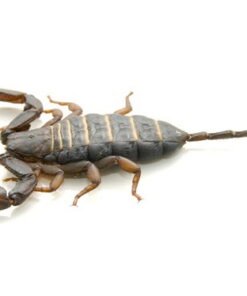
Scorpions for Sale
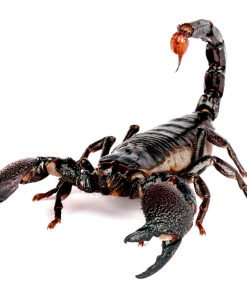
Scorpions for Sale
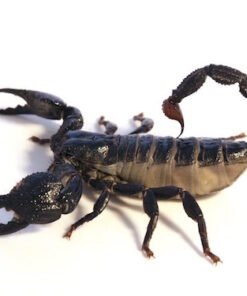
Scorpions for Sale
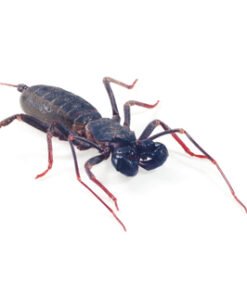
Scorpions for Sale
Explore Different Types of Scorpions for Sale
Scorpions vary considerably in size, appearance, temperament and habitat preferences. Exploring these differences can help you identify a species that suits your experience and facilities.
Emperor Scorpions
The Emperor Scorpion (Pandinus imperator) is one of the best-known species in the exotic invertebrate hobby. It is recognised by its large, heavy body, broad pincers and dark brown to black colouration.
Native to parts of West Africa, this species inhabits humid environments where it can shelter beneath logs, stones and other natural cover. It is generally associated with forest-floor conditions rather than extremely dry desert habitats.
Emperor Scorpions require a secure enclosure, suitable humidity, deep enough substrate for natural behaviour and a diet of appropriately sized insects. Despite their impressive appearance, they should never be handled casually.
Asian Forest Scorpions
The Asian Forest Scorpion (Heterometrus species) is admired for its robust build, large pincers and dark colouration. Some species can reach approximately 13–15 cm in total length, depending on the species and individual.
These scorpions originate from tropical and subtropical regions of Asia, where they shelter in humid forest environments and burrows. They generally require moisture-retaining substrate, secure hiding places and stable temperatures.
Asian Forest Scorpions are popular among experienced invertebrate keepers, but their defensive behaviour and venomous sting mean that safe enclosure management is essential.
Desert Hairy Scorpions
Desert Hairy Scorpions (Hadrurus species) are impressive desert-dwelling arachnids known for their large pincers, hairy appearance and adaptations to arid environments.
They are associated with dry habitats in North America, where they may dig burrows or shelter beneath rocks. Their captive environment should reflect these conditions, with a predominantly dry substrate that allows suitable burrowing behaviour.
Desert species should not be kept in the same damp conditions required by tropical forest scorpions. Correct identification is important because care requirements differ significantly between species.
Bark Scorpions
Bark scorpions, including species in the genus Centruroides, are generally more slender than many large forest scorpions. They are often associated with bark, crevices, rocks and other narrow shelters.
Some species possess medically significant venom. They are therefore unsuitable for casual handling and require particularly careful containment.
Anyone considering a bark scorpion should research the exact species, its venom risk and any applicable restrictions before purchasing it.
Burrowing Scorpions
Burrowing scorpions are adapted to spending considerable time underground. They often have robust bodies and strong pincers that help them excavate or occupy sheltered spaces.
Depending on the species, their natural habitats may be dry, semi-arid or seasonally moist. Captive enclosures should provide an appropriate substrate depth and consistency so that burrows remain stable.
Because these scorpions may remain hidden for long periods, they are generally best suited to keepers who appreciate observing natural behaviour rather than expecting a constantly visible animal.
Flat Rock Scorpions
Flat Rock Scorpions are associated with rocky environments and may use narrow spaces beneath stones or within rock crevices for shelter.
Their flattened appearance and specialised habitat preferences make them interesting to invertebrate enthusiasts. Depending on the species, their enclosure may require a particular combination of rock-like shelter, suitable substrate and carefully controlled moisture.
Rockwork must always be secure. Loose or unstable stones can collapse and injure the animal.
Tanzanian Three-Striped Scorpions
The Tanzanian Three-Striped Scorpion is commonly associated with tropical African environments and is recognised by its striped appearance.
As with all scorpions, its precise care requirements depend on correct species identification. Temperature, humidity, substrate and feeding should be selected according to reliable species-specific guidance rather than general recommendations for all African scorpions.
Other Scorpions for Sale
The wider scorpion hobby includes species with different body shapes, colours, burrowing habits and environmental needs. Listings may also include species such as the Florida Bark Scorpion, Dictator Scorpion, Olive Keeled Flat Rock Scorpion and Wahlbergs Burrowing Scorpion.
Availability varies, and not every species will be in stock at all times. Always check the current product listing for the scientific name, size, origin and specific care requirements.
What Makes Scorpions Special?
Scorpions have several distinctive adaptations that make them fascinating subjects for observation.
- Distinctive pincers: Their pedipalps help them grasp prey and defend themselves.
- Curved tail and venomous sting: The tail ends in a stinger used to subdue prey and for defence.
- Nocturnal behaviour: Many species are more active at night and spend daylight hours sheltering.
- Specialised habitats: Scorpions have adapted to environments ranging from dry deserts to humid forests.
- Burrowing behaviour: Many species excavate or occupy burrows to regulate temperature and moisture.
- Fluorescence under ultraviolet light: Many scorpions fluoresce under UV illumination because of compounds in their outer cuticle.
These characteristics make scorpions particularly interesting to observe, but they also highlight the importance of secure enclosures and appropriate husbandry.
Scorpion Habitat and Natural Environment
Scorpions occur across many regions of the world, and their habitat preferences differ significantly by species.
Desert-dwelling scorpions may favour dry substrates and sheltered burrows, while tropical forest species often need higher humidity and moisture-retaining materials. Some species shelter beneath rocks or logs, whereas others occupy narrow crevices or excavated tunnels.
When preparing a captive habitat, consider the following factors:
- Substrate: Choose material appropriate for the species' natural environment and burrowing habits.
- Temperature: Maintain a stable, species-appropriate temperature range.
- Humidity: Match moisture levels to whether the scorpion originates from a dry or humid habitat.
- Shelter: Provide a secure hide that allows the animal to retreat from light and disturbance.
- Water: Offer a suitable water source where appropriate for the species.
- Ventilation: Ensure sufficient airflow without allowing environmental conditions to become unsuitable.
- Security: Use a secure, escape-resistant enclosure with a properly fitted lid.
Never assume that one enclosure design is suitable for every scorpion. A setup appropriate for a desert species may be unsuitable for a tropical forest species.
Scorpion Care Guide
Scorpions are often considered relatively low-maintenance invertebrates, but they still require careful environmental management and responsible handling practices.
Enclosure Requirements
A suitable enclosure should provide enough floor space for movement, feeding and shelter. Many terrestrial species benefit more from horizontal space than from excessive enclosure height.
The enclosure must have a secure lid and should be made from materials that allow you to observe the animal without opening it unnecessarily.
Provide a suitable hide, an appropriate substrate and any additional environmental features required by the species. Burrowing scorpions may need a deeper substrate than species that mainly shelter beneath surface cover.
Avoid overcrowding the enclosure with decorations or creating unstable structures. The goal is to provide a safe environment that supports the animal's natural behaviour.
Temperature and Humidity
Temperature and humidity requirements vary widely among scorpion species.
Tropical forest scorpions generally require more moisture than desert species, which often need comparatively dry conditions. Both groups need stable environments that avoid extremes.
Use reliable thermometers and, where appropriate, a hygrometer to monitor conditions. If supplementary heating is required, use a suitable controlled method that does not create dangerous hot spots.
Do not apply a single temperature or humidity recommendation to all scorpions. Confirm the requirements of the exact species before setting up its enclosure.
Substrate and Burrowing
Substrate selection is particularly important for species that dig burrows.
Suitable materials may include appropriate soil-based mixes, coconut fibre or other substrates selected for the species' moisture requirements and ability to support natural behaviour.
Desert species generally require drier conditions, while tropical species may need substrate that retains some moisture. The substrate should not become waterlogged or develop persistent mould.
For burrowing species, provide sufficient depth to allow natural digging while ensuring that the enclosure remains structurally safe. Never place heavy decorations where excavations could undermine them.
Hiding Places and Lighting
Scorpions often prefer sheltered, low-light environments. Provide a secure hide that allows the animal to remain out of view during daylight hours.
Bright lighting is generally unnecessary for ordinary observation and may cause some scorpions to remain hidden. A consistent day-and-night cycle can be maintained through the room's normal lighting conditions, provided the enclosure is not exposed to excessive heat or direct sunlight.
Many scorpions fluoresce under ultraviolet light. Although this can be visually interesting, UV illumination should not replace appropriate husbandry, and the animal should not be exposed unnecessarily.
Feeding Scorpions
Scorpions are predators that generally feed on live invertebrates. The type and size of prey should be suitable for the species and the individual animal.
Common feeder options may include:
- Appropriately sized crickets.
- Suitable roaches.
- Mealworms or other suitable insect larvae.
- Other safe feeder insects recommended for the species.
Juvenile scorpions generally need smaller prey and may require more frequent feeding than adults. Feeding frequency also varies with species, temperature, age and body condition.
Remove uneaten prey when appropriate, especially if feeder insects could injure a scorpion during moulting. Always provide access to suitable hydration according to the species' needs.
Avoid overfeeding. A suitable feeding routine should maintain healthy body condition without allowing uneaten prey to accumulate in the enclosure.
Behaviour and Handling Safety
Scorpions are best kept for observation rather than physical interaction. Even species commonly described as less aggressive can sting or pinch when threatened.
Never pick up a scorpion with bare hands or attempt to test its temperament. Use secure, species-appropriate procedures for enclosure maintenance and transfers, and seek advice from an experienced invertebrate keeper when necessary.
Keep the enclosure away from children, pets and areas where it could be knocked over. Ensure that all household members understand that the animal must not be handled.
If a sting occurs, seek medical advice promptly, especially if the species is unknown or the person develops significant pain, spreading symptoms, breathing difficulties or other concerning signs.
Are Scorpions Suitable for Beginners?
Some scorpion species can be suitable for carefully prepared beginners who are comfortable observing an animal without handling it. Others, particularly species with medically significant venom or specialised environmental needs, are better suited to experienced keepers.
Before purchasing a scorpion, consider its temperament, venom risk, adult size, environmental requirements and the security of the enclosure you can provide.
A species should not be chosen solely because it is inexpensive, attractive or described as easy to keep. Responsible ownership requires understanding the animal's natural behaviour and the potential risks involved.
Buying Scorpions Responsibly
When searching for scorpions for sale, choose a reputable seller who can provide reliable information about the species, its origin and its care requirements.
Before purchasing, consider the following:
- Scientific identification: Confirm the species name rather than relying on a common name alone.
- Captive-bred status: Ask whether the animal was bred in captivity and request supporting documentation.
- Health and condition: Look for an intact exoskeleton, normal movement and no obvious signs of injury.
- Feeding history: Ask about accepted prey and the animal's recent feeding routine.
- Adult size: Research the expected adult dimensions before selecting an enclosure.
- Environmental requirements: Prepare the correct temperature, humidity and substrate conditions in advance.
- Venom risk: Understand the species' potential medical significance and whether possession is restricted.
- Transport arrangements: Confirm that the seller uses suitable live-animal transport procedures and complies with applicable regulations.
Price, availability, sex and captive-bred status should be confirmed directly with the seller.
Conservation and Legal Considerations
Some scorpion species are collected from the wild, while others are bred in captivity. Responsible purchasing should prioritise lawful sourcing and reliable documentation.
Wildlife-trade regulations differ between countries and species. Some scorpions may be subject to restrictions on possession, collection, export or import. Venomous invertebrates may also be regulated under local safety or animal-keeping legislation.
Before purchasing or importing a scorpion, check the rules that apply in both the exporting and importing countries. Do not collect wild specimens or purchase animals whose origin cannot be established.
Never release a captive scorpion into the wild. A non-native species may create ecological risks, and releasing captive animals can also spread disease or parasites.
Frequently Asked Questions About Scorpions for Sale
What types of scorpions are available?
Species offered in the exotic pet trade may include Emperor Scorpions, Asian Forest Scorpions, Desert Hairy Scorpions, Bark Scorpions, Flat Rock Scorpions and various burrowing species. Availability varies by seller and season.
Are scorpions good pets?
Scorpions can be interesting observation animals for keepers who understand their environmental needs and potential risks. They are not suitable for people who want a pet that can be handled regularly.
Are all scorpions dangerous?
All scorpions possess venom and can sting, but the medical significance of their venom varies considerably between species. Never assume that a species is harmless simply because it is small or commonly kept.
What do pet scorpions eat?
Most pet scorpions eat live invertebrates, such as appropriately sized crickets or roaches. Food size and feeding frequency should be matched to the species, age and body condition.
Do scorpions need heat and humidity?
Their requirements depend on their natural habitat. Tropical species generally need more moisture, while desert species typically require drier conditions. Confirm the exact species' care requirements before purchasing it.
Can scorpions live together?
Some species may tolerate cohabitation under carefully managed conditions, but others are territorial or cannibalistic. Individual housing is generally the safer starting point unless experienced specialist guidance supports a suitable communal arrangement.
Do scorpions glow in the dark?
Many scorpions fluoresce under ultraviolet light because of compounds in their outer cuticle. This fluorescence is not the same as producing light independently.
Are scorpions suitable for beginners?
Some species may suit prepared beginners, but venom risk, secure housing and species-specific care must be considered carefully. Species with medically significant venom are not appropriate casual pets.
Can I buy scorpions online?
Online listings may offer scorpions for sale, depending on the species and seller. Before ordering, verify availability, lawful sourcing, transport conditions and the regulations that apply in your location.
Find Your Scorpion
Scorpions are remarkable invertebrates with a wide variety of shapes, colours, behaviours and environmental adaptations. From the powerful pincers of forest species to the specialised burrowing habits of desert scorpions, each type offers a different opportunity to observe the natural world.
Explore our Scorpions for Sale category to learn about the species available and identify one whose care requirements and risk profile you can responsibly manage. By researching the species, preparing a secure enclosure and choosing a reputable source, you can support responsible invertebrate keeping while providing an appropriate environment for your scorpion.