

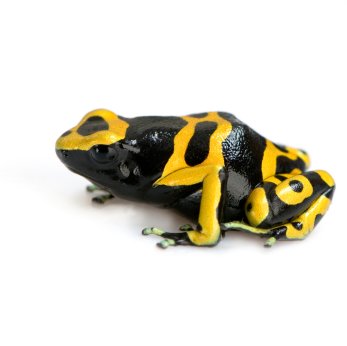
Bumble Bee Poison Dart Frog for Sale
€84,99
Bumble Bee Poison Dart Frogs for Sale (Dendrobates leucomelas) – Discover these striking tropical amphibians, admired for their bright yellow-and-black patterns and active daytime behaviour.
Adults typically reach 3–5 cm and can live for 10–15 years with appropriate care. They thrive in a secure, planted terrarium with suitable humidity, leaf litter and sheltered areas.
Their diet includes small live insects such as fruit flies and springtails. Contact us to enquire about current availability, specimen size and captive-bred status before ordering.
Bumble Bee Poison Dart Frog for Sale – Discover a Vibrant Tropical Amphibian
Looking for a colourful frog with striking patterns and fascinating daytime behaviour? Explore our Bumble Bee Poison Dart Frog for Sale listing and discover one of the most recognisable poison dart frog species, admired for its bright yellow markings, bold black bands and active personality.
The Bumble Bee Poison Dart Frog (Dendrobates leucomelas), also known as the Bumblebee Dart Frog or Yellow-banded Poison Dart Frog, originates from northern South America. Its natural distribution includes Venezuela, Guyana, Colombia and northern Brazil. The species is named after its distinctive yellow-and-black colouration, which resembles the markings of a bumblebee.
Unlike many nocturnal amphibians, Bumble Bee Poison Dart Frogs are primarily active during daylight hours. They spend much of their time exploring the forest floor, searching for small insects and moving through leaf litter and low vegetation. Their curious behaviour, distinctive appearance and fascinating natural history make them popular among amphibian enthusiasts.
Bumble Bee Poison Dart Frogs require a secure, carefully maintained tropical terrarium with suitable humidity, moderate temperatures, appropriate shelter and a reliable supply of small live feeder insects. Although they are relatively small, they need consistent care and a properly prepared environment.
If you are searching for Bumble Bee Poison Dart Frogs for Sale, explore our listing and enquire about current availability, specimen size, colour variation, feeding history and captive-bred status. Preparing the enclosure before purchase helps your new frog settle into its surroundings.
Bumble Bee Poison Dart Frog Characteristics
- Common name: Bumble Bee Poison Dart Frog.
- Alternative names: Bumblebee Dart Frog and Yellow-banded Poison Dart Frog.
- Scientific name: Dendrobates leucomelas.
- Family: Dendrobatidae.
- Animal group: Amphibians.
- Natural distribution: Venezuela, Guyana, Colombia and northern Brazil.
- Natural habitat: Humid tropical forests, forest floors, leaf litter and low vegetation.
- Adult size: Approximately 3–5 cm in body length.
- Colouration: Bright yellow or golden markings contrasted with black bands, spots or irregular patterns.
- Activity pattern: Primarily diurnal, meaning active during daylight hours.
- Diet: Small live insects and other suitable invertebrates.
- Enclosure: Secure, planted tropical terrarium with leaf litter, hiding places and suitable moisture levels.
- Daytime temperature: Approximately 22–26°C.
- Night-time temperature: Approximately 20–22°C.
- Humidity: Approximately 70–90% as a general starting range, with suitable ventilation.
- Lifespan: Often around 10–15 years in captivity, with some individuals living longer.
- Handling: Minimise direct handling because amphibian skin is sensitive.
- Sourcing: Documented captive-bred specimens are preferable.
- Availability: Contact the supplier to confirm current stock and specimen details.
These measurements and environmental ranges are general care references. Individual requirements may vary, so confirm suitable husbandry conditions for the particular animal before purchase.
Why Choose a Bumble Bee Poison Dart Frog?
Distinctive Yellow-and-Black Colouration
The Bumble Bee Poison Dart Frog is instantly recognisable for its bold yellow and black markings. Its contrasting colours create an eye-catching appearance that stands out among tropical amphibians.
Depending on the locality and individual, the markings may form broad bands, broken stripes or spotted patterns. This natural variation makes each frog interesting to observe.
If you are looking for a particular pattern or locality, enquire about the specimens currently available rather than assuming all individuals look identical.
Fascinating Daytime Activity
Bumble Bee Poison Dart Frogs are primarily diurnal. They can often be observed moving around their enclosure, exploring leaf litter and searching for food during daylight hours.
Their activity makes them appealing to keepers who enjoy watching natural amphibian behaviour without having to wait until night.
Interesting Natural History
Native to tropical South America, this species has adapted to humid forest environments where vegetation, fallen leaves and sheltered spaces provide opportunities for feeding, resting and reproduction.
A carefully designed terrarium can recreate some of these habitat features and provide opportunities for natural behaviours.
Suitable for a Planted Terrarium
Bumble Bee Poison Dart Frogs can thrive in a well-maintained, naturalistic enclosure with suitable plants, leaf litter, cork bark and sheltered resting areas.
A bioactive setup may also include appropriate springtails and isopods to support the enclosure’s micro-ecosystem. Regular maintenance and monitoring remain essential.
A Long-term Amphibian Companion
With appropriate husbandry, Bumble Bee Poison Dart Frogs can live for many years. They are therefore best suited to keepers prepared to provide consistent care over the long term.
Before purchasing, consider the ongoing costs of feeder insects, enclosure maintenance, environmental monitoring and veterinary care.
Physical Appearance and Colour Variations
Yellow and Black Markings
The species’ most recognisable feature is its yellow-and-black patterning. Yellow markings may appear as bands, stripes or irregular spots across the body and limbs.
Golden Colouration
Some individuals display deeper golden or orange-yellow tones, creating a striking contrast against the darker markings.
Natural Pattern Differences
Colouration and patterning can vary between geographical populations and individuals. Juveniles may also differ in appearance from mature frogs.
When selecting a Bumble Bee Poison Dart Frog, ask about its locality or colour form where known. Photographs of the actual specimen can help you understand what to expect.
Size and Growth
Adult Bumble Bee Poison Dart Frogs commonly reach approximately 3–5 cm in body length, although size varies between individuals and sources.
Their relatively small dimensions make them suitable for carefully designed terrariums, but they still require adequate usable floor space and suitable hiding places.
Young frogs need very small feeder insects and close monitoring of their feeding behaviour. As they grow, prey size and feeding frequency should be adjusted accordingly.
Before ordering, enquire about the animal’s current size, developmental stage and feeding history. This information helps you prepare an appropriate enclosure and diet.
Natural Habitat and Behaviour
Native to Northern South America
Bumble Bee Poison Dart Frogs occur in parts of northern South America, including Venezuela, Guyana, Colombia and northern Brazil.
They inhabit tropical forest environments where leaf litter, fallen wood, low plants and sheltered spaces provide suitable places to explore and find food.
Ground-dwelling Lifestyle
Although they can climb, Bumble Bee Poison Dart Frogs spend much of their time at ground level among leaf litter and low vegetation.
A suitable captive environment should therefore prioritise usable floor space, ground cover and sheltered areas rather than relying exclusively on vertical height.
Daytime Activity
These frogs are primarily active during daylight hours. They may explore their surroundings, search for food and produce calls associated with communication and reproduction.
A consistent light-dark cycle helps support their normal activity patterns.
Calling Behaviour
Adult males can produce distinctive vocalisations, particularly in breeding contexts. The sound may be noticeable in a quiet room, so consider this before placing the enclosure in a bedroom or other noise-sensitive area.
Territorial Behaviour
Individual behaviour varies, and territorial interactions can occur, especially when frogs compete for space or access to resources.
Careful consideration of enclosure dimensions, group composition and individual compatibility is essential when deciding whether to house multiple frogs together.
Bumble Bee Poison Dart Frog Enclosure Setup
A suitable enclosure should provide a stable tropical environment, adequate floor space, secure shelter and appropriate moisture without stagnant conditions.
Enclosure Dimensions
For a pair or small group, an enclosure around 45 × 45 × 45 cm may serve as an initial planning reference, depending on the number of frogs, their compatibility and the enclosure layout. A larger enclosure is preferable where space permits.
Ensure that the enclosure has a secure lid and no gaps through which the frogs could escape.
Substrate and Drainage
A suitable tropical substrate may include an amphibian-safe soil mix, coconut fibre and other materials recommended for poison dart frogs.
A drainage layer can help prevent waterlogged substrate. Avoid contaminated soil, pesticides, fertilisers and materials that may release harmful chemicals.
Leaf Litter
Clean, pesticide-free leaf litter provides cover, sheltered resting locations and a naturalistic forest-floor appearance.
Leaf litter can also support a bioactive setup when appropriate microfauna and substrate conditions are maintained.
Live Plants
Suitable tropical plants provide cover, visual barriers and additional structure. Choose plants that are safe for amphibians and have not been treated with harmful pesticides.
Arrange plants so the frogs can move between sheltered areas without being constantly exposed.
Cork Bark and Hiding Places
Cork bark, small logs and other secure furnishings create sheltered resting locations and enrich the enclosure.
Ensure that all decorations are stable, free from sharp edges and easy to maintain.
Water and Moisture
Provide access to clean, dechlorinated water where appropriate. Any water dish should be shallow enough to allow safe access and easy exit.
Replace water regularly and prevent stagnant or contaminated water from accumulating.
Bioactive Setup
A bioactive terrarium may include suitable springtails and isopods to help break down some organic waste.
However, a bioactive enclosure does not eliminate the need for regular cleaning, removal of uneaten food and monitoring of temperature and humidity.
Temperature Requirements
Bumble Bee Poison Dart Frogs generally do best in moderate, stable temperatures. Excessive heat can be dangerous, particularly in a humid enclosure with limited airflow.
A daytime range of approximately 22–26°C and a night-time range of 20–22°C provide a general starting reference.
To maintain suitable temperatures:
- Use reliable thermometers.
- Avoid placing the enclosure in direct sunlight.
- Prevent overheating from lamps or heating equipment.
- Use thermostatically controlled heating when required.
- Monitor conditions at different points in the enclosure.
- Avoid sudden temperature fluctuations.
Do not assume that warmer temperatures are always beneficial. Confirm the recommended range for the animal and maintain conditions that support normal activity and feeding.
Humidity Requirements
Humidity is essential for Bumble Bee Poison Dart Frogs because their skin is sensitive to moisture loss.
A relative humidity range of approximately 70–90% is a useful starting reference, although appropriate conditions depend on ventilation, temperature and enclosure design.
To maintain suitable humidity:
- Use a reliable hygrometer.
- Mist with clean, dechlorinated water as needed.
- Maintain suitable substrate moisture.
- Provide appropriate airflow.
- Prevent the substrate from becoming waterlogged.
- Remove uneaten food and waste.
- Monitor for mould and poor enclosure hygiene.
The enclosure should remain suitably humid without becoming stagnant or persistently saturated. Stable conditions and good ventilation are important for long-term health.
Lighting and Day-Night Cycle
A consistent light-dark cycle helps support the frog’s daytime activity.
A schedule of approximately 10–12 hours of light followed by darkness is a useful starting reference. If the terrarium contains live plants, choose lighting that supports plant growth without overheating the enclosure.
Low-level UVB lighting may be beneficial when selected and installed appropriately. Confirm the requirements for your setup and provide shaded areas where the frog can retreat from direct light.
What Do Bumble Bee Poison Dart Frogs Eat?
Bumble Bee Poison Dart Frogs are insectivores and require appropriately sized live prey. Small feeder insects are particularly important because of the frog’s body size.
Fruit Flies
Flightless fruit flies are a common staple food for captive poison dart frogs. They are available in different sizes, allowing keepers to select prey suitable for their animals.
Springtails
Springtails are tiny invertebrates that can provide additional food, particularly for young frogs. They are also commonly used in bioactive terrariums.
Small Crickets
Pinhead crickets and other appropriately sized young crickets may be offered when suitable. Avoid prey that is too large for the frog to swallow safely.
Other Suitable Invertebrates
Other small feeder invertebrates may provide variety, depending on the frog’s size and feeding ability.
Avoid wild-caught insects that may have been exposed to pesticides or environmental contaminants.
Feeding Frequency
Young frogs generally require more frequent feeding than adults. The feeding routine should reflect age, prey size, body condition and appetite.
Observe feeding behaviour regularly and remove excess prey when necessary.
Calcium and Vitamin Supplements
Feeder insects should be appropriately nourished before being offered. A suitable calcium and vitamin supplementation programme may be needed to support balanced nutrition.
Follow a species-appropriate routine and avoid excessive supplementation. Seek advice from an amphibian-experienced veterinarian if you are uncertain about the correct approach.
Before purchasing your frog, ensure that a reliable supply of suitable live feeder insects is available.
Lifespan and Long-term Care
Bumble Bee Poison Dart Frogs often live for approximately 10–15 years in captivity, and some individuals may live longer with appropriate care.
This makes them a long-term responsibility for prospective keepers.
Essential aspects of long-term care include:
- Maintaining suitable temperatures and humidity.
- Providing a secure, planted enclosure.
- Supplying appropriately sized live feeder insects.
- Following a suitable supplementation routine.
- Keeping water clean.
- Removing waste and uneaten food.
- Monitoring appetite, activity and body condition.
- Minimising unnecessary handling.
- Seeking veterinary care when health concerns arise.
Prepare the enclosure and feeding arrangements before purchase to help reduce stress during the transition into captivity.
Can Bumble Bee Poison Dart Frogs Live Together?
Group housing requires careful planning because territorial behaviour and aggression may occur.
A compatible pair or carefully selected small group may be appropriate in a sufficiently large enclosure, but group composition, individual behaviour and available space all matter.
If housing multiple frogs:
- Provide adequate floor space.
- Include multiple sheltered areas.
- Create visual barriers with suitable plants and furnishings.
- Monitor feeding to ensure each frog receives sufficient food.
- Watch for chasing, aggression or persistent stress.
- Quarantine new arrivals separately.
- Separate incompatible individuals when necessary.
Do not assume that different poison dart frog species can safely share an enclosure. Species mixing can create welfare, disease and compatibility risks.
Are Bumble Bee Poison Dart Frogs Poisonous in Captivity?
Wild poison dart frogs can acquire defensive skin alkaloids through their natural diets, which include certain specialised prey. Captive-bred frogs raised on conventional feeder insects generally do not develop the same chemical defences as wild populations.
However, this does not mean that they should be handled casually. Their skin remains delicate and permeable, and unnecessary handling can cause stress or expose them to harmful residues.
Choose specimens from reputable sources and ask for documented captive-bred status where possible. Never assume that an animal’s toxicity or origin can be established from its colouration alone.
Handling and Safety
Bumble Bee Poison Dart Frogs are best kept as observation animals rather than pets for frequent handling.
Amphibian skin is sensitive, and direct contact can cause stress or injury. Residues from soap, hand cream, cleaning products and other substances may also be harmful.
Follow these precautions:
- Avoid unnecessary handling.
- Use appropriate clean, non-powdered gloves when essential handling is required.
- Follow suitable amphibian-handling guidance for necessary transfers.
- Keep frogs away from children and household pets.
- Wash your hands after enclosure maintenance.
- Use a secure container when moving a frog if appropriate.
If you notice unusual skin changes, reduced appetite, lethargy or abnormal movement, consult a veterinarian experienced with amphibians.
Are Bumble Bee Poison Dart Frogs Suitable for Beginners?
Bumble Bee Poison Dart Frogs may suit well-prepared beginners who have researched their care requirements and can maintain a stable tropical enclosure.
Their relatively small size does not make them maintenance-free pets. They need suitable live food, reliable environmental monitoring and regular enclosure maintenance.
Before purchasing, make sure you can:
- Set up the terrarium before arrival.
- Maintain appropriate temperature and humidity.
- Provide a reliable supply of small live insects.
- Follow an appropriate supplementation routine.
- Keep water and enclosure furnishings clean.
- Monitor feeding and behaviour.
- Arrange veterinary care when required.
If this is your first amphibian, research the species carefully and consider speaking to an experienced poison dart frog keeper before ordering.
Responsible Sourcing and Legal Considerations
When purchasing a Bumble Bee Poison Dart Frog, responsible sourcing should be a priority.
Ask the supplier whether the frog is captive-bred, what its documented origin is and whether relevant legal documentation is available.
Before ordering, confirm:
- The scientific identification.
- The specimen’s size and feeding history.
- Captive-bred or wild-collected status.
- The availability of supporting origin documentation.
- Whether sale and delivery to your location are permitted.
- Any applicable import, export or wildlife-trade requirements.
Wildlife-trade rules vary by jurisdiction and may depend on the specimen’s origin and the nature of the transaction. Check current requirements before purchase, particularly for international orders.
Never release captive amphibians into the wild.
Ordering a Bumble Bee Poison Dart Frog Online
Our Bumble Bee Poison Dart Frog for Sale listing is intended for amphibian enthusiasts interested in this distinctive yellow-and-black species.
Before placing an order, enquire about current availability, specimen size, colour variation, feeding history and captive-bred status. Make sure your enclosure is ready and that suitable live feeder insects are available.
Review the supplier’s delivery policy, packaging arrangements and any live-arrival guarantee, including its conditions and exclusions. Confirm that delivery to your location is permitted and that applicable legal requirements have been addressed.
A properly prepared enclosure, suitable diet and stable environmental conditions help support a smoother transition into captivity.
Frequently Asked Questions
What is the scientific name of the Bumble Bee Poison Dart Frog?
Its scientific name is Dendrobates leucomelas. It is also known as the Bumblebee Dart Frog or Yellow-banded Poison Dart Frog.
Where do Bumble Bee Poison Dart Frogs come from?
They are native to northern South America, including Venezuela, Guyana, Colombia and northern Brazil.
How large does a Bumble Bee Poison Dart Frog grow?
Adults commonly measure approximately 3–5 cm in body length, although size varies between individuals.
How long does a Bumble Bee Poison Dart Frog live?
A lifespan of approximately 10–15 years in captivity is a useful general estimate. Some individuals may live longer with appropriate care.
What colours do Bumble Bee Poison Dart Frogs have?
They are best known for their bright yellow or golden markings contrasted with black bands, spots or irregular patterns.
What do Bumble Bee Poison Dart Frogs eat?
They eat small live insects and other suitable invertebrates. Fruit flies and springtails are common foods, while appropriately sized crickets may provide additional variety.
What temperature do Bumble Bee Poison Dart Frogs need?
Approximately 22–26°C during the day and 20–22°C at night is a general starting reference. Avoid overheating and monitor conditions carefully.
What humidity do Bumble Bee Poison Dart Frogs need?
Approximately 70–90% relative humidity is a useful starting reference. Maintain suitable moisture while providing adequate ventilation.
Are Bumble Bee Poison Dart Frogs poisonous in captivity?
Captive-bred individuals raised on conventional feeder insects generally lack the same chemical defences as wild populations. Nevertheless, avoid unnecessary handling because their skin is sensitive.
Can Bumble Bee Poison Dart Frogs live together?
Compatible individuals may be housed together in an appropriately sized enclosure, but territorial behaviour can occur. Monitor group dynamics and separate incompatible frogs.
Can I buy Bumble Bee Poison Dart Frogs online?
Availability depends on the supplier and current stock. Confirm specimen details, captive-bred status, sourcing documentation and delivery eligibility before ordering.
Find Your Bumble Bee Poison Dart Frog for Sale
Discover the Bumble Bee Poison Dart Frog, a remarkable tropical amphibian admired for its vivid yellow-and-black patterns, active daytime behaviour and fascinating natural history.
With a secure, planted terrarium, suitable temperatures and humidity, clean water and a reliable supply of small live insects, this species can be a rewarding choice for a carefully prepared amphibian keeper.
Explore our Bumble Bee Poison Dart Frog for Sale listing and enquire about current availability, specimen details and delivery arrangements. Confirm responsible sourcing and prepare a suitable habitat before ordering to support the health and welfare of your new amphibian.
| Choose | cb Med-Large |
|---|---|
| Options | Female, Male |
Be the first to review “Bumble Bee Poison Dart Frog for Sale”
Related products
Frogs for Sale
Frogs for Sale
Frogs for Sale
Frogs for Sale
Frogs for Sale
Frogs for Sale
Frogs for Sale
Frogs for Sale
Reviews
There are no reviews yet.