

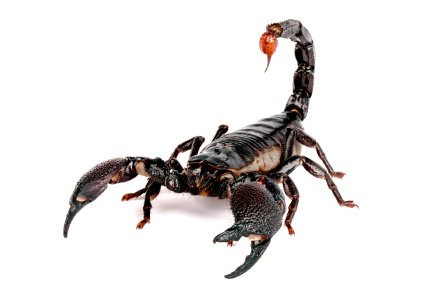
Emperor Scorpion for Sale
€79,99
Emperor Scorpions for Sale are a popular choice among exotic invertebrate enthusiasts, admired for their large, glossy dark bodies, powerful pincers and fascinating burrowing behaviour.
Scientifically known as Pandinus imperator, these African forest scorpions thrive in secure enclosures with deep, moisture-retentive substrate, suitable warmth, high humidity and access to clean water.
Their diet consists of appropriately sized live feeder insects, such as crickets and cockroaches.
Best suited to observation-focused keeping, Emperor Scorpions possess a venomous sting and should not be handled directly. Check availability, legal requirements and CITES documentation before purchasing.
Emperor Scorpion for Sale – Discover the Magnificent African Forest Scorpion
Explore our Emperor Scorpion for Sale selection to discover one of the most recognisable and impressive scorpions in the exotic invertebrate world. Known for its large body, glossy dark exoskeleton, powerful pincers and fascinating burrowing behaviour, the Emperor Scorpion is a popular choice among enthusiasts interested in keeping unusual arachnids.
Scientifically known as Pandinus imperator, this remarkable species originates from West Africa, where it inhabits humid forest environments and sheltered areas with suitable soil, leaf litter and natural cover. Its robust appearance and distinctive anatomy make it an interesting species to observe in a carefully prepared enclosure.
Unlike many scorpions adapted to dry desert habitats, Emperor Scorpions benefit from a humid environment with moisture-retentive substrate, secure hiding places and sufficient depth for burrowing. They are predominantly nocturnal, often spending daylight hours concealed beneath the substrate or inside a sheltered retreat before becoming more active after dark.
Emperor Scorpions are carnivorous predators that feed on suitable live invertebrates, including crickets and appropriately sized cockroaches. Their strong pincers help them capture and restrain prey, while their tail and sting provide additional defensive capabilities.
Although they are often described as relatively calm compared with some other scorpion species, Emperor Scorpions remain venomous animals and should never be handled casually. They are best suited to observation-focused keeping, with a secure enclosure and careful husbandry.
Whether you are expanding an existing exotic invertebrate collection or researching this species for the first time, understanding its natural behaviour, environmental requirements and legal status is essential before purchasing.
What Is an Emperor Scorpion?
The Emperor Scorpion is a large arachnid belonging to the family Scorpionidae. Its scientific name is Pandinus imperator, and it is native to parts of West Africa.
The species is recognised for its substantial build, dark exoskeleton, broad pedipalps and powerful pincers. These characteristics give it a distinctive appearance compared with smaller scorpions that have narrower bodies and more slender pincers.
Emperor Scorpions are adapted to forest-floor environments, where they shelter beneath fallen wood, stones, leaf litter and other natural cover. They may also create or occupy burrows in suitable soil.
Their behaviour reflects their predominantly nocturnal lifestyle. During daylight hours, an individual may remain hidden for extended periods, emerging when conditions are suitable for exploring or hunting.
In captivity, a well-designed enclosure should provide deep, burrowable substrate, secure hides, appropriate warmth, moisture retention and adequate ventilation. These conditions help the scorpion establish a secure retreat and exhibit natural behaviours.
The Emperor Scorpion is also notable for its parental behaviour. Females give birth to live young, which initially remain on the mother’s back before becoming independent. This reproductive strategy is one of the species’ most interesting biological characteristics.
Although Emperor Scorpions are popular in the exotic pet trade, prospective keepers should pay particular attention to the animal’s origin and applicable wildlife-trade requirements.
Emperor Scorpion Characteristics
- Common name: Emperor Scorpion.
- Scientific name: Pandinus imperator.
- Animal group: Arachnids.
- Family: Scorpionidae.
- Natural distribution: West Africa.
- Natural habitat: Humid forest environments and sheltered ground-level habitats.
- Appearance: Large, robust body with dark, glossy colouration and powerful pincers.
- Activity: Predominantly nocturnal.
- Feeding behaviour: Carnivorous, feeding on suitable live invertebrates.
- Housing: Secure terrestrial enclosure with deep, moisture-retentive substrate.
- Environmental needs: Appropriate warmth, humidity, ventilation and access to clean water.
- Handling: Not recommended; observation is preferable.
- Wildlife-trade status: Listed in CITES Appendix II.
- Availability: Subject to current stock, specimen details and shipping eligibility.
Individual size, colouration and behaviour can vary. Confirm the scientific identification, developmental stage and provenance information with the supplier before purchasing.
Why Choose an Emperor Scorpion?
Impressive Size and Appearance
Emperor Scorpions are among the larger scorpion species commonly encountered in the exotic pet hobby. Adults can reach approximately 15–20 cm in total length, depending on the individual and how the animal is measured.
Their substantial bodies, broad pincers and dark exoskeleton create a striking appearance that makes them particularly interesting to observe.
Glossy Dark Exoskeleton
The Emperor Scorpion is typically dark brown to black, with a glossy appearance that can become especially noticeable under suitable lighting.
Its colouration and robust body structure help distinguish it from many smaller and more slender scorpion species.
Powerful Pincers
The large pedipalps are one of the species’ most recognisable features.
These specialised appendages help the scorpion grasp and restrain prey. They also contribute to its impressive appearance and are an important part of its natural feeding behaviour.
Fascinating Burrowing Behaviour
Emperor Scorpions are adapted to sheltered environments and can use burrows to hide and regulate their exposure to environmental conditions.
Providing deep, compactable substrate allows them to establish retreats and behave more naturally in captivity.
Interesting Nocturnal Activity
These scorpions are generally most active during darker periods.
Keepers may observe them emerging from their hides, exploring the enclosure and hunting when the surrounding environment is quiet.
A Popular Species for Arachnid Enthusiasts
The Emperor Scorpion is well known among exotic invertebrate keepers because of its distinctive appearance, interesting behaviour and established presence in the hobby.
It may appeal to people who prefer observing natural animal behaviour rather than handling their pets.
Physical Appearance and Identification
Emperor Scorpions have several physical characteristics that make them easy to recognise when correctly identified.
Large, Robust Body
The body is substantial compared with that of many smaller scorpion species.
Its structure supports terrestrial movement and life in sheltered forest-floor environments.
Dark Colouration
Adults are typically dark brown or black, although individual colouration and the appearance of the exoskeleton can vary.
The dark colouration contributes to the species’ characteristic glossy appearance.
Broad Pincers
The pedipalps terminate in powerful pincers used to grasp prey.
Their size and shape are among the most distinctive features of the Emperor Scorpion.
Segmented Tail and Sting
Like all true scorpions, Pandinus imperator has a segmented tail ending in a telson containing its venom apparatus.
The tail can be raised over the body when the scorpion feels threatened or attempts to subdue prey.
Although this species is often described as relatively docile, it remains venomous and should be treated with appropriate caution.
Adult Size
Adults can reach approximately 15–20 cm in total length, although not every individual reaches the upper end of this range.
Young scorpions are much smaller and grow through successive moults. Their housing, feeding routine and environmental requirements should be adjusted to their developmental stage.
Natural Habitat and Behaviour
Understanding the Emperor Scorpion’s natural habitat helps explain its environmental needs in captivity.
West African Distribution
The Emperor Scorpion originates from West Africa, where it inhabits forest environments and other sheltered habitats with suitable ground cover.
Its natural range includes regions with warm conditions and access to humid refuges.
Forest-Floor Environment
Fallen wood, stones, leaf litter, roots and suitable soil provide cover and hiding opportunities.
These features help protect the scorpion from disturbance and provide opportunities to establish burrows.
Burrowing Behaviour
Emperor Scorpions are adapted to burrowing and benefit from substrate that can retain its shape.
A suitable captive enclosure should provide sufficient depth for the animal to establish a retreat without the risk of collapsing substrate or unstable decorations.
Nocturnal Activity
Emperor Scorpions generally spend much of the day concealed and become more active after dark.
Periods of inactivity are normal for many nocturnal scorpions and do not necessarily indicate a problem.
Predatory Behaviour
These scorpions feed on suitable invertebrates, using their pincers to grasp prey.
Their feeding behaviour can be fascinating to observe, particularly when the animal emerges from its hide to hunt.
Setting Up an Emperor Scorpion Enclosure
A suitable enclosure is essential for supporting the Emperor Scorpion’s health and natural behaviour. As a forest-dwelling species, it requires a different setup from scorpions adapted to arid desert environments.
Enclosure Size
Choose a secure terrestrial enclosure with sufficient floor space for movement, feeding and burrowing.
For a large adult, an enclosure with a footprint of approximately 45 × 30 cm or larger is a useful starting point. Additional space may be appropriate depending on the individual and enclosure design.
Floor area and substrate depth are generally more important than excessive height. A relatively low layout also helps reduce the risk of injury from falls.
Secure Lid
Emperor Scorpions may climb uneven surfaces and can exploit small openings.
Use a firmly secured lid with suitable ventilation. Check access ports, cable openings and other gaps regularly.
Keep the enclosure away from children, other pets and areas where it could be knocked over.
Deep, Burrowable Substrate
Provide a substantial layer of suitable substrate that can retain moisture and support stable burrows.
A depth of approximately 10–15 cm can be a useful starting point for an adult, with additional depth where the enclosure allows and the individual benefits from it.
Suitable materials may include chemical-free topsoil, coconut fibre or an appropriate mixture that holds its structure without becoming waterlogged.
Avoid fertilised soil, pesticides, sharp materials and substrate that collapses easily.
Hides and Natural Cover
Provide secure hiding places using suitable cork bark, stable pieces of wood or other appropriate materials.
These should create dark retreats where the scorpion can remain concealed during daylight hours.
Ensure that heavy decorations cannot shift or collapse if the animal burrows beneath them.
Safe Enclosure Construction
Place heavy structural items securely before introducing the animal.
Avoid stacking unstable stones or placing heavy objects loosely on soft substrate. A collapsing hide or burrow can cause serious injury.
Once the scorpion has established a retreat, minimise unnecessary disturbance to the enclosure.
Water Dish
Provide a shallow, stable dish containing clean water.
Keep it accessible and refill it regularly. A water dish is important even when the enclosure maintains suitable humidity.
Ventilation
Adequate ventilation helps prevent stagnant air, mould and excessive condensation.
However, excessive airflow can make it difficult to maintain the moisture levels required by this forest-dwelling species.
Balance ventilation with substrate moisture and monitor the enclosure regularly.
Temperature and Humidity Requirements
Emperor Scorpions require warm conditions and access to a suitably humid environment.
Exact requirements can vary with the enclosure, local climate and individual animal, so monitor conditions rather than relying solely on a fixed setting.
Temperature
A temperature range of approximately 24–28°C is a useful starting point for many captive Emperor Scorpions.
Avoid sudden fluctuations, direct sunlight and excessive heat. Glass enclosures can warm rapidly when exposed to sunlight, creating potentially dangerous conditions.
If supplemental heating is required, use a suitable thermostat-controlled arrangement and monitor the temperature inside the enclosure.
Avoid unregulated heating equipment and heat sources positioned where they could overheat the scorpion’s burrow.
Humidity
Emperor Scorpions generally require higher humidity than desert-adapted scorpion species.
A relative humidity range around 70–85% is often used as a starting point in captive husbandry, but humidity readings should be considered alongside substrate moisture and ventilation.
The enclosure should not be persistently waterlogged. The deeper substrate should retain moisture while excess water is allowed to drain or evaporate.
Substrate Moisture
Maintain a moisture gradient where the lower layers remain suitably moist and the surface is less wet.
The substrate should hold together when compressed without releasing excessive water.
Avoid allowing the entire enclosure to dry out, but do not compensate by repeatedly soaking the habitat.
Monitoring Conditions
Use a thermometer and suitable hygrometer to monitor environmental conditions.
Check for persistent condensation, mould, unpleasant odours and changes in substrate structure. These may indicate that moisture or ventilation needs adjusting.
What Do Emperor Scorpions Eat?
Emperor Scorpions are carnivorous predators that feed on suitable live invertebrates.
In captivity, their diet commonly includes crickets, appropriately sized cockroaches and other suitable feeder insects.
Crickets
Crickets are a widely used feeder for captive scorpions.
Choose prey that the scorpion can capture and subdue safely. Remove uneaten crickets when necessary, particularly if the scorpion is inactive or approaching a moult.
Cockroaches
Appropriately sized feeder cockroaches can provide another food option.
Choose prey according to the scorpion’s size and feeding response. Avoid leaving uneaten insects in the enclosure for extended periods.
Mealworms and Other Suitable Insects
Mealworms and other appropriate feeder insects may be offered as part of a varied feeding routine.
Select prey that is safe and suitably sized for the animal. Not every insect is appropriate for every scorpion.
Gut-Loaded Feeder Insects
Gut-loading involves feeding feeder insects a suitable nutritious diet before offering them to the scorpion.
Providing healthy, appropriately maintained feeder insects is a useful husbandry practice.
Feeding Frequency
Feeding frequency depends on the scorpion’s age, size, body condition and activity.
Adults may feed every one to two weeks, while growing juveniles may need smaller meals more frequently. These are general guidelines rather than fixed rules.
Monitor the animal’s body condition and feeding response when adjusting the routine.
Removing Uneaten Prey
Remove uneaten feeder insects when necessary.
Live prey can disturb a resting scorpion and may present a risk during moulting. Avoid leaving active prey with an animal that is vulnerable or unable to respond normally.
Moulting and Growth
Emperor Scorpions grow by moulting their exoskeleton.
During this process, the scorpion sheds its old external covering and develops a new one. It is vulnerable while the new exoskeleton hardens.
Signs of Premoulting
An Emperor Scorpion may become less active, refuse food or remain hidden for longer periods before moulting.
These signs can have other explanations, so assess the animal’s overall condition and environment before assuming a moult is imminent.
Caring for a Scorpion During Moulting
Avoid disturbing the scorpion or dismantling its burrow.
Maintain suitable environmental conditions and remove uneaten prey only when this can be done safely without disturbing the animal.
Never attempt to pull a scorpion out of its shelter to check whether it is moulting.
After Moulting
Allow the scorpion sufficient time to recover and for its new exoskeleton to harden before offering food.
Wait until it has resumed normal activity and appears ready to feed. Do not force food on an inactive animal.
Can Emperor Scorpions Live Together?
Emperor Scorpions have been observed living in groups under suitable natural conditions, and their social behaviour is unusual compared with many other scorpion species.
However, this does not mean that communal housing is automatically safe in captivity.
Competition for shelter, feeding conflicts, stress and cannibalism can occur, particularly when space, food or hiding places are inadequate.
For most private keepers, individual housing is the more straightforward option because it allows feeding, moulting and general condition to be monitored separately.
Communal housing should only be considered by experienced keepers who understand the risks, can provide sufficient space and secure retreats, and have separate enclosures available if animals need to be separated.
Do not house Emperor Scorpions with other scorpion species or unrelated invertebrates.
Is the Emperor Scorpion Suitable for Beginners?
The Emperor Scorpion may be suitable for a prepared beginner who has researched its care requirements and understands the risks of keeping a venomous arachnid.
Its environmental needs can be managed with a well-designed enclosure, but responsible ownership requires attention to moisture, temperature, substrate depth, feeding and enclosure security.
Prospective keepers should be comfortable with:
- Maintaining a secure, escape-resistant enclosure.
- Providing deep, burrowable substrate.
- Monitoring temperature, humidity and ventilation.
- Supplying appropriately sized live feeder insects.
- Recognising potential moulting behaviour.
- Avoiding direct handling.
- Carrying out enclosure maintenance carefully.
- Understanding applicable wildlife-trade requirements.
The Emperor Scorpion is best suited to people who enjoy observing animal behaviour and can provide a stable environment over the long term.
Emperor Scorpion Compared with Other Scorpions
Different scorpion species have different physical characteristics and environmental needs.
Emperor Scorpion
The Emperor Scorpion (Pandinus imperator) is a large forest-dwelling species with a robust body and broad pincers.
Its enclosure should provide deep substrate, suitable moisture retention and secure hiding places.
Dictator Scorpion
The Dictator Scorpion has traditionally been identified as Pandinus dictator and is also recognised as Pandinopsis dictator in newer taxonomic references.
Although it shares a robust appearance with the Emperor Scorpion, accurate identification is important because the two species should not automatically be treated as interchangeable.
Asian Forest Scorpion
Asian forest scorpions, commonly associated with the genus Heterometrus, are also large-bodied arachnids.
Their enclosure requirements may overlap with those of other forest scorpions, but care should be tailored to the exact species.
Desert Scorpions
Desert-adapted species require different environmental conditions, often with drier substrates and different shelter arrangements.
A desert scorpion enclosure should not be used for an Emperor Scorpion without substantial modification.
Why Species-Specific Care Matters
A setup that works for one scorpion may be unsuitable for another.
Confirm the scientific name before purchasing and prepare the enclosure around the animal’s natural habitat and behaviour.
Safe Handling and Responsible Ownership
Emperor Scorpions are best kept as observation animals rather than handled pets.
Although they are often described as relatively calm, their behaviour can change when they are startled, restrained or disturbed. Their pincers can cause injury, and their sting delivers venom.
Avoid Direct Handling
Do not pick up an Emperor Scorpion with your hands or encourage it to walk across your body.
Direct handling increases the risk of a sting, injury to the animal and unnecessary stress.
Use Suitable Equipment
If the scorpion must be moved for essential enclosure maintenance, use a suitable transfer container and appropriate tools, following specialist guidance.
Never pull the animal from a burrow by its legs, pincers or tail.
Keep the Enclosure Secure
Use a firmly fitted lid and inspect the enclosure regularly for gaps or damaged fittings.
Keep the enclosure away from children, other pets and areas where it could be accidentally disturbed.
Responding to a Sting
The effects of a scorpion sting can vary between individuals.
If a sting occurs, seek appropriate medical advice, especially if symptoms are severe or worsening. Treat breathing difficulties, collapse or other signs of a serious allergic reaction as a medical emergency.
Consider the Long-Term Commitment
Emperor Scorpions can live for several years in captivity, with lifespan varying according to sex, individual characteristics and care conditions.
Research the expected lifespan and ensure that you can provide suitable housing and feeding throughout the animal’s life.
Responsible Purchasing and Wildlife-Trade Requirements
Before purchasing an Emperor Scorpion, confirm the specimen’s identity, origin and the legal requirements that apply to its sale and transport.
Verify the Scientific Name
Check that the animal is correctly identified as Pandinus imperator.
Accurate identification is important for appropriate husbandry and for ensuring that accompanying purchase and wildlife-trade documents refer to the correct species.
Ask About Provenance
Where possible, request information about whether the specimen is captive-bred or wild-collected.
Do not assume that all Emperor Scorpions offered for sale are captive-bred. Reliable provenance information helps buyers make informed decisions about the animal’s origin.
CITES Appendix II Listing
The Emperor Scorpion is listed in Appendix II of the Convention on International Trade in Endangered Species of Wild Fauna and Flora (CITES).
Appendix II regulates international trade to help ensure that trade does not threaten the survival of the species. Depending on the transaction and country, permits, certificates or other evidence of lawful origin may be required.
Within the European Union, additional wildlife-trade rules apply to listed species. Check the current requirements with the relevant national authority before buying, importing, exporting or transporting an Emperor Scorpion across borders.
Prepare the Enclosure Before Arrival
Set up the enclosure before the animal arrives.
Ensure that the substrate, hides, water dish, temperature, moisture levels and ventilation are appropriate and stable.
Confirm Shipping Details
Review the seller’s delivery arrangements, destination restrictions and any applicable live-arrival policy.
Live arachnids require appropriate packaging and transport conditions, and international shipments may be subject to additional legal and logistical requirements.
Ordering an Emperor Scorpion Online
Before purchasing an Emperor Scorpion for Sale, review the product listing and confirm:
- Scientific identification as Pandinus imperator.
- Approximate size and developmental stage.
- Sex, if known and available.
- Captive-bred or wild-collected status, where documented.
- Current stock availability.
- Any applicable CITES or wildlife-trade documentation.
- Packaging and dispatch arrangements.
- Shipping eligibility for your destination.
- Any live-arrival policy or product guarantee.
Prepare the enclosure in advance and follow the seller’s instructions for introducing the scorpion to its new environment.
Do not assume that every seller can ship to every destination or that the same guarantees apply to all international orders. Confirm the relevant terms before purchasing.
Frequently Asked Questions
What is an Emperor Scorpion?
The Emperor Scorpion is a large African forest scorpion scientifically known as Pandinus imperator. It is recognised for its dark body, broad pincers and burrowing behaviour.
How large does an Emperor Scorpion grow?
Adults can reach approximately 15–20 cm in total length, although actual size varies between individuals.
Where do Emperor Scorpions come from?
Emperor Scorpions originate from West Africa, where they inhabit forest environments and other sheltered habitats.
Are Emperor Scorpions venomous?
Yes. Emperor Scorpions possess a venomous sting. Although they are often considered relatively calm compared with some other scorpion species, they should never be handled casually.
Are Emperor Scorpions aggressive?
Behaviour varies between individuals. Some may retreat or remain still when disturbed, while others may defend themselves using their pincers or sting. Never rely on apparent calmness as a reason to handle one.
What do Emperor Scorpions eat?
They are carnivorous and commonly consume suitable feeder insects, including crickets and cockroaches.
How often should I feed an Emperor Scorpion?
Many adults can be fed approximately every one to two weeks, while growing juveniles may need more frequent meals. Adjust the routine according to age, body condition and feeding response.
Do Emperor Scorpions need high humidity?
Yes. They generally require a more humid environment than desert-adapted scorpions, with suitable substrate moisture and adequate ventilation.
Do Emperor Scorpions need deep substrate?
They benefit from deep, burrowable substrate that allows them to establish secure retreats and display natural burrowing behaviour.
Can Emperor Scorpions live together?
They can display social behaviour under suitable conditions, but communal housing can still involve risks. Individual housing is generally easier to manage and monitor.
Are Emperor Scorpions suitable for beginners?
They may be suitable for prepared beginners who understand their environmental and safety requirements. Research the species thoroughly and establish the enclosure before purchasing.
Do Emperor Scorpions need UVB lighting?
Specialised UVB lighting is not generally considered essential for this nocturnal species. Provide a suitable day-and-night cycle, secure hiding places and appropriate environmental conditions.
What should I do if my Emperor Scorpion stops eating?
Reduced feeding may occur before moulting or because of environmental changes. Check the enclosure conditions and observe the animal without disturbing its burrow unnecessarily. Seek advice from an experienced keeper or qualified exotic-animal professional if you suspect a health problem.
Is it legal to buy an Emperor Scorpion?
The species is listed in CITES Appendix II, and additional rules may apply under EU or national wildlife-trade legislation. Check the current requirements for your country and ensure that the seller can provide any necessary documentation.
Find Your Emperor Scorpion for Sale
Discover our Emperor Scorpion for Sale selection and explore one of the most recognisable large forest scorpions in the exotic invertebrate hobby. With its dark, glossy body, powerful pincers and fascinating burrowing behaviour, Pandinus imperator offers an interesting opportunity to observe a specialised arachnid.
Whether you are expanding an existing collection or researching your first scorpion, responsible ownership begins with accurate species identification, appropriate documentation and a carefully prepared enclosure.
Provide deep, moisture-retentive substrate, secure hiding places, suitable warmth, clean water and appropriately sized live feeder insects. Avoid direct handling and maintain a secure environment that supports the scorpion’s natural behaviour.
Before ordering, review the current product specifications, availability, shipping conditions and any relevant wildlife-trade requirements. With careful preparation and responsible long-term care, an Emperor Scorpion can be a fascinating addition to an observation-focused exotic invertebrate collection.
| Choose | Med-Large |
|---|---|
| Options | No Pref, Male, Female |
Be the first to review “Emperor Scorpion for Sale”
Related products
Scorpions for Sale
Scorpions for Sale
Scorpions for Sale
Reviews
There are no reviews yet.