

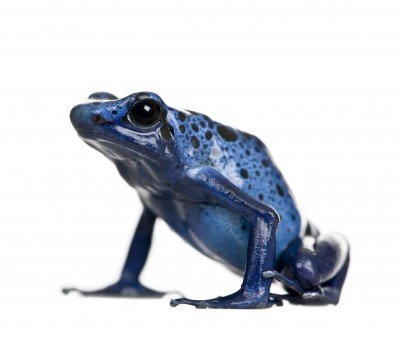
Blue Poison Dart Frog for Sale
€59,99
Blue Poison Dart Frogs for Sale (Dendrobates tinctorius ‘azureus’) – Discover these striking tropical amphibians, admired for their vivid cobalt-blue colouration and contrasting black markings.
Adults typically reach 4–5 cm and can live for 10–15 years with proper care. They thrive in a secure, planted tropical terrarium with stable temperatures, high humidity and suitable ventilation.
Their diet includes tiny live insects such as fruit flies and springtails. Contact us to enquire about current availability, specimen size and captive-bred status before ordering.
Blue Poison Dart Frog for Sale – Discover a Brilliant Blue Tropical Amphibian
Looking for a colourful amphibian that stands out in a naturalistic tropical terrarium? Discover our Blue Poison Dart Frog for Sale listing and explore one of the most recognisable poison dart frogs in the hobby.
Known for its vivid cobalt-blue colouration, dark markings and fascinating daytime activity, this remarkable amphibian is a popular choice among enthusiasts who appreciate unusual tropical wildlife.
The Blue Poison Dart Frog, commonly known as the Blue Dart Frog or Blue Poison Arrow Frog, is associated with the scientific name Dendrobates tinctorius ‘azureus’. Its striking blue body is covered with irregular black spots and patches, creating a distinctive pattern that makes each individual visually appealing.
Native to the Sipaliwini region of southern Suriname, this frog inhabits humid forest environments surrounded by the open savannah. It spends much of its time exploring the ground, moving among leaf litter, rocks and sheltered areas in search of small insects.
Unlike nocturnal amphibians, Blue Poison Dart Frogs are primarily active during daylight hours, making them fascinating animals to observe in a well-designed enclosure. Their bold behaviour and vivid appearance can make a carefully maintained vivarium an impressive display.
Although relatively robust when their needs are met, these frogs require consistent environmental conditions, appropriate live food and a secure, well-planted habitat. Their small size should not be mistaken for low maintenance, and their territorial behaviour means that enclosure planning is important.
If you are searching for Blue Poison Dart Frogs for Sale, explore our product listing and enquire about current availability, specimen size, feeding history, captive-bred status and delivery arrangements before ordering.
Blue Poison Dart Frog Characteristics
- Common name: Blue Poison Dart Frog.
- Alternative names: Blue Dart Frog and Blue Poison Arrow Frog.
- Scientific name: Dendrobates tinctorius ‘azureus’.
- Family: Dendrobatidae.
- Animal group: Amphibians.
- Natural origin: Sipaliwini region of southern Suriname.
- Natural habitat: Humid forest patches, forest floors, leaf litter and sheltered areas near streams.
- Adult size: Approximately 4–5 cm in body length.
- Colouration: Brilliant cobalt blue with irregular black spots and patches.
- Activity pattern: Diurnal, meaning primarily active during daylight hours.
- Diet: Small live invertebrates, including fruit flies and springtails.
- Enclosure: Secure, planted tropical terrarium with suitable substrate, leaf litter and sheltered areas.
- Temperature: Approximately 22–26°C as a general starting range.
- Humidity: A humid tropical environment, often around 80–90% relative humidity, with suitable ventilation.
- Lifespan: Approximately 10–15 years under suitable captive conditions.
- Behaviour: Active, territorial and best observed rather than handled.
- Sourcing: Documented captive-bred specimens are preferable.
- Availability: Contact the supplier to confirm current stock and specimen details.
These measurements and husbandry figures are general references. Individual requirements can vary with age, enclosure design and environmental conditions, so establish a suitable care routine before purchase.
Why Choose a Blue Poison Dart Frog?
Striking Cobalt-Blue Colouration
The Blue Poison Dart Frog is admired for its intense blue body and contrasting black markings. Its colouration can range from deep cobalt to brighter blue, with irregular spots and patches across the back, head and limbs.
This dramatic appearance makes the species particularly attractive to keepers who want a colourful amphibian in a carefully designed tropical display.
Fascinating Daytime Behaviour
Blue Poison Dart Frogs are active primarily during daylight hours. They can often be seen exploring their enclosure, searching for small prey and moving between leaf litter, plants and sheltered areas.
Their daytime activity makes them rewarding to observe without needing to disturb them at night.
A Distinctive Tropical Species
The Blue Poison Dart Frog has a fascinating natural history. Its restricted natural distribution in southern Suriname makes it particularly interesting to amphibian enthusiasts and those who appreciate the diversity of tropical wildlife.
A well-planted vivarium can recreate some features of its natural habitat while providing the stable conditions needed in captivity.
Suitable for a Naturalistic Vivarium
A secure enclosure with live tropical plants, leaf litter, cork bark and suitable ground-level furnishings provides opportunities for exploration and sheltering.
A bioactive setup can also support beneficial microfauna, although it still requires regular cleaning and environmental monitoring.
A Long-term Companion for Observation
With appropriate care, Blue Poison Dart Frogs can live for many years. Prospective keepers should be prepared for a long-term commitment involving live food cultures, environmental monitoring and regular enclosure maintenance.
Appearance and Identification
The Blue Poison Dart Frog is recognised by its vivid blue body, dark markings and compact build.
Blue Body and Black Markings
The blue colouration may appear brighter or darker depending on the individual and lighting conditions. Black markings commonly form irregular spots and patches across the body and limbs.
Compact Body Shape
Adults typically reach around 4–5 cm in body length. Despite their small size, they are active animals that benefit from sufficient floor space and several sheltered areas.
Scientific Identification
The Blue Poison Dart Frog is commonly identified in the pet trade as Dendrobates tinctorius ‘azureus’. It is closely associated with the dyeing poison frog group and should not be confused with the unrelated Strawberry Poison Dart Frog or Green and Black Poison Dart Frog.
When purchasing, ask for clear identification and information about the animal’s origin and captive-bred status.
Size and Growth
Adult Blue Poison Dart Frogs commonly reach approximately 4–5 cm in body length. Growth rates depend on age, nutrition, environmental conditions and individual development.
Young frogs require appropriately sized prey and close monitoring to ensure they feed consistently. As they mature, prey size and feeding routines should be adjusted to suit their needs.
Their compact size makes them sensitive to dehydration, inappropriate temperatures and unsuitable food. A properly prepared enclosure and dependable supply of small live insects are essential.
Before ordering, enquire about the specimen’s current size, developmental stage and feeding history.
Natural Habitat and Behaviour
Native to Southern Suriname
The Blue Poison Dart Frog is associated with the Sipaliwini region of southern Suriname, where isolated humid forest patches occur within a savannah landscape.
Its natural habitat includes moist forest-floor environments, sheltered areas and locations near small streams.
Ground-dwelling Behaviour
These frogs spend much of their time close to the ground. They explore leaf litter and other sheltered areas while searching for small insects.
A suitable captive enclosure should therefore prioritise usable floor space, ground cover and hiding places rather than relying entirely on tall climbing structures.
Daytime Activity
Blue Poison Dart Frogs are diurnal and are often active during daylight hours. A consistent light-dark cycle helps support their normal daily activity.
Territorial Behaviour
Territorial behaviour is an important consideration when keeping this species. Individuals may compete for space and preferred locations, and aggression can occur between frogs of the same sex.
Group housing should be carefully planned, with sufficient space, visual barriers and several sheltered areas. Monitor feeding and body condition, and separate incompatible individuals when necessary.
Blue Poison Dart Frog Enclosure Setup
A suitable terrarium should provide stable tropical conditions, good ventilation, appropriate moisture and opportunities for natural behaviour.
Enclosure Size
For a pair, an enclosure around 50 × 50 × 50 cm is a useful planning reference, although the appropriate dimensions depend on the layout and the individual frogs.
Larger enclosures may be needed for carefully managed groups. Provide sufficient usable floor space, several sheltered areas and visual barriers to reduce territorial conflict.
The enclosure should have a secure lid and no gaps through which the frogs could escape.
Substrate and Drainage
Use an amphibian-safe tropical substrate that retains suitable moisture without becoming waterlogged.
A drainage layer can help prevent excess water from accumulating beneath the substrate. Avoid contaminated soil, pesticides, fertilisers and materials that may release harmful chemicals.
Leaf Litter
Clean, pesticide-free leaf litter provides cover, supports natural foraging behaviour and helps create a forest-floor appearance.
Replace decomposing material as necessary and monitor for excessive waste or mould.
Live Plants
Suitable tropical plants create shelter and help provide visual barriers. Choose plants that are safe for amphibians and have not been treated with harmful pesticides.
Arrange plants so the frogs can move freely between sheltered areas and access their food.
Cork Bark and Hiding Places
Cork bark, stable logs and other suitable furnishings provide sheltered resting locations and additional structure.
Ensure that decorations are stable, free from sharp edges and easy to maintain.
Water and Moisture
Maintain appropriate moisture throughout the enclosure and provide access to clean, dechlorinated water where suitable.
Avoid stagnant or contaminated water, and ensure that any water feature is safe for frogs that are not strong swimmers.
Bioactive Terrarium
A bioactive enclosure may include suitable springtails and isopods to help process some organic waste and support a naturalistic environment.
However, bioactive systems do not eliminate the need to remove uneaten food, monitor hygiene and maintain suitable temperature and humidity.
Temperature Requirements
Blue Poison Dart Frogs generally thrive in moderate, stable temperatures.
A daytime temperature range of approximately 22–26°C is a useful starting point, with slightly cooler conditions at night where appropriate. Avoid overheating, particularly in humid enclosures with limited airflow.
To maintain suitable conditions:
- Monitor temperatures with reliable thermometers.
- Avoid placing the terrarium in direct sunlight.
- Prevent excessive heat from lighting equipment.
- Use thermostatically controlled heating when required.
- Check conditions at different points in the enclosure.
- Avoid sudden temperature fluctuations.
Stable temperatures are more important than attempting to keep the enclosure excessively warm.
Humidity Requirements
Blue Poison Dart Frogs require a humid environment to support their normal skin function and prevent excessive moisture loss.
A relative humidity range around 80–90% can be a useful starting reference, although the appropriate conditions depend on enclosure design, ventilation and substrate moisture.
To maintain suitable humidity:
- Use a reliable hygrometer.
- Mist with clean, dechlorinated water as needed.
- Maintain suitable substrate moisture.
- Provide adequate airflow.
- Prevent the substrate from becoming waterlogged.
- Remove uneaten food and waste.
- Monitor for mould and poor hygiene.
A healthy enclosure should remain suitably humid without becoming stagnant or persistently saturated.
Lighting and Day-Night Cycle
A consistent light-dark cycle helps support the frog’s daytime activity.
Approximately 10–12 hours of light followed by darkness is a useful starting reference. If the terrarium contains live plants, choose lighting that supports plant growth without overheating the enclosure.
Provide shaded areas and monitor the enclosure for excessive heat or rapid drying.
Seek species-specific advice before introducing UVB lighting, particularly when setting up a compact terrarium.
What Do Blue Poison Dart Frogs Eat?
Blue Poison Dart Frogs are insectivores and require a regular supply of small live prey.
Fruit Flies
Flightless fruit flies are a common staple food for captive poison dart frogs. Choose suitable cultures and prey sizes for the frog’s age and body size.
Springtails
Springtails are tiny invertebrates that provide additional food and can be useful in bioactive enclosures.
Small Crickets
Appropriately sized young crickets may be offered where suitable. Avoid prey that is too large for the frog to swallow safely.
Isopods and Other Small Invertebrates
Small, suitable isopods and other feeder invertebrates can provide variety when their size and nutritional suitability are appropriate.
Avoid wild-caught insects that may have been exposed to pesticides or environmental contaminants.
Feeding Frequency
Juveniles generally need more frequent feeding than adults. Feeding routines should reflect age, appetite, prey size and body condition.
Observe feeding behaviour and remove excess prey when necessary.
Calcium and Vitamin Supplementation
Feeder insects should be appropriately nourished before being offered. A suitable calcium and vitamin supplementation programme may be needed to support long-term health.
Follow species-appropriate guidance and avoid excessive supplementation. Consult an amphibian-experienced veterinarian if you are uncertain about the correct routine.
Before purchasing, ensure that you can maintain reliable cultures of suitable feeder insects.
Lifespan and Long-term Care
Blue Poison Dart Frogs commonly live for approximately 10–15 years in captivity when their environmental and nutritional needs are met, although individual longevity varies.
Long-term care includes:
- Maintaining suitable temperatures and humidity.
- Providing a secure, well-planted terrarium.
- Supplying appropriately sized live feeder insects.
- Following a suitable supplementation routine.
- Keeping water and enclosure furnishings clean.
- Removing waste and uneaten food.
- Monitoring appetite, activity and body condition.
- Minimising unnecessary handling.
- Seeking veterinary care when health concerns arise.
Preparing the enclosure and feeding arrangements before purchase helps reduce stress during the transition into captivity.
Can Blue Poison Dart Frogs Live Together?
Blue Poison Dart Frogs are territorial, and housing multiple individuals requires careful planning.
Compatible pairs may be maintained in appropriately designed enclosures, but group housing is not automatically suitable for every frog.
If keeping multiple individuals:
- Provide sufficient floor space.
- Include several sheltered areas and visual barriers.
- Monitor feeding to ensure each frog receives enough food.
- Watch for chasing, aggression or persistent hiding.
- Quarantine new arrivals separately.
- Separate incompatible individuals when necessary.
Aggression can occur even when frogs appear healthy. Changes in feeding behaviour or body condition may indicate that an individual is being outcompeted or stressed.
Are Blue Poison Dart Frogs Poisonous in Captivity?
Wild poison dart frogs can acquire defensive skin alkaloids through their natural diets. Captive-bred individuals raised on conventional feeder insects generally do not develop the same chemical defences as wild populations.
Nevertheless, their skin remains delicate and permeable, and unnecessary handling should be avoided.
Choose specimens from reputable sources and ask for documented captive-bred status where possible. Never assume an animal’s toxicity or origin can be determined from its colouration alone.
Handling and Safety
Blue Poison Dart Frogs are best kept as observation animals rather than pets for frequent handling.
Their sensitive skin can be harmed by residues from soaps, lotions, cleaning products and other substances. Handling can also cause unnecessary stress.
Follow these precautions:
- Avoid unnecessary handling.
- Use suitable clean, non-powdered gloves when essential handling is required.
- Follow appropriate amphibian-handling guidance for necessary transfers.
- Keep frogs away from children and household pets.
- Wash your hands after enclosure maintenance.
- Use a secure container when moving a frog if appropriate.
If you notice unusual skin changes, reduced appetite, lethargy or abnormal movement, consult a veterinarian experienced with amphibians.
Are Blue Poison Dart Frogs Suitable for Beginners?
Blue Poison Dart Frogs may suit well-prepared beginners who have researched tropical amphibian care and can maintain stable enclosure conditions.
Their care still requires regular attention, including live food cultures, environmental monitoring and enclosure maintenance. Their territorial behaviour also means that social housing should be considered carefully.
Before purchasing, make sure you can:
- Prepare the terrarium before arrival.
- Maintain suitable temperature and humidity.
- Provide a reliable supply of small live insects.
- Follow an appropriate supplementation routine.
- Maintain good enclosure hygiene.
- Monitor feeding and behaviour.
- Arrange veterinary care when required.
If this is your first amphibian, research the species carefully and seek guidance from an experienced poison dart frog keeper.
Responsible Sourcing and Legal Considerations
Responsible sourcing is important when purchasing Blue Poison Dart Frogs.
The species is commonly traded under the Dendrobates tinctorius ‘azureus’ designation. International trade in applicable poison dart frog taxa may be subject to wildlife-trade requirements, so verify the current legal status and documentation for the actual specimen.
Before ordering, ask the supplier:
- Is the frog captive-bred?
- What is its documented origin?
- What is its current size and feeding history?
- Is supporting legal-origin documentation available?
- Can it legally be delivered to your location?
- Are import, export or wildlife-trade requirements applicable?
Captive-bred specimens with clear provenance are preferable. Check current regulations before purchasing, particularly for international orders, and never release captive amphibians into the wild.
Ordering a Blue Poison Dart Frog Online
Our Blue Poison Dart Frog for Sale listing is intended for amphibian enthusiasts interested in this striking blue species.
Before placing an order, enquire about current availability, specimen size, feeding history and captive-bred status. Ensure that your terrarium is ready and that suitable live feeder insects are available.
Review the supplier’s shipping policy, packaging arrangements and any live-arrival guarantee, including its conditions and exclusions. Confirm that delivery to your location is permitted and that all applicable legal requirements have been addressed.
A properly prepared enclosure, suitable diet and stable environmental conditions help support a smoother transition into captivity.
Frequently Asked Questions
What is the scientific name of the Blue Poison Dart Frog?
It is commonly identified as Dendrobates tinctorius ‘azureus’, a blue form associated with the dyeing poison frog group.
Where do Blue Poison Dart Frogs come from?
They originate from the Sipaliwini region of southern Suriname, where they inhabit humid forest patches within a savannah landscape.
How large does a Blue Poison Dart Frog grow?
Adults typically reach around 4–5 cm in body length.
How long does a Blue Poison Dart Frog live?
A lifespan of approximately 10–15 years in captivity is a useful general estimate, although individual longevity varies.
What do Blue Poison Dart Frogs eat?
They eat small live invertebrates, including fruit flies and springtails. Appropriately sized young crickets and other suitable feeders may provide additional variety.
What temperature do Blue Poison Dart Frogs need?
Approximately 22–26°C is a useful daytime starting range. Avoid overheating and monitor conditions carefully.
What humidity do Blue Poison Dart Frogs need?
A humid tropical environment, often around 80–90% relative humidity, is a useful starting reference. Maintain suitable moisture while ensuring adequate ventilation.
Are Blue Poison Dart Frogs poisonous in captivity?
Captive-bred frogs raised on conventional feeder insects generally do not develop the same chemical defences as wild individuals. However, unnecessary handling should still be avoided.
Can Blue Poison Dart Frogs live together?
Compatible individuals may be housed together in carefully planned enclosures, but territorial aggression can occur. Monitor feeding, behaviour and body condition.
Can I buy Blue Poison Dart Frogs online?
Availability depends on the supplier and current stock. Confirm the specimen’s identification, captive-bred status, legal documentation and delivery eligibility before ordering.
Find Your Blue Poison Dart Frog for Sale
Discover the Blue Poison Dart Frog, a remarkable tropical amphibian admired for its brilliant blue colouration, contrasting black markings and active daytime behaviour.
With a secure, planted terrarium, suitable temperatures and humidity, clean conditions and a dependable supply of small live insects, this species can be a rewarding choice for a carefully prepared amphibian keeper.
Explore our Blue Poison Dart Frog for Sale listing and enquire about current availability, specimen details and delivery arrangements. Confirm responsible sourcing and prepare a suitable habitat before ordering to support the health and welfare of your new amphibian.
| Choose | Small |
|---|---|
| Options | No Pref, Male, Female |
Be the first to review “Blue Poison Dart Frog for Sale”
Related products
Frogs for Sale
Frogs for Sale
Frogs for Sale
Frogs for Sale
Frogs for Sale
Frogs for Sale
Frogs for Sale
Frogs for Sale
Reviews
There are no reviews yet.