

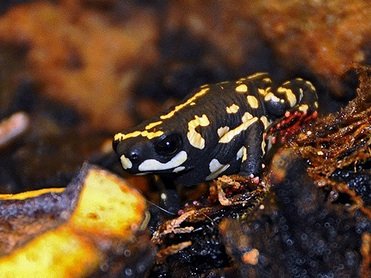
Bumble Bee Toad for Sale
€139,99
Bumble Bee Toads for Sale are a fascinating choice for amphibian enthusiasts, admired for their striking black-and-yellow markings, reddish accents and distinctive walking behaviour.
These small terrestrial toads thrive with a suitable enclosure, carefully managed temperature and humidity, secure hiding places and access to clean water.
Their diet includes appropriately sized live feeder insects, such as flightless fruit flies and small crickets.
Explore our Bumble Bee Toad selection, check current availability and confirm species identification and care requirements before purchasing.
Bumble Bee Toad for Sale – Discover the Colourful South American Walking Toad
Looking for a small, colourful and unusual amphibian for your exotic animal collection? Discover our Bumble Bee Toad for Sale listing and explore a fascinating species known for its striking black-and-yellow markings, reddish accents and distinctive walking behaviour.
Scientifically identified as Melanophryniscus stelzneri in the reference listing, the Bumble Bee Toad is a small South American amphibian belonging to the family Bufonidae. It is also known as the Bumblebee Walking Toad, Yellow and Black Walking Toad and Red-bellied Toad. Unlike many frogs and toads that rely primarily on hopping, these little amphibians are known for their characteristic ambling movements.
Their bold colouration, compact size and interesting natural behaviours make Bumble Bee Toads particularly appealing to amphibian enthusiasts who enjoy observing smaller terrestrial species. They inhabit environments that can include grasslands, rocky areas and seasonal wetlands, where they seek shelter among vegetation, leaf litter and other natural cover.
Bumble Bee Toads require a carefully prepared terrestrial enclosure with suitable substrate, secure hiding places, appropriate temperatures, controlled moisture levels and access to clean water. Their small size does not eliminate the need for specialised care, and their environmental requirements should be tailored to the exact species and origin of the individual.
Browse our Bumble Bee Toad for Sale listing to explore the available specimens and check current stock information. Before ordering, confirm the scientific identification, captive-bred status where documented, feeding requirements and delivery eligibility for your destination.
Bumble Bee Toad Characteristics
- Common name: Bumble Bee Toad.
- Scientific name listed by the supplier: Melanophryniscus stelzneri.
- Family: Bufonidae.
- Animal group: Amphibians.
- Natural distribution: South America; the exact range depends on the species.
- Appearance: Black body with contrasting yellow or orange markings and reddish colouration on some body areas.
- Adult size: Often approximately 2.5–4 cm in snout-to-vent length, depending on sex and the identified species.
- Habitat: Terrestrial environments, including grasslands, rocky areas and locations associated with seasonal water.
- Diet: Small live invertebrates.
- Activity: Can be active during daylight hours under suitable conditions.
- Housing: Secure terrestrial enclosure with shelter, suitable substrate and a shallow water source.
- Temperature: Requires a monitored, species-appropriate temperature range.
- Humidity: Requires carefully managed moisture levels and adequate ventilation.
- Handling: Best kept for observation rather than frequent handling.
- Availability: Subject to current stock and supplier confirmation.
These characteristics are general references rather than guarantees for every specimen. Several closely related species are sold under the common name Bumble Bee Toad, so accurate identification is essential before applying detailed husbandry recommendations.
Why Choose a Bumble Bee Toad?
Striking Black and Yellow Colouration
One of the most recognisable features of the Bumble Bee Toad is its contrasting colour pattern. The dark body is often marked with vivid yellow or orange areas, while the underside, feet or rear body may show reddish colouration.
These markings create a distinctive appearance that sets the species apart from many more uniformly coloured amphibians.
Colouration varies between individuals and may differ according to species, age and geographical origin.
Distinctive Walking Behaviour
Bumble Bee Toads are known for their unusual method of moving along the ground. Rather than relying exclusively on long jumps, they often move with a distinctive walking or ambling gait.
This behaviour is particularly interesting to observe in an appropriately furnished enclosure with sufficient floor space and natural cover.
Compact Size
Bumble Bee Toads are relatively small amphibians, making them interesting for keepers who prefer observing compact terrestrial species.
However, their small size means that feeder insects must also be appropriately sized and that enclosure maintenance must be carried out carefully to avoid accidental injury or escape.
Fascinating Natural Adaptations
Their contrasting colouration is associated with warning signals in nature. When threatened, some Bumble Bee Toads display defensive postures that expose more of their colourful markings.
Like other amphibians, they have specialised skin that requires careful protection from chemicals, contaminants and unsuitable handling.
An Interesting Choice for Amphibian Enthusiasts
Bumble Bee Toads can appeal to keepers who enjoy observing feeding behaviour, movement, sheltering and other natural activities.
They are best appreciated as observation-focused animals rather than pets for frequent handling.
Physical Appearance and Identification
Body Shape
Bumble Bee Toads have compact bodies, relatively short limbs and a sturdy appearance.
Their proportions support their terrestrial lifestyle, allowing them to move through low vegetation, leaf litter and other ground-level cover.
Black and Yellow Markings
The dorsal surface commonly features dark colouration with contrasting yellow or orange markings.
The exact pattern varies between individuals and may differ between related species.
Reddish Colouration
Some individuals display red or orange colouration around the feet, groin or underside. These markings contribute to the species’ distinctive appearance.
Not every individual will exhibit identical colouration, so photographs and supplier descriptions should not be treated as guarantees of a particular pattern.
Adult Size
Bumble Bee Toads are small amphibians. Published husbandry references for animals sold under this name commonly describe adults measuring approximately 2.5–4 cm in snout-to-vent length, with females often larger than males.
Snout-to-vent length is measured from the tip of the snout to the rear of the body, excluding the legs.
Ask the supplier for the current measurements and scientific identification of the specimen before purchasing.
Natural Habitat and Behaviour
Understanding the natural history of Bumble Bee Toads helps explain their captive care requirements.
South American Origins
Bumble Bee Toads belong to the genus Melanophryniscus, which occurs in parts of South America.
The precise geographical range depends on the species. The name M. stelzneri should therefore be verified rather than assumed to cover every Bumble Bee Toad offered for sale.
Grasslands and Rocky Environments
Depending on the species, these amphibians may inhabit grasslands, open landscapes, rocky areas and environments with seasonal rainfall.
Natural shelter can include vegetation, leaf litter, stones and other ground-level features.
Terrestrial Lifestyle
Bumble Bee Toads are primarily terrestrial. They benefit from an enclosure with sufficient floor space, suitable substrate and secure hiding places.
A naturalistic setup should allow them to move between sheltered areas without exposing them constantly to bright light or disturbance.
Seasonal Water and Breeding
Some species in the genus use temporary pools or other seasonal water sources for reproduction.
Breeding behaviour is influenced by rainfall, temperature and other environmental conditions. Captive breeding requires additional research into the exact species and its reproductive needs.
Feeding Behaviour
Bumble Bee Toads hunt small invertebrates and need prey that fits their small mouths.
Observing their feeding behaviour can be rewarding, but prey size and nutritional quality must be carefully managed.
Bumble Bee Toad Enclosure Setup
A properly prepared enclosure supports natural behaviour and helps maintain the animal’s health.
Enclosure Size
Choose a secure terrestrial enclosure with sufficient floor space for movement, feeding and sheltering.
For a small group of adult Bumble Bee Toads, an enclosure measuring approximately 45 × 30 × 30 cm can be a provisional starting point, provided that the number and size of animals are appropriate. Larger enclosures generally offer more opportunities to create separate hiding areas and moisture gradients.
The final dimensions should reflect the exact species, number of animals and husbandry requirements.
Secure Lid and Ventilation
Use a firmly fitted lid to prevent escapes. Small amphibians can exploit surprisingly narrow gaps.
Provide appropriate ventilation while retaining enough moisture to maintain suitable conditions. Check openings, cable ports and enclosure fittings regularly.
Suitable Substrate
Use amphibian-safe substrate that supports natural movement and provides suitable moisture retention.
Depending on the species and enclosure design, suitable materials may include chemical-free soil mixtures, leaf litter and other safe naturalistic substrates.
Avoid fertilisers, pesticides, sharp materials and substrates that can cause harm if accidentally swallowed.
Leaf Litter and Hiding Places
Provide leaf litter, suitable cork bark and other stable hiding places.
These features create sheltered areas and help the toads feel secure. Ensure that decorations cannot collapse or trap the animals.
Shallow Water Source
Provide a shallow, stable dish of clean, appropriately treated water.
The dish should allow the animals to enter and leave easily. Replace contaminated water regularly and keep the surrounding substrate clean.
Plants and Natural Cover
Suitable non-toxic plants and naturalistic decorations can provide additional cover and improve the enclosure’s appearance.
Choose materials that are free from pesticides and other harmful residues. Make sure that the layout remains easy to inspect and maintain.
Temperature Requirements
Bumble Bee Toads should not automatically be maintained at the high temperatures used for some tropical amphibians.
For a specimen confirmed as Melanophryniscus stelzneri, a daytime range of approximately 20–25°C may serve as a provisional starting reference. A cooler nighttime range may be appropriate, depending on the species, geographical origin and specialist husbandry guidance.
These figures are not a universal prescription for every animal sold as a Bumble Bee Toad.
Use a reliable thermometer to monitor the enclosure and avoid prolonged excessive heat, direct sunlight and sudden temperature changes.
If supplemental heating is required, use a suitable thermostat-controlled arrangement. Ensure the enclosure does not become excessively warm or dry.
Humidity and Moisture Management
Bumble Bee Toads need suitable access to moisture, but the entire enclosure should not automatically be kept constantly wet.
For a confirmed Melanophryniscus stelzneri, a relative humidity range of approximately 60–80% may serve as a provisional reference. The ideal conditions depend on the animal’s origin, enclosure design and access to suitable microhabitats.
Use a hygrometer to monitor humidity and provide a moisture gradient where appropriate. The substrate should offer sheltered, suitably moist areas without becoming waterlogged.
Good ventilation is important to help prevent stagnant air, mould and excessive condensation.
Avoid relying on a single humidity reading. The condition of the substrate, availability of clean water and the animal’s behaviour should also be considered.
What Do Bumble Bee Toads Eat?
Bumble Bee Toads are insectivorous and require appropriately sized live prey.
Because they are small amphibians, prey selection is especially important. Oversized insects can be difficult to swallow, while poorly nourished feeder insects may provide inadequate nutrition.
Flightless Fruit Flies
Flightless fruit flies are a useful food option for small Bumble Bee Toads, particularly juveniles and smaller individuals.
Choose a suitable species and size of fruit fly and maintain a reliable supply so feeding can remain consistent.
Small Crickets
Pinhead crickets and other suitably small crickets may be offered according to the toad’s size.
Ensure that prey can be swallowed safely and remove uneaten insects when necessary.
Springtails and Other Small Invertebrates
Appropriately sized springtails and other suitable small feeder invertebrates can provide variety.
Choose feeder species that meet the animal’s dietary needs and are obtained from a reliable source.
Feeding Frequency
Feeding frequency depends on age, body condition, activity and prey size.
Growing juveniles generally require more frequent feeding than adults. Monitor feeding responses and body condition rather than following a rigid schedule.
Nutritional Supplementation
Feeder insects should be appropriately nourished before being offered.
Calcium and vitamin supplementation may be necessary, depending on the diet, life stage and husbandry recommendations for the identified species.
Follow specialist guidance to avoid both nutritional deficiencies and excessive supplementation.
Avoid Wild-Caught Insects
Do not collect wild insects for feeding unless their safety and suitability can be established.
Wild prey may carry parasites or have been exposed to pesticides and other contaminants.
Can Bumble Bee Toads Live Together?
Bumble Bee Toads are sometimes kept in groups, but communal housing should only be considered after the exact species and its requirements have been confirmed.
Group housing requires sufficient space, multiple hiding places, suitable feeding arrangements and the ability to separate animals if necessary.
Differences in size, feeding behaviour or health can create problems in a shared enclosure. Monitor every animal to ensure that each is feeding and maintaining suitable body condition.
Do not assume that a Bumble Bee Toad can safely share an enclosure with dart frogs or other unrelated amphibians simply because they may occupy similar habitats.
Different species can have incompatible environmental requirements and may expose one another to disease or injury.
Handling and Safety
Bumble Bee Toads are best kept for observation rather than frequent handling.
Amphibian skin is permeable and sensitive to residues from soap, hand cream, cleaning products and other chemicals. Some toads can also produce defensive skin secretions.
Avoid unnecessary direct contact. When moving an animal for essential enclosure maintenance, use a suitable clean container and follow amphibian-safe handling practices.
Wash your hands after working with the enclosure and prevent skin secretions from contacting your eyes, mouth or open wounds.
Keep the enclosure secure and away from children and other pets.
Lifespan and Long-Term Care
The lifespan of a Bumble Bee Toad depends on its exact species, health, origin and captive conditions.
Some specialist pet-trade sources report that related Bumble Bee Toads can live for ten years or longer under suitable captive conditions. However, this should not be treated as a guaranteed lifespan for every animal sold under the name.
Before purchasing, confirm the species and ask the supplier for relevant information about age, feeding history and captive origin.
Responsible ownership includes maintaining a suitable enclosure, providing reliable feeder insects, monitoring environmental conditions and arranging veterinary care when required.
Is a Bumble Bee Toad Suitable for Beginners?
A Bumble Bee Toad may suit a prepared amphibian keeper who understands the needs of small terrestrial species.
However, small size does not automatically mean simple care. These toads require suitable prey, careful moisture management, stable temperatures and an enclosure that prevents escapes.
Before buying, make sure you can:
- Maintain a secure terrestrial enclosure.
- Provide appropriately sized feeder insects.
- Monitor temperature and humidity.
- Maintain clean water and suitable substrate.
- Minimise unnecessary handling.
- Observe feeding and body condition.
- Arrange suitable veterinary care if required.
- Confirm legal ownership and transport requirements.
Research the exact species before deciding whether it is appropriate for your experience and available facilities.
Responsible Sourcing and Purchasing
Before ordering a Bumble Bee Toad, confirm its scientific identification and origin.
Some animals in the pet trade have historically been sold as Melanophryniscus stelzneri even when they may belong to a closely related species, including Melanophryniscus klappenbachi.
Ask the supplier for the scientific name, captive-bred or wild-collected status where documented, current size and feeding information.
Captive-bred animals may be a responsible option when their origin is documented, as they can reduce reliance on wild collection. However, do not assume an animal is captive-bred unless the supplier confirms it.
Check any applicable wildlife-trade requirements, import restrictions and transport conditions for your destination.
Ordering a Bumble Bee Toad Online
Before completing your purchase, review the product listing and confirm:
- Exact scientific identification.
- Current stock availability.
- Approximate size and developmental stage.
- Captive-bred or wild-collected status, where documented.
- Feeding history and suitable prey.
- Shipping eligibility for your destination.
- Packaging and dispatch arrangements.
- Any live-arrival guarantee and its conditions.
- Relevant legal or import documentation.
Prepare the enclosure before the animal arrives. A stable environment helps reduce stress during the transition to its new habitat.
Do not assume that every seller can ship live amphibians to every destination. Confirm delivery eligibility and the applicable terms before ordering.
Frequently Asked Questions
What is a Bumble Bee Toad?
The Bumble Bee Toad is a small South American amphibian in the genus Melanophryniscus. The reference seller identifies its listing as Melanophryniscus stelzneri, although the exact species should be confirmed.
How big do Bumble Bee Toads grow?
Adults commonly measure approximately 2.5–4 cm in snout-to-vent length, depending on the species and sex. Ask the supplier for the current measurements of the individual being offered.
What colours are Bumble Bee Toads?
They typically display contrasting black and yellow or orange markings, with reddish colouration on some areas of the body. Individual patterns vary.
What do Bumble Bee Toads eat?
They eat small live invertebrates, including appropriately sized flightless fruit flies, springtails and small crickets.
What temperature do Bumble Bee Toads need?
For a confirmed Melanophryniscus stelzneri, approximately 20–25°C during the day can serve as a provisional starting reference. Confirm the appropriate range for the animal’s exact species and origin.
What humidity do Bumble Bee Toads need?
A relative humidity range around 60–80% may serve as a provisional reference for confirmed M. stelzneri. Monitor the enclosure and maintain suitable moisture without waterlogging the substrate.
Can Bumble Bee Toads live in groups?
Some may be maintained communally under suitable conditions, but group housing requires careful monitoring, sufficient space and the ability to separate animals when necessary.
Are Bumble Bee Toads suitable for beginners?
They may suit prepared beginners who can provide suitable environmental conditions and small live prey. Research the species thoroughly before purchasing.
Can Bumble Bee Toads be handled?
Frequent handling is not recommended because amphibian skin is sensitive to contaminants. Observation is preferable.
How long do Bumble Bee Toads live?
Lifespan varies with species and captive conditions. Some specialist sources report ten years or longer for related animals, but this is not guaranteed for every specimen.
Are Bumble Bee Toads the same as dart frogs?
No. Bumble Bee Toads belong to the family Bufonidae, whereas dart frogs belong to the family Dendrobatidae. Their care requirements should not be treated as interchangeable.
Find Your Bumble Bee Toad for Sale
Discover our Bumble Bee Toad for Sale listing and explore a colourful, compact amphibian known for its contrasting markings and unusual walking behaviour.
Whether you are expanding an established amphibian collection or researching your first terrestrial toad, responsible ownership begins with accurate species identification and suitable preparation.
Provide a secure enclosure, appropriate substrate, hiding places, clean water, monitored temperatures and carefully managed moisture. Offer suitably sized live feeder insects and minimise unnecessary handling.
Browse the available product listing, confirm the specimen’s identity and origin, and review the applicable shipping and purchasing terms before placing your order.
Choose responsibly and enjoy discovering the fascinating natural behaviour of the Bumble Bee Toad.
| Choose | Medium |
|---|---|
| Options | No Pref, Male, Female |
Be the first to review “Bumble Bee Toad for Sale”
Related products
Amphibians for Sale
Amphibians for Sale
Amphibians for Sale
Amphibians for Sale
Amphibians for Sale
Amphibians for Sale
Amphibians for Sale
Amphibians for Sale
Reviews
There are no reviews yet.