

4-Pack of White’s Tree Frogs for Sale
€89,99
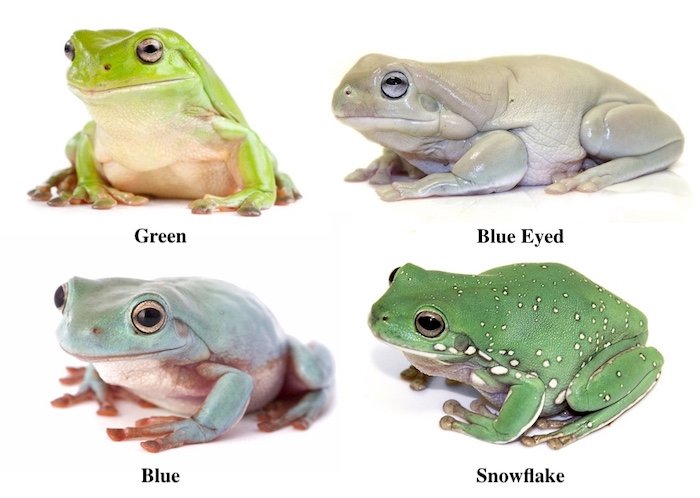
4-Pack of White’s Tree Frogs for Sale – Large Stock Available! This colourful bundle features four stunning variations of White’s Tree Frog (Litoria caerulea): Green, Blue, Blue-Eyed and Snowflake.
Admired for their distinctive colours, expressive eyes and fascinating climbing behaviour, these popular Australian amphibians make an attractive addition to a well-prepared collection.
Contact us to confirm current stock, the four morphs included, specimen sizes and feeding history. Suitable housing, proper care and delivery eligibility should be confirmed before ordering.
4-Pack of White’s Tree Frogs for Sale – Green, Blue, Blue-Eyed and Snowflake
Looking for a colourful addition to your amphibian collection? Our 4-Pack of White’s Tree Frogs for Sale brings together four eye-catching colour variations of the popular White’s Tree Frog, offering an exciting opportunity to appreciate the different appearances of this well-known Australian amphibian. The pack features Green, Blue, Blue-Eyed and Snowflake White’s Tree Frogs, each with its own distinctive visual appeal.
Scientifically known as Litoria caerulea, White’s Tree Frogs are also commonly called Australian Green Tree Frogs or Dumpy Tree Frogs. They are admired for their rounded bodies, expressive eyes, climbing abilities and generally calm temperament. Their adaptability and fascinating behaviour have made them popular among amphibian enthusiasts, although they still require carefully managed temperatures, humidity, hygiene and nutrition.
This four-frog bundle is ideal for keepers who appreciate colour variation and want to explore the differences between these attractive frogs. The Green morph displays the familiar green appearance, while the Blue morph offers a cooler-toned look. Blue-Eyed specimens are distinguished by their eye colour, and Snowflake frogs feature characteristic pale speckling across the skin.
We have a large stock of White’s Tree Frogs available for enquiries, subject to current inventory. Contact us to confirm the availability of this four-pack, the exact morphs offered, individual sizes and feeding history before placing your order.
Whether you are expanding an established amphibian collection or preparing your first dedicated tree frog habitat, it is important to plan for all four animals before purchasing. White’s Tree Frogs are arboreal, meaning they benefit from a tall enclosure with sturdy branches, climbing opportunities, foliage, suitable resting places and a shallow dish of clean water.
Browse our 4-Pack of White’s Tree Frogs for Sale and discover these distinctive colour variations. Confirm the details of the animals supplied, prepare suitable housing and review the relevant purchasing and delivery requirements before ordering.
What Is Included in the 4-Pack?
This product is designed around four White’s Tree Frog colour variations. Confirm the exact availability and appearance of each frog with the supplier before purchase.
1. Green White’s Tree Frog
The Green White’s Tree Frog displays the familiar green colouration associated with this species. Depending on the individual, its skin may appear bright green, olive-green or slightly bluish-green under different lighting conditions.
Its rounded body, broad mouth and expressive eyes give it the classic appearance that has made White’s Tree Frogs so recognisable among amphibian enthusiasts.
Green specimens are an excellent way to appreciate the species’ natural appearance and distinctive climbing behaviour.
2. Blue White’s Tree Frog
The Blue White’s Tree Frog is valued for its unusual blue-toned appearance. Its precise colour can vary according to genetics, pigmentation, lighting and individual development.
Blue colouration makes this variation visually distinctive alongside the more familiar green form. Confirm the exact colour and characteristics of the specimen offered, as the appearance of individual frogs may differ from product photographs.
3. Blue-Eyed White’s Tree Frog
The Blue-Eyed White’s Tree Frog is distinguished by its eye colour, which provides a striking contrast with its body colouration.
Eye colour and body colour are separate characteristics, so the overall appearance of a blue-eyed specimen may vary. Ask the supplier to confirm the specific traits of the frog included in your pack.
4. Snowflake White’s Tree Frog
Snowflake White’s Tree Frogs feature pale, snowflake-like markings scattered across the skin. The amount and distribution of these markings can vary between individuals.
The distinctive pattern gives each frog an individual appearance and makes this variation particularly appealing to keepers interested in colour and pattern differences.
Ask about the specimen’s current markings and developmental stage before ordering.
Why Choose a 4-Pack of White’s Tree Frogs?
Four Distinctive Appearances
The main attraction of this bundle is the opportunity to appreciate four visual variations of the same species. Green, Blue, Blue-Eyed and Snowflake frogs provide an interesting combination of colour and pattern.
The exact appearance of each frog depends on its individual characteristics, so photographs should be treated as examples rather than guarantees of identical markings.
Popular Australian Amphibians
White’s Tree Frogs originate from Australia and southern New Guinea. They are well known for their robust bodies, adhesive toe pads and ability to climb branches and other surfaces.
Their distinctive appearance and interesting behaviour make them popular with amphibian enthusiasts who can meet their care requirements.
Fascinating Climbing Behaviour
As arboreal frogs, White’s Tree Frogs spend considerable time above ground. They climb branches, rest on foliage and use elevated surfaces to explore their surroundings.
A tall enclosure with stable branches and broad leaves provides opportunities for natural movement and resting behaviour.
A Bundle for Established Collections
A four-frog pack can be an appealing option for experienced keepers who want to explore different colour variations.
Before purchasing, ensure that you have enough space and equipment to house four frogs appropriately. Separate enclosures may be necessary if the animals differ significantly in size, health or compatibility.
Large Stock Available for Enquiries
We have a large stock of White’s Tree Frogs available for enquiries, subject to current inventory. Contact us to check the availability of the four-pack, confirm the colour variations and discuss the individual specimens offered.
We recommend confirming the full contents of the pack before ordering, particularly if you are looking for specific colour or eye characteristics.
White’s Tree Frog Characteristics
- Common name: White’s Tree Frog.
- Other names: Australian Green Tree Frog and Dumpy Tree Frog.
- Scientific name: Litoria caerulea.
- Family: Hylidae.
- Animal group: Amphibians.
- Natural distribution: Australia and southern New Guinea.
- Natural habitat: Woodlands, wetlands, gardens and other environments with suitable moisture and shelter.
- Adult size: Commonly around 7–11 cm in body length, with variation between individuals and sexes.
- Appearance: Rounded body, broad mouth, adhesive toe pads and variable green, blue-toned or patterned colouration.
- Lifestyle: Arboreal and primarily active during the evening and night.
- Diet: Carnivorous, feeding on appropriate live insects and other suitable invertebrates.
- Enclosure: Tall, secure terrarium with climbing branches, foliage, resting places and a shallow water dish.
- Daytime temperature: Approximately 24–27°C in the main warm area, with a cooler zone.
- Night-time temperature: Approximately 18–22°C, provided the animal remains within its suitable range.
- Humidity: Approximately 50–70% as a starting reference, with suitable ventilation and periodic increases following misting.
- Lifespan: Often around 10–20 years in captivity with appropriate care.
- Handling: Minimise handling and avoid damaging the frog’s sensitive skin.
- Availability: Large stock available for enquiries, subject to current inventory and the exact morphs offered.
These figures are general husbandry references for White’s Tree Frogs. Individual requirements can vary with age, health and environmental conditions. Confirm the details of the particular frogs offered before purchase.
Understanding White’s Tree Frog Colour Variations
White’s Tree Frog colour variations are particularly interesting because individuals can differ in colouration, eye appearance and skin pattern while belonging to the same species.
Colour and Pigmentation
The familiar green form may display several shades of green, while blue-toned forms can have a different visual appearance. The colour seen in photographs can also be affected by lighting, camera settings and the frog’s condition.
A product photograph should not be treated as a guarantee that every specimen will have exactly the same shade.
Eye Colour
The Blue-Eyed variation is distinguished by its eye characteristics. Eye colour does not necessarily determine the frog’s body colour, so ask for photographs or details of the specific animal if this feature is important to your purchase.
Snowflake Markings
Snowflake White’s Tree Frogs are known for their pale speckles or patches. The pattern can vary in size and distribution, and some individuals may develop more noticeable markings as they mature.
Individual Differences
Even frogs described using the same morph name can look different. Age, genetics, pigmentation and environmental conditions can all affect their appearance.
Before ordering, confirm the exact variations included in the four-pack and whether the supplier can accommodate any requests for particular visual characteristics.
Size and Growth
White’s Tree Frogs are relatively large compared with many commonly kept tree frog species.
Adults commonly reach around 7–11 cm in body length, although some individuals may fall outside this range. Females are often larger than males.
Juveniles are considerably smaller and require appropriately sized food, suitable enclosure furnishings and careful monitoring.
When buying a four-pack, ask about the approximate size and developmental stage of each frog. Similar-sized individuals are generally easier to assess for compatibility than animals with substantial differences in size.
Growth depends on genetics, age, feeding, health and husbandry. A suitable diet and well-managed enclosure support healthy development, but overfeeding should be avoided because White’s Tree Frogs can become overweight in captivity.
Enclosure Requirements for Four White’s Tree Frogs
White’s Tree Frogs are arboreal, so enclosure height and climbing opportunities are important. A four-frog pack requires careful housing plans, particularly because a single enclosure may not be appropriate for every combination of sizes or individuals.
Enclosure Size
For one adult, a tall enclosure measuring at least approximately 45 × 45 × 60 cm (length × width × height) is a useful starting reference. Two compatible adults may require a larger enclosure, and four adults will need substantially more space.
A spacious enclosure around 90 × 60 × 120 cm may be a planning option for four similarly sized adults, but this is not a universal minimum. The final dimensions should be based on the animals’ sizes, usable climbing space, ventilation, furnishings and specialist husbandry advice.
If you cannot provide sufficient space for all four frogs, prepare separate enclosures before ordering.
Vertical Space
Provide sturdy branches, climbing structures and broad-leaved plants at different heights. These allow the frogs to climb, rest and select suitable positions within the enclosure.
Ensure that all branches and furnishings are secure. Avoid sharp edges, unstable structures and gaps where frogs could become trapped.
Hiding and Resting Areas
White’s Tree Frogs need sheltered resting locations. Broad foliage, suitable hides and elevated resting surfaces can help provide privacy and reduce disturbance.
Arrange furnishings so that every frog can access suitable resting areas without being forced into constant contact with other animals.
Water Dish
Provide a shallow, stable dish large enough for the frogs to sit in comfortably. Use clean, dechlorinated water and change it regularly.
A water dish should not be so deep that smaller or weaker frogs struggle to enter and leave it safely.
Substrate
Choose a safe substrate that supports suitable moisture levels and is appropriate for the enclosure design.
Avoid loose materials that could be swallowed accidentally during feeding. If using a naturalistic substrate, consider feeding the frogs in a suitable separate container to reduce the risk of accidental ingestion.
Ventilation and Security
Use a secure, well-ventilated enclosure with a tightly fitting lid. Maintain enough airflow to prevent stagnant, excessively damp conditions while providing suitable humidity.
Check the enclosure regularly for gaps, damaged fittings and hazards.
Temperature Requirements
White’s Tree Frogs need a suitable temperature gradient so they can move between warmer and cooler areas.
A daytime range of approximately 24–27°C in the main warm area can serve as a starting reference. Provide a cooler area and allow a modest night-time drop, generally around 18–22°C where appropriate for the individual.
Use accurate thermometers to monitor conditions and a suitable thermostat to control any supplemental heating. Avoid direct contact between frogs and hot equipment, and never allow the enclosure to overheat.
Because the pack contains four animals, check that the enclosure provides suitable temperatures throughout its usable space rather than only at one point.
Humidity Requirements
White’s Tree Frogs require suitable moisture but should not be kept in continuously saturated conditions without adequate ventilation.
A relative humidity range around 50–70% is a useful starting reference. Brief increases following misting can help provide moisture, but the enclosure should have sufficient airflow and allow the surfaces to dry partially between misting sessions.
Use a hygrometer to monitor conditions and adjust misting according to the enclosure’s design, temperature and ventilation.
Always provide clean water. Persistent condensation, mould or a strong unpleasant smell may indicate that ventilation or moisture management needs improvement.
Feeding Four White’s Tree Frogs
White’s Tree Frogs are carnivorous and eat suitable live insects and other invertebrates.
Crickets
Appropriately sized crickets are a common staple feeder. Select prey small enough for each frog to swallow safely and remove uneaten insects where necessary.
Cockroaches
Suitable feeder cockroaches can provide dietary variety. Ensure that the prey species is appropriate and that individual insects are not too large.
Locusts and Other Invertebrates
Other suitable feeder invertebrates may be offered as part of a varied diet, depending on availability and the frog’s size.
Avoid wild-caught prey of unknown origin because it may contain pesticides or other contaminants.
Feeding Frequency
Juveniles generally need more frequent meals than adults. Adult feeding schedules should be adjusted according to age, body condition, activity and prey size.
When keeping four frogs, monitor each animal individually. Do not assume that all four receive enough food simply because prey has been placed in the enclosure.
Supplements
Feeder insects should be appropriately nourished before feeding. Calcium and vitamin supplementation may be needed depending on the diet and husbandry conditions.
Follow species-specific feeding guidance or advice from an amphibian-experienced veterinarian.
Preventing Overfeeding
White’s Tree Frogs can become overweight if offered excessive quantities of food. Monitor their body condition and adjust portion sizes and feeding frequency as necessary.
A varied diet and appropriate feeding schedule are more beneficial than unlimited access to prey.
Can Four White’s Tree Frogs Live Together?
White’s Tree Frogs may be kept together under suitable conditions, but cohabitation requires careful consideration.
Before housing the four frogs together, confirm that they are appropriately sized, healthy and compatible. Significant size differences can create risks during feeding, and a shared enclosure can make it harder to monitor individual health.
Provide sufficient space, multiple resting areas and more than one suitable feeding position. Watch for persistent competition, injuries, unusual stress or one animal consistently missing meals.
Quarantine new arrivals separately before introducing them to established animals. This helps reduce the risk of spreading infections or parasites.
Separate housing may be necessary if the frogs are different sizes, show incompatible behaviour or require individual treatment. Do not assume that buying a four-pack means the frogs must all live in one enclosure.
Lifespan and Long-Term Care
White’s Tree Frogs can live for many years in captivity. A lifespan of around 10–20 years is a useful general estimate, although individual longevity varies.
Buying four frogs means taking responsibility for the long-term care of four animals, including food, enclosure maintenance and veterinary expenses.
Responsible care includes:
- Providing suitable vertical space and climbing structures.
- Maintaining appropriate temperature and humidity.
- Supplying clean, dechlorinated water.
- Offering a varied diet of suitable feeder insects.
- Monitoring each frog’s appetite and body condition.
- Maintaining enclosure hygiene.
- Minimising unnecessary handling.
- Seeking veterinary advice when health concerns arise.
Before purchasing, make sure you have the time, space and resources to care for all four frogs throughout their lives.
Handling and Safety
White’s Tree Frogs have sensitive skin and are best observed rather than handled frequently.
Avoid touching them unnecessarily. If a transfer is essential for cleaning or veterinary care, follow appropriate amphibian-handling guidance and use clean, non-powdered gloves where recommended.
Keep hands free from soap, lotion, cleaning products and other residues before contact with the animal or its enclosure. Wash your hands thoroughly after maintenance, as amphibians can carry microorganisms that may cause illness.
Children should be supervised around amphibians, and frogs should be kept away from household pets that might injure or ingest them.
Is a 4-Pack of White’s Tree Frogs Suitable for Beginners?
White’s Tree Frogs are often considered manageable for prepared beginners, but buying four animals at once increases the responsibility.
Before purchasing, make sure you can:
- Provide sufficient space for four frogs.
- Prepare separate enclosures if necessary.
- Maintain suitable temperature and humidity.
- Supply enough appropriately sized feeder insects.
- Monitor each frog’s feeding and health.
- Maintain clean water and enclosure hygiene.
- Avoid unnecessary handling.
- Arrange veterinary care when needed.
If you are new to amphibian keeping, consider whether you have the equipment and experience to manage four animals at once. Preparing the enclosure and understanding their requirements beforehand will make the transition easier.
Responsible Sourcing and Purchasing
Before ordering the four-pack, confirm the exact species and morphs supplied. The listing should clearly identify the frogs as White’s Tree Frogs (Litoria caerulea) and explain which colour variations are included.
Ask the supplier about:
- Current stock availability.
- The four morphs included in the pack.
- Approximate size and developmental stage.
- Feeding history and accepted prey.
- Captive-bred or wild-collected status, where documented.
- Any available health or sourcing information.
- Shipping eligibility and delivery arrangements.
- Any live-arrival guarantee and its conditions.
Responsible sourcing helps buyers make informed decisions and supports animal welfare. Never release captive frogs into the wild.
Ordering Your 4-Pack of White’s Tree Frogs Online
Our 4-Pack of White’s Tree Frogs for Sale is designed for enthusiasts interested in the Green, Blue, Blue-Eyed and Snowflake variations.
We have a large stock of White’s Tree Frogs available for enquiries, subject to current inventory. Contact us before ordering to confirm whether all four variations are available together and to request information about the specimens supplied.
Before completing your purchase, ensure that the enclosure is ready, the environmental conditions are suitable and you have an appropriate feeding plan for all four frogs.
Review the supplier’s shipping policy, delivery arrangements and any applicable live-arrival guarantee. Confirm that delivery to your location is permitted and that you can meet the animals’ long-term care requirements.
Frequently Asked Questions
What is included in the 4-Pack of White’s Tree Frogs?
The pack is advertised as including Green, Blue, Blue-Eyed and Snowflake White’s Tree Frogs. Confirm the exact contents and availability with the supplier before ordering.
What is the scientific name of White’s Tree Frog?
The species is commonly identified as Litoria caerulea. Some newer taxonomic references use the name Ranoidea caerulea.
How large do White’s Tree Frogs grow?
Adults commonly reach approximately 7–11 cm in body length, although size varies between individuals and sexes.
How long do White’s Tree Frogs live?
They can live around 10–20 years in captivity under suitable conditions. Individual lifespans vary.
What do White’s Tree Frogs eat?
They eat suitable live insects and other invertebrates, including appropriately sized crickets, cockroaches and locusts.
What temperature do White’s Tree Frogs need?
A daytime warm area around 24–27°C is a useful starting reference, with a cooler area and a suitable night-time temperature drop. Monitor the enclosure and follow specialist care guidance.
What humidity do White’s Tree Frogs need?
Approximately 50–70% relative humidity is a useful starting reference. Provide adequate ventilation, suitable moisture and access to clean water.
Can all four frogs live in one enclosure?
Possibly, if they are compatible, similarly sized and provided with sufficient space. However, separate housing or quarantine may be necessary. Monitor feeding and behaviour closely.
Are the Blue and Blue-Eyed morphs the same?
Not necessarily. Blue refers to body colouration, whereas Blue-Eyed refers to eye characteristics. Confirm the specific traits of each animal with the supplier.
What makes a Snowflake White’s Tree Frog different?
Snowflake frogs are recognised by pale, snowflake-like markings on their skin. The pattern varies between individuals.
Do you have a large stock available?
We have a large stock of White’s Tree Frogs available for enquiries, subject to current inventory. Contact us to confirm the availability of this four-pack and the specific morphs offered.
Can I buy the four-pack online?
Availability and delivery eligibility depend on current stock, supplier arrangements and the regulations that apply to your location. Confirm these details before ordering.
Order Your 4-Pack of White’s Tree Frogs Today
Discover the colourful world of White’s Tree Frogs with our four-pack featuring Green, Blue, Blue-Eyed and Snowflake variations.
These Australian amphibians are admired for their distinctive colouration, climbing behaviour and engaging appearance. With suitable housing, carefully managed temperatures and humidity, clean water and a balanced diet, they can be rewarding animals to observe for many years.
We have a large stock of White’s Tree Frogs available for enquiries, subject to current inventory. Contact us to check availability, confirm the four morphs included and request details about the specimens offered.
Prepare suitable housing for all four animals before ordering, and choose responsibly to support their long-term health and welfare.
| Choose | cb Baby 4-Pack (four morphs) |
|---|
Be the first to review “4-Pack of White’s Tree Frogs for Sale”
Related products
Frogs for Sale
Frogs for Sale
Frogs for Sale
Frogs for Sale
Frogs for Sale
Frogs for Sale
Frogs for Sale
Frogs for Sale
Reviews
There are no reviews yet.