

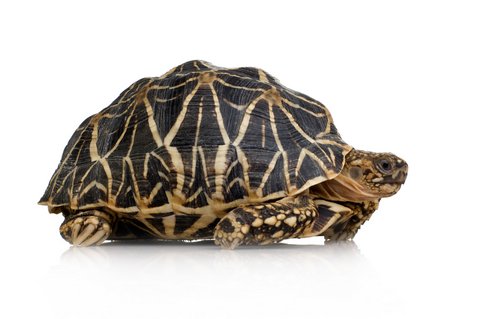
Star Tortoise for Sale

€599,99
The Star Tortoise (Geochelone elegans) is admired for its distinctive domed shell with beautiful yellow star-shaped markings against a dark background.
Native to the Indian subcontinent, this fascinating reptile requires a carefully maintained habitat, appropriate UVB lighting, suitable temperatures and a fibre-rich, plant-based diet.
Star Tortoises need specialised care and a long-term commitment.
Before considering one, verify all applicable wildlife-trade regulations and legal documentation, as the species is highly protected under CITES Appendix I.
Star Tortoise for Sale | Care, Habitat & Species Guide
Looking for a Star Tortoise for sale? The Indian Star Tortoise (Geochelone elegans) is one of the most visually distinctive tortoise species, admired for its beautifully patterned shell featuring radiating yellow lines against a dark background. Native to parts of the Indian subcontinent, this fascinating reptile is known for its unique appearance, terrestrial lifestyle and interesting natural behaviour.
The Star Tortoise is particularly recognisable by the star-shaped markings across its domed shell, which make it stand out among other tortoise species. Its relatively compact size compared with larger tortoises may appeal to reptile enthusiasts, but its specialised environmental requirements and protected status mean that careful research is essential before considering ownership.
If you are interested in a Star Tortoise, it is important to understand its dietary needs, enclosure requirements, temperature preferences and legal documentation requirements. Responsible ownership begins with ensuring that the animal has a lawful origin and that you can provide suitable care throughout its life.
Why Star Tortoises Are So Distinctive
Star Tortoises are admired for their striking shell patterns and unique appearance. Each animal may display differences in the shape, contrast and arrangement of its markings, making individual tortoises visually distinctive.
Some of their notable characteristics include:
- Star-patterned shell: Radiating yellow or cream markings contrast beautifully with the darker shell background.
- Compact compared with giant tortoises: Many Indian Star Tortoises remain considerably smaller than large species such as the Leopard or Sulcata Tortoise.
- Terrestrial lifestyle: They spend their time walking, foraging, resting and exploring their enclosure.
- Herbivorous diet: Their feeding requirements centre on suitable grasses, leafy plants and other fibrous vegetation.
- Long-term commitment: They can live for decades, so prospective keepers must plan for their long-term needs.
- Specialised care: They require carefully managed lighting, temperatures, hydration and habitat conditions.
Although their appearance is appealing, Star Tortoises are not low-maintenance pets. Their sensitivity to husbandry conditions makes preparation particularly important.
Star Tortoise Appearance and Characteristics
The Indian Star Tortoise is recognised by its high-domed carapace, the upper part of its shell, which features radiating yellow lines across darker shell plates. These markings create the characteristic star-like pattern that gives the species its common name.
Its sturdy legs and strong claws help it move across natural ground and investigate its surroundings. Colour intensity and shell pattern vary between individuals, and size can differ according to geographic origin, sex, genetics and age.
Star Tortoise facts:
- Scientific name: Geochelone elegans
- Common name: Indian Star Tortoise
- Origin: India, Pakistan and Sri Lanka
- Diet: Primarily herbivorous
- Typical adult shell length: Approximately 15–30 cm, with variation between populations
- Potential lifespan: Several decades, sometimes 50 years or longer
- Activity: Primarily active during daylight
- Habitat: Warm grasslands, scrubland, dry woodland and seasonally variable environments
These figures are general estimates. Individual size and lifespan depend on genetics, environmental conditions, nutrition and overall care.
Temperament and Behaviour
Star Tortoises are generally quiet, terrestrial reptiles that spend much of their active time foraging, exploring and resting in sheltered areas. They may gradually become accustomed to a regular feeding routine and the presence of their keeper.
However, they are not domesticated animals and usually do not enjoy frequent handling. Allowing them to move around naturally, retreat to hiding places and regulate their body temperature is important for their wellbeing.
Star Tortoises are often best housed individually unless there is a well-planned reason and suitable facilities for keeping compatible animals together. Competition, stress and aggression can occur when tortoises are kept in unsuitable groups.
Star Tortoise Habitat and Housing
A suitable enclosure is essential for supporting the health and natural behaviour of a Star Tortoise. These reptiles need adequate floor space, secure boundaries, appropriate lighting and a temperature gradient that allows them to move between warmer and cooler areas.
Indoor Enclosures
An appropriately designed tortoise table or spacious, well-ventilated enclosure can provide a controlled environment, particularly in climates where outdoor conditions are unsuitable.
The enclosure should include:
- A warm basking area.
- A cooler retreat where the tortoise can regulate its temperature.
- Secure hiding places at suitable points throughout the enclosure.
- A safe substrate that allows natural movement.
- Appropriate UVB lighting.
- A shallow water dish.
- Reliable thermometers and a hygrometer for monitoring environmental conditions.
Avoid cramped glass tanks and poorly ventilated setups. As the tortoise grows, its enclosure should be upgraded to provide sufficient room for natural activity.
Outdoor Housing
In suitable warm weather, a secure outdoor enclosure can offer access to natural sunlight, safe vegetation and additional opportunities for movement.
An outdoor habitat should provide sunny and shaded areas, sheltered resting places, protection from predators and secure boundaries. It must also protect the tortoise from excessive rain, cold temperatures and other unsuitable weather.
Outdoor access should only be provided when conditions are appropriate for the species. In cooler climates, a suitable indoor enclosure remains essential.
Temperature and Humidity Requirements
Star Tortoises depend on external heat sources to regulate their body temperature. Their enclosure should provide a warm basking spot and a cooler area where they can retreat.
A basking temperature of approximately 32°C and a cooler area around 25°C are useful starting points for an Indian Star Tortoise setup. Overnight temperatures should generally remain above 20°C, with appropriate heating and monitoring when necessary.
These are general guidelines, and the precise conditions should be adjusted according to the animal’s age, health and enclosure design.
Humidity should be monitored rather than managed by guesswork. Indian Star Tortoises generally require low-to-moderate ambient humidity, with suitable hydration and access to appropriately managed microclimates. Young tortoises may require more careful humidity management than adults.
Use a thermostat-controlled heat source, reliable thermometers and a hygrometer. Avoid both excessively dry conditions and persistently damp, poorly ventilated housing.
UVB Lighting and Calcium
Proper lighting is essential for indoor Star Tortoises. UVB exposure supports vitamin D3 production and calcium metabolism, helping maintain healthy bones and shell development.
Choose a reptile-specific UVB lighting system suitable for tortoises and follow the manufacturer’s instructions for installation distance, exposure and replacement. The enclosure should also provide shaded areas so the tortoise can move away from direct lighting when necessary.
Natural sunlight can be beneficial when provided safely. However, sunlight through ordinary window glass is not an adequate substitute for direct UVB exposure.
A balanced diet, suitable calcium supplementation and correct environmental conditions all contribute to healthy development.
Feeding Your Star Tortoise
Star Tortoises are primarily herbivorous. Their diet should focus on suitable grasses, edible weeds and leafy plants that provide fibre and appropriate nutrients.
Suitable food options may include:
- Dandelion leaves and flowers.
- Plantain leaves.
- Suitable pesticide-free grasses.
- Chicory and endive.
- Other safe, tortoise-friendly weeds and leafy plants.
Offer a variety of appropriate plants rather than relying on a single food source. Food must be free from pesticides, herbicides and other harmful contaminants.
Fruit should not form a regular part of the diet, and processed human foods, dairy products, meat and other unsuitable foods should be avoided.
Calcium is important for healthy shell and bone development. A suitable supplement may be necessary depending on the tortoise’s diet, age and UVB exposure. A reptile-experienced veterinarian can help establish an appropriate feeding and supplementation plan.
Provide fresh drinking water in a shallow, stable dish that the tortoise can enter and leave safely. Keep food and water containers clean and remove uneaten food regularly.
Lifespan and Long-Term Care
Star Tortoises can live for several decades, and some individuals may reach 50 years or more. They should therefore be considered a long-term responsibility rather than a short-term purchase.
Before acquiring one, consider the costs of suitable housing, lighting, heating, food, veterinary care and replacement equipment. You should also plan for holidays, changes in accommodation and who will care for the animal if your circumstances change.
Indian Star Tortoises should not be routinely subjected to hibernation or brumation. They need suitable warmth and stable environmental conditions throughout the year.
Health and General Wellbeing
A healthy Star Tortoise should be alert when active, move normally, show interest in suitable food and have a shell without obvious damage or abnormal softening.
Monitor its appetite, activity, hydration, shell development and general behaviour. Persistent refusal to eat, unusual lethargy, swollen eyes, nasal discharge, laboured breathing, abnormal shell changes or difficulty walking should be assessed by a qualified reptile veterinarian.
Good husbandry includes appropriate lighting, suitable temperatures, adequate hydration, balanced nutrition, a clean enclosure and regular observation.
Because tortoises can carry bacteria such as Salmonella, wash your hands after handling the animal or cleaning its enclosure, and supervise hygiene around children.
Buying a Star Tortoise Responsibly
If you are searching for a Star Tortoise for sale, legal sourcing and documentation must be a priority. Indian Star Tortoises are highly protected under international wildlife-trade regulations, and their commercial trade is subject to strict controls.
Before considering a purchase, verify:
- The animal’s exact species and origin.
- Whether its captive-bred status can be documented.
- The applicable CITES and national or regional legal requirements.
- Any required permits, certificates, identification or registration.
- Whether the seller is authorised to make the proposed sale or transfer.
In the European Union, Indian Star Tortoises are subject to particularly strict wildlife-trade rules. Do not assume that a seller’s statement that an animal is captive-bred, or an ordinary sales receipt, is sufficient proof of lawful trade. Confirm the requirements with the relevant CITES management authority before making a payment.
Responsible ownership means supporting conservation, avoiding animals of uncertain origin and ensuring that all legal requirements are satisfied.
Is a Star Tortoise Right for You?
A Star Tortoise may appeal to experienced reptile enthusiasts who appreciate its distinctive shell pattern and are prepared to maintain carefully controlled environmental conditions.
However, its specialised care needs, long lifespan and protected status make it a species that requires substantial preparation. Prospective keepers should establish a suitable habitat, identify a reptile-experienced veterinarian and verify all legal requirements before proceeding.
Choosing a tortoise responsibly and providing appropriate care are essential to supporting its long-term welfare.
Frequently Asked Questions
How big does a Star Tortoise get?
Indian Star Tortoises commonly reach approximately 15–30 cm in shell length, although adult size varies between populations and individuals.
How long does a Star Tortoise live?
They can live for several decades, with some individuals reaching 50 years or longer under suitable conditions.
What do Star Tortoises eat?
They primarily eat suitable grasses, leafy plants, edible weeds and other fibrous vegetation. Their diet should be varied and nutritionally appropriate.
Do Star Tortoises need UVB lighting?
Yes. Indoor Star Tortoises require appropriate UVB lighting to support vitamin D3 production and calcium metabolism.
What temperature does a Star Tortoise need?
A basking area around 32°C and a cooler area around 25°C are useful starting points. Temperatures must be monitored and adjusted to suit the individual animal and enclosure.
Are Star Tortoises suitable for beginners?
They are generally not recommended for novice tortoise keepers because they are sensitive to environmental conditions and require carefully managed husbandry.
Can Star Tortoises live outdoors?
They can benefit from secure outdoor access when temperatures and weather conditions are suitable. A properly equipped indoor enclosure is still necessary when outdoor conditions are unsuitable.
Do Star Tortoises hibernate?
No. Indian Star Tortoises should not be routinely hibernated or subjected to brumation.
Is it legal to buy a Star Tortoise?
Possession, sale and transfer requirements depend on the applicable laws and documentation. The species is highly protected under international wildlife-trade regulations, so verify the relevant requirements with the competent authority before any transaction.
What should I check before acquiring a Star Tortoise?
Confirm its species, origin, health history and documented captive-bred status where applicable. Verify the required legal documents and make sure you can provide appropriate housing, lighting, temperature management and veterinary care.
| Choose Size | cb Hatchling |
|---|---|
| Options | No Pref, Male, Female |
Be the first to review “Star Tortoise for Sale”
Related products
Tortoises for Sale
Tortoises for Sale
Tortoises for Sale
Tortoises for Sale
Tortoises for Sale
Tortoises for Sale
Tortoises for Sale
Tortoises for Sale
Reviews
There are no reviews yet.