

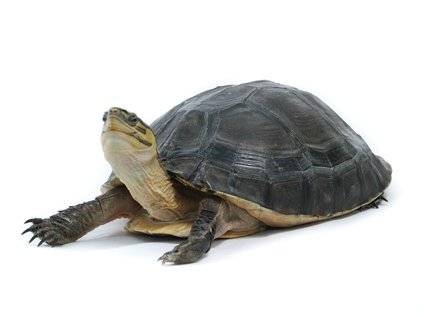
Indonesian Box Turtle for Sale


€119,99
The Indonesian Box Turtle (Cuora amboinensis), also known as the Southeast Asian Box Turtle, is a distinctive semi-aquatic turtle recognised for its dark, rounded shell, yellow head markings and hinged lower shell. It thrives in a well-maintained habitat with clean water, accessible land areas, suitable temperatures and hiding places.
Its varied omnivorous diet includes worms, insects, aquatic plants and fruits. Before purchasing, verify its legal origin and required wildlife-trade documentation, as this species is classified as Endangered and international trade is regulated.
Indonesian Box Turtle for Sale – Discover This Unique Semi-Aquatic Turtle
Looking for an Indonesian Box Turtle for Sale? The Indonesian Box Turtle (Cuora amboinensis), also known as the Southeast Asian Box Turtle or Amboina Box Turtle, is a distinctive Asian turtle admired for its dark, rounded shell, yellow-striped head and remarkable hinged lower shell. Its semi-aquatic lifestyle makes it different from fully terrestrial box turtles and many commonly kept tortoise species.
Native to a wide region of South and Southeast Asia, including Indonesia, Malaysia, Thailand and the Philippines, this species inhabits wetlands, swamps, ponds, rice fields, marshes and other shallow freshwater environments. It can move between water and land while searching for food, shelter and suitable resting areas.
The Indonesian Box Turtle is an omnivore that feeds on a variety of animal and plant matter. In captivity, it requires a carefully designed habitat with clean, shallow water, accessible land areas, suitable temperatures, hiding places and a varied diet.
If you are considering acquiring this species, understanding its environmental needs and conservation status is essential. This guide covers its characteristics, diet, habitat, care requirements and responsible sourcing considerations to help prospective keepers make an informed decision.
Why Is the Indonesian Box Turtle Unique?
The Indonesian Box Turtle stands out because of its semi-aquatic lifestyle, protective shell structure and distinctive facial markings. Its ability to use both land and water makes it an interesting species for keepers who can provide an appropriately designed habitat.
Key characteristics include:
- Distinctive shell: A rounded, relatively high-domed shell that is generally dark brown, olive-brown or blackish.
- Yellow head markings: Yellow stripes on the head and neck contrast with its darker colouration.
- Hinged lower shell: Its hinged plastron helps it close the shell openings and protect vulnerable parts of its body.
- Semi-aquatic behaviour: It spends considerable time in shallow freshwater but also moves onto land.
- Omnivorous feeding habits: Its natural diet includes aquatic and terrestrial plants, fruits, worms, molluscs, crustaceans and insects.
- Broad Asian distribution: Its natural range covers several countries and islands across South and Southeast Asia.
- Long-term care commitment: It can live for decades, requiring consistent husbandry throughout its life.
- Conservation importance: Wild populations have declined because of extensive collection for consumption and trade.
The species is particularly interesting to observe when it explores the water, forages along the shoreline or retreats into its shell when disturbed.
However, its distinctive appearance should not overshadow the importance of responsible sourcing and suitable long-term care.
Indonesian Box Turtle Characteristics
Understanding the species’ basic characteristics helps prospective owners prepare an appropriate enclosure and assess whether they can meet its needs.
- Common name: Indonesian Box Turtle
- Alternative names: Southeast Asian Box Turtle, Amboina Box Turtle
- Scientific name: Cuora amboinensis
- Family: Geoemydidae
- Natural distribution: South and Southeast Asia
- Countries within its range include Indonesia, Malaysia, Thailand, the Philippines, Vietnam, Myanmar, Bangladesh, India and other parts of the region
- Natural habitat: Wetlands, swamps, ponds, marshes, rice fields and other freshwater environments
- Shell appearance: Dark brown to olive-brown, with a rounded shape
- Head markings: Yellow stripes on a darker background
- Lifestyle: Semi-aquatic
- Diet: Omnivorous
- Adult size: Commonly smaller than 25 cm in shell length, although size varies
- Conservation status: Endangered in the IUCN Red List assessment published in 2020
- International trade: The genus Cuora is listed under CITES Appendix II
These are general characteristics of the species. The exact size, age, sex, health and origin of an individual turtle should be confirmed with the seller. Taxonomic research has also indicated that the currently recognised species may require further revision.
Indonesian Box Turtle for Sale: What to Know Before Buying
If you are searching for an Indonesian Box Turtle for Sale, research its environmental needs before making a purchase. Although it is commonly called a box turtle, its care requirements differ from those of many terrestrial North American box turtles.
This species needs access to both aquatic and terrestrial areas. A suitable enclosure should provide enough water for swimming and soaking, accessible land for resting and foraging, secure hiding places and appropriate temperature and humidity conditions.
Before purchasing, consider the following:
- Suitable enclosure: Prepare a secure habitat with both water and land areas.
- Water quality: Provide clean water and reliable filtration appropriate for the enclosure.
- Land access: Ensure the turtle can leave the water easily and rest on a stable surface.
- Temperature control: Maintain suitable environmental conditions using reliable monitoring equipment.
- Nutrition: Establish a varied diet appropriate for its age and condition.
- Veterinary support: Identify a veterinarian experienced in aquatic and semi-aquatic turtles.
- Legal sourcing: Request information and documentation establishing the animal’s origin.
- Long-term commitment: Consider the ongoing cost of food, equipment, maintenance and veterinary care.
Ask the seller for the turtle’s current shell length, feeding history, health information and origin. If it is advertised as captive-bred, request supporting evidence.
Do not assume that an online listing confirms current stock, captive-bred status, a live-arrival guarantee or delivery to your location. Verify these details directly with the seller before proceeding.
Baby Indonesian Box Turtles
Baby Indonesian Box Turtles are small, developing turtles that require careful environmental management. Their size can make them appealing to reptile enthusiasts, but young turtles can be particularly vulnerable to unsuitable temperatures, poor water quality, dehydration and inadequate nutrition.
A suitable hatchling enclosure should provide shallow water with easy access to the surface, safe land areas, hiding places and a stable environment. The turtle should be able to enter and leave the water without difficulty.
Before purchasing a hatchling, ask the seller about:
- Its age and current shell length.
- Its feeding routine and accepted foods.
- Its health history and any known concerns.
- Its breeding or collection origin.
- Whether its sex has been determined reliably.
- Available wildlife-trade documentation.
Prepare the enclosure before the turtle arrives. Monitor its feeding, swimming, basking and general activity while it settles into its new surroundings.
Avoid unnecessary handling during this period. If the hatchling stops eating, develops abnormal swimming behaviour or shows other persistent changes, review its conditions and seek veterinary advice.
Adult Indonesian Box Turtles
Adult Indonesian Box Turtles require sufficient space to move between aquatic and terrestrial areas. Their enclosure should accommodate normal swimming, foraging, resting and hiding behaviour.
An adult may need a different enclosure arrangement from a hatchling, particularly as its size and activity level increase. The available water depth must allow comfortable movement without making it difficult to reach the surface or exit onto land.
Before acquiring an adult, ask about:
- Current shell length and approximate age.
- Feeding history and accepted foods.
- Previous housing conditions.
- Health history and veterinary records, where available.
- Documented origin and legal status.
- Whether its sex is known or remains unconfirmed.
Prepare the habitat in advance and allow the turtle time to adjust. Avoid introducing it directly into an enclosure with other turtles without considering compatibility, quarantine and potential disease transmission.
Captive-Bred Indonesian Box Turtles for Sale
Captive-bred Indonesian Box Turtles may be available through specialist breeders and sellers. However, claims about breeding origin should be supported by reliable documentation.
The species has experienced substantial pressure from collection for food, traditional medicine and the pet trade. The IUCN assessment published in 2020 identifies the species as Endangered and reports a decreasing population trend.
Responsible sourcing is therefore an important consideration when evaluating a potential purchase.
If a seller advertises a turtle as captive-bred, ask for:
- Verifiable breeding-origin information.
- Available records relating to the breeding history.
- Documentation establishing the animal’s legal source.
- Feeding and health records.
- Details of its age and current size.
- Any permits or certificates required for the transaction.
Do not assume that a turtle is captive-bred simply because it is advertised that way. Nor should captive-bred status be treated as automatic exemption from wildlife-trade regulations.
Verify the rules applicable to the individual animal, seller and destination before completing a purchase.
Indonesian Box Turtle Availability and Pricing
Availability and pricing may vary according to the turtle’s age, size, origin, seller and other factors. Current stock and prices should be confirmed directly rather than inferred from a product listing.
Before comparing prices, establish whether the individual animal is available and whether the proposed transaction is lawful.
Important details to confirm include:
- Current stock status.
- Asking price and additional charges.
- Age and shell length.
- Whether the sex is known or unconfirmed.
- Captive-bred status and supporting records.
- Feeding and health history.
- Applicable wildlife-trade documentation.
- Transport arrangements and delivery charges.
- Written terms for any guarantee offered.
A higher price does not necessarily establish good health, captive-bred origin or legal sourcing. Photographs may also be representative rather than images of the exact turtle being supplied.
Confirm the seller’s actual terms before placing an order. Do not advertise a specific price, stock level or delivery promise unless it can be substantiated.
Indonesian Box Turtle Diet and Feeding
The Indonesian Box Turtle is an omnivore with a varied natural diet. Reported food sources include aquatic and terrestrial plants, fruits, molluscs, crustaceans, worms, insect larvae and fungi. Its feeding behaviour reflects its ability to forage in both water and on land.
In captivity, a varied and balanced diet is important. Feeding should be adapted to the turtle’s age, size, health and individual preferences.
Potential dietary components include:
- Commercial turtle food: A nutritionally balanced product suitable for semi-aquatic turtles.
- Earthworms and other worms: Suitable feeder worms from a reliable source.
- Insects: Appropriate feeder insects and other safe invertebrates.
- Molluscs and crustaceans: Suitable food items selected according to specialist guidance.
- Leafy vegetation: Safe leafy greens and suitable aquatic plants.
- Fruit: Small quantities of appropriate fruits as part of a varied diet.
- Other suitable foods: Additional items recommended by a reptile nutrition specialist.
Important feeding principles include:
- Offer a varied diet rather than relying on one food.
- Avoid feeding only meat, fish or fruit.
- Use feeder organisms from safe, reliable sources.
- Remove uneaten food promptly to maintain water quality.
- Provide access to clean water at all times.
- Discuss calcium and vitamin supplementation with a reptile-experienced veterinarian.
- Monitor appetite, weight and body condition.
The correct balance of foods may vary with age and health. Juveniles and adults may require different feeding schedules, so avoid applying one rigid routine to every turtle.
Indonesian Box Turtle Habitat and Enclosure Requirements
The Indonesian Box Turtle is associated with shallow freshwater environments, wetlands and areas with dense vegetation. Its enclosure should reflect its semi-aquatic lifestyle by providing accessible water, dry resting areas, shelter and appropriate environmental conditions.
An enclosure containing only deep water does not provide all the features this species needs. Equally, a completely dry terrestrial setup is unsuitable for a semi-aquatic turtle.
Indoor enclosure
Indoor housing allows keepers to monitor water quality, temperature and other environmental conditions more consistently.
A suitable enclosure should include:
- Enough space for swimming and moving around on land.
- A water area with safe entry and exit points.
- Stable land areas for resting and foraging.
- Suitable hiding places.
- Reliable water filtration.
- Appropriate heating and temperature monitoring.
- Suitable lighting and UVB provision.
- A secure enclosure design that prevents escapes.
- Regular cleaning and maintenance.
The enclosure should be planned around the turtle’s expected adult size. A setup suitable for a small hatchling may not remain appropriate as the animal grows.
Water depth and swimming space
The Indonesian Box Turtle uses aquatic environments for feeding, movement and resting. Provide enough water for comfortable swimming while ensuring that the turtle can reach the surface easily.
The appropriate water depth depends on the turtle’s size, swimming ability and condition. Juveniles and individuals with health or mobility concerns may need a more carefully managed arrangement.
Provide secure access to land and avoid structures that could trap the turtle underwater. The habitat should allow the animal to move freely between the water and its resting areas.
Water quality and filtration
Good water quality is essential for semi-aquatic turtle health. Turtles produce waste that can quickly affect their environment, so reliable filtration and regular maintenance are important.
Use a filter suited to the enclosure’s volume and biological load. Monitor water quality with appropriate testing equipment and perform partial water changes as needed.
Good maintenance practices include:
- Removing uneaten food and visible waste.
- Monitoring water quality regularly.
- Maintaining an established biological filtration system.
- Treating tap water appropriately before use.
- Cleaning the enclosure without unnecessarily disrupting beneficial filter bacteria.
- Avoiding overcrowding.
- Checking equipment for proper operation.
Clear water is not necessarily clean water. Regular testing and maintenance are more reliable than judging water quality by appearance alone.
Land areas and shelter
The enclosure should include stable areas where the turtle can leave the water, rest and explore.
Provide secure hiding places and sheltered areas that help the turtle feel safe. Land areas should be arranged so that the animal can enter and exit the water easily.
Choose materials that are safe, stable and easy to clean. Avoid steep, slippery ramps and structures that could collapse or trap the turtle.
Temperature and heating
Temperature influences activity, feeding and digestion. The enclosure should maintain suitable conditions for the species, with appropriate monitoring of both water and land areas.
Use reliable thermometers and consult a species-specific husbandry resource or reptile-experienced veterinarian for suitable temperature targets.
Avoid sudden temperature changes and prolonged exposure to unsuitable cold or excessive heat. Heating equipment should be installed securely and monitored to prevent burns or overheating.
Humidity and ventilation
The Indonesian Box Turtle benefits from access to moist environments, particularly in sheltered land areas. Humidity should be managed alongside temperature, ventilation and enclosure hygiene.
Use a hygrometer where appropriate and ensure that land areas do not remain persistently wet or poorly ventilated.
The aim is to provide a stable environment that supports normal behaviour without encouraging mould growth or unsanitary conditions.
Lighting and UVB
Appropriate lighting supports a consistent day–night cycle and forms part of a complete reptile husbandry plan.
For indoor housing, select reptile UVB lighting according to reliable species-specific guidance. Follow the manufacturer’s instructions regarding distance, installation and replacement.
Provide areas of shade and ensure the turtle can move away from direct light. UVB provision should be considered alongside diet, calcium nutrition and suitable temperatures.
Indonesian Box Turtle Temperament and Behaviour
Indonesian Box Turtles are semi-aquatic animals that move between water and land while feeding, resting and exploring.
Their behaviour can vary with temperature, environmental conditions, feeding routine and individual temperament. A turtle may retreat into its shell when disturbed, which is a natural defensive response.
Allow the animal to establish a comfortable routine and avoid unnecessary handling. Repeated disturbance can cause stress and interfere with normal feeding and resting behaviour.
Observe the turtle’s normal swimming, feeding and movement patterns. Persistent changes in appetite, unusual buoyancy, difficulty swimming or other concerning symptoms should prompt a review of the enclosure and veterinary advice.
How Big Does an Indonesian Box Turtle Get?
Indonesian Box Turtles commonly reach shell lengths below 25 cm, although larger individuals have been recorded. Adult size varies according to individual and population differences. <Cite refs={[“turn346531search0″,”turn346531search2”]}/>
When planning an enclosure, consider the possibility that the turtle will grow considerably beyond its juvenile size. It needs sufficient space for both swimming and movement on land.
Ask the seller for the current shell length and any reliable age information. Avoid treating an estimated size or age as a guarantee.
How Long Does an Indonesian Box Turtle Live?
The Indonesian Box Turtle can be a long-term commitment. Published species information reports that individuals may live for several decades, although lifespan varies with genetics, health, nutrition, environmental conditions and veterinary care.
Before purchasing, consider whether you can maintain suitable housing, filtration, heating, food and veterinary care over many years.
Rather than relying on an exact lifespan claim, focus on the individual turtle’s history and the quality of care you can provide throughout its life.
Indonesian Box Turtle Health and General Care
A suitable environment and balanced diet are central to maintaining good health. Poor water quality, unsuitable temperatures, inadequate nutrition and poor enclosure hygiene can contribute to health problems.
Regular care should include:
- Monitoring water quality and temperature.
- Maintaining appropriate filtration.
- Cleaning the enclosure and removing uneaten food.
- Providing a varied, suitable diet.
- Checking the shell, skin, eyes and limbs.
- Observing normal swimming and feeding behaviour.
- Providing access to appropriate land and water areas.
- Identifying a veterinarian experienced in semi-aquatic turtles.
Seek veterinary advice if the turtle develops persistent loss of appetite, swelling, shell abnormalities, unusual discharge, breathing difficulties, difficulty swimming or unexplained weight loss.
Do not attempt to treat suspected infections or shell conditions with unverified remedies. A qualified veterinarian can assess the cause and recommend appropriate treatment.
Indonesian Box Turtle Live-Arrival Guarantee
When purchasing a live turtle online, it is important to understand the seller’s transport arrangements and written guarantee policy before placing an order.
A live-arrival guarantee should only be advertised or relied upon when the seller explicitly offers it for the animal being purchased and provides the applicable terms.
Before ordering, confirm:
- Whether a live-arrival guarantee is available.
- The conditions required for coverage.
- The deadline for reporting a qualifying problem.
- What evidence is required for a claim.
- Any weather-related or transport exclusions.
- Whether the policy covers arrival only or includes additional provisions.
Do not assume that a guarantee advertised by one retailer applies to another seller. Request the actual policy and clarify any uncertainties before payment.
A live-arrival guarantee does not replace the buyer’s responsibility to prepare a suitable enclosure and provide appropriate care after arrival.
Indonesian Box Turtle Shipping and Delivery
Transporting a live turtle requires careful planning to protect its welfare. Delivery options depend on the seller, destination, transport method and applicable wildlife-trade requirements.
Before completing a purchase, confirm:
- Whether the seller can legally supply the turtle to your location.
- Which transport method will be used.
- Expected dispatch and delivery arrangements.
- Any additional shipping charges.
- Whether weather or transport conditions could cause delays.
- Which documents must accompany the animal.
- How to receive the turtle and transfer it safely into its prepared enclosure.
International transport may require permits, certificates or additional documentation. A seller’s willingness to ship an animal does not automatically mean that the transaction is lawful.
Confirm destination coverage and all relevant legal requirements before ordering. Do not assume international delivery is available unless the actual seller confirms it.
Conservation Status and Responsible Ownership
The Indonesian Box Turtle is classified as Endangered in the IUCN Red List assessment published in 2020. The assessment identifies a decreasing population trend and substantial historical pressure from collection for consumption and trade.
The genus Cuora, which includes Cuora amboinensis, is listed under CITES Appendix II. International trade is therefore regulated, and additional restrictions may apply depending on the source, destination and circumstances of the transaction.
Before purchasing an Indonesian Box Turtle:
- Request verifiable evidence of its legal origin.
- Ask for breeding records if it is advertised as captive-bred.
- Confirm the species identification.
- Verify applicable CITES documents and national permits.
- Check local rules governing possession, sale and transfer.
- Avoid animals whose origins cannot be established.
- Never release a captive turtle into the wild.
Captive-bred status does not automatically remove all legal requirements. Confirm the rules applicable to the individual animal and the proposed transaction.
Responsible sourcing is particularly important for a species that has experienced extensive collection from the wild.
Is the Indonesian Box Turtle Suitable as a Pet?
The Indonesian Box Turtle may appeal to keepers who enjoy observing semi-aquatic behaviour and can maintain a carefully designed freshwater habitat.
However, it is not a low-maintenance pet. It requires clean water, suitable land areas, appropriate temperatures, secure shelter and a varied diet. The long-term commitment and conservation considerations should also be taken seriously.
Before deciding whether to keep one, ask yourself:
- Can you provide a suitable enclosure with both water and land areas?
- Can you maintain water quality consistently?
- Can you provide appropriate heating, lighting and shelter?
- Do you understand its nutritional requirements?
- Is a reptile-experienced veterinarian accessible?
- Can you meet the ongoing costs of food, equipment and maintenance?
- Can you verify the turtle’s legal origin and required documentation?
If you are new to semi-aquatic turtle care, seek specialist advice before purchasing. The most important consideration is whether you can provide suitable long-term care rather than simply whether the turtle is available for sale.
Frequently Asked Questions About Indonesian Box Turtles
What is the scientific name of the Indonesian Box Turtle?
Its scientific name is Cuora amboinensis. It is also commonly known as the Southeast Asian Box Turtle or Amboina Box Turtle.
Why is it called a Box Turtle?
It has a hinged lower shell, known as the plastron, which helps it close the openings around its body when threatened.
How big does an Indonesian Box Turtle get?
It commonly remains below 25 cm in shell length, although larger individuals have been recorded.
Is the Indonesian Box Turtle aquatic or terrestrial?
It is semi-aquatic. It uses shallow freshwater environments but also moves onto land to forage and rest. Its enclosure should provide both water and terrestrial areas.
What does an Indonesian Box Turtle eat?
It is an omnivore. Its diet includes aquatic and terrestrial plants, fruits, worms, molluscs, crustaceans and insects. Captive feeding should provide appropriate variety and nutritional balance.
Does an Indonesian Box Turtle need a filter?
Reliable filtration is strongly recommended for maintaining water quality in its aquatic area. Regular water testing and maintenance remain necessary even when a filter is installed.
Does the Indonesian Box Turtle need UVB lighting?
Appropriate lighting, including suitable UVB provision for indoor housing, should be considered as part of a complete husbandry plan. Seek species-specific guidance and follow the equipment manufacturer’s instructions.
Is the Indonesian Box Turtle endangered?
The species is classified as Endangered in the IUCN Red List assessment published in 2020. Population pressures include extensive collection for consumption and trade.
Is the Indonesian Box Turtle protected by wildlife-trade regulations?
The genus Cuora is listed under CITES Appendix II. Additional rules may apply depending on the source, destination and circumstances of the transaction. Verify the current requirements before purchasing or transporting an animal.
How can I verify whether an Indonesian Box Turtle is captive-bred?
Ask the seller for verifiable breeding-origin information and supporting records. Also confirm the animal’s legal source and any documentation required for its sale or transfer.
Can an Indonesian Box Turtle be shipped internationally?
That depends on the seller, destination, transport arrangements and applicable legal requirements. Confirm delivery availability and the necessary documentation before placing an order.
What should I prepare before acquiring an Indonesian Box Turtle?
Prepare a secure enclosure with accessible water, land areas, suitable hiding places, reliable filtration, temperature monitoring and appropriate lighting. Establish a varied feeding plan and identify a veterinarian experienced in semi-aquatic turtles.
Indonesian Box Turtle for Sale: Make an Informed Decision
The Indonesian Box Turtle is a distinctive semi-aquatic Asian species recognised for its dark shell, yellow-striped head and hinged lower shell. Its ability to use both land and water makes it an interesting species, but its environmental requirements and conservation status deserve careful consideration.
If you are researching an Indonesian Box Turtle for Sale, take time to understand its habitat requirements, diet, adult size and long-term care needs before considering a purchase.
Confirm current availability, health information, legal origin and all required wildlife-trade documentation directly with the seller. If the animal is advertised as captive-bred or supplied with a live-arrival guarantee, request supporting evidence and written terms before proceeding.
Prioritise responsible sourcing, appropriate husbandry and the long-term welfare of this distinctive turtle.
| Choose Size | 2-3 inches |
|---|---|
| Options | No Pref, Male, Female |
Be the first to review “Indonesian Box Turtle for Sale”
Related products
Turtles for Sale
Turtles for Sale
Turtles for Sale
Turtles for Sale
Turtles for Sale
Turtles for Sale

Turtles for Sale

Turtles for Sale
Reviews
There are no reviews yet.