

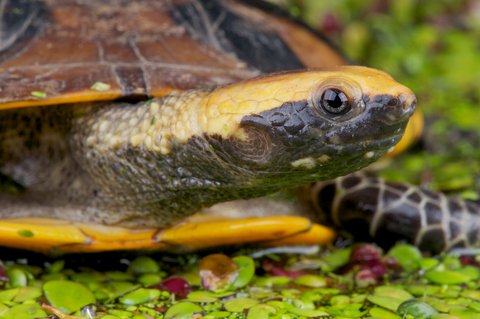
Twist Necked Turtle for Sale


€99,99
The Twist-necked Turtle (Platemys platycephala) is a fascinating South American turtle known for its flattened, ridged shell, orange-brown head and distinctive sideways neck movement.
Native to Amazonian rainforest habitats, it inhabits shallow pools, marshes and forest streams, where it forages for worms, insects and other small prey.
Reaching approximately 14.5–20 cm in shell length, this unusual species requires a carefully maintained habitat with shallow water, suitable humidity, hiding places and a varied diet.
Twist Necked Turtle for Sale – A Unique South American Freshwater Turtle
Looking for a Twist Necked Turtle for sale? The Twist-necked Turtle (Platemys platycephala), also known as the Flat-headed Turtle, is an unusual South American species admired for its remarkably flattened shell, orange-toned head and distinctive sideways neck movement. Its unusual appearance and fascinating behaviour make it a particularly interesting species for experienced turtle enthusiasts.
Unlike many freshwater turtles with rounded shells, the Twist-necked Turtle has a flattened, oval-shaped carapace featuring a deep central groove bordered by two raised ridges. This distinctive structure helps it blend into its natural surroundings, where it moves through shallow streams, marshes, damp forest floors and other humid environments.
The Twist-necked Turtle is relatively small compared with many commonly kept aquatic turtles, but its specialised habitat requirements mean it still needs careful husbandry. It prefers shallow water, secure resting areas, suitable humidity and a varied diet based on appropriate animal prey.
If you are considering purchasing a Twist-necked Turtle, learning about its appearance, adult size, natural habitat and care requirements will help you determine whether this unusual species is suitable for your experience and available facilities.
Why Choose a Twist-necked Turtle?
The Twist-necked Turtle stands out because of its distinctive anatomy and specialised lifestyle.
- Unique flattened shell: Its low-profile, oval shell features a central groove and two raised ridges.
- Distinctive orange-toned head: The head often displays orange or orange-brown colouring against darker skin.
- Sideways neck movement: Like other side-necked turtles, it folds its head sideways beneath the edge of its shell.
- Compact adult size: Adults generally reach around 14.5–20 cm in shell length.
- Interesting natural behaviour: It explores shallow water and damp terrestrial areas, often moving along the bottom rather than swimming continuously.
- Specialised feeding habits: Its diet includes suitable worms, insects, molluscs and other animal-based foods.
These characteristics make the species appealing to reptile enthusiasts interested in less commonly encountered South American turtles. However, its specialised environmental needs should be considered before making a purchase.
Twist-necked Turtle Appearance and Characteristics
The Twist-necked Turtle belongs to the family Chelidae and is scientifically known as Platemys platycephala. It is the only recognised living species within its genus.
Its most distinctive feature is its unusually flat, oval-shaped upper shell, known as the carapace. The shell is typically brown or dark olive, with a pronounced central groove and two raised longitudinal ridges. These features give the turtle a different appearance from the more rounded shells of many other freshwater species.
The lower shell, or plastron, is generally dark brown or black. Its head is relatively small and flattened, with orange or orange-brown pigmentation often visible on the upper surface. The neck has prominent pointed projections that contribute to the species’ distinctive appearance.
Its limbs are adapted for movement through shallow aquatic environments and across damp ground. Rather than relying on continuous swimming, the turtle frequently moves along the bottom of shallow water and through leaf litter.
When threatened, it retracts its head sideways beneath the shell’s edge. This defensive movement is characteristic of side-necked turtles and explains the species’ common name.
Natural Habitat and Distribution
The Twist-necked Turtle is native to northern and central parts of South America. Its distribution includes areas of the Amazon Basin and surrounding regions, with records from countries such as Brazil, Venezuela, Guyana, Suriname, French Guiana, Ecuador, Peru and Bolivia.
Its habitat includes shallow streams, marshes, forest pools, swampy areas and humid forest floors. It is particularly associated with environments where soft substrates, leaf litter and vegetation provide shelter and feeding opportunities.
Although it is considered an aquatic turtle, it does not behave like a strong, continuously swimming river turtle. It often prefers shallow water where it can move along the bottom and may venture onto damp land.
Its flattened shell and natural colouring help it remain inconspicuous among leaves, mud and submerged debris.
In captivity, these natural behaviours highlight the importance of providing both shallow aquatic areas and suitable humid terrestrial sections rather than treating the species as a conventional deep-water aquarium turtle.
Twist-necked Turtle Size and Lifespan
The Twist-necked Turtle is a relatively small species. Adults typically reach approximately 14.5–20 cm in carapace length, or around 5.7–7.9 inches.
Its compact size can make it easier to accommodate than much larger freshwater turtles, but a suitable enclosure must still provide enough room for normal movement, feeding and resting.
Growth varies according to genetics, age, sex, nutrition and environmental conditions. Juveniles require particularly careful attention to water quality, temperature and feeding.
Reliable information about the exact lifespan of this species in captivity is limited. Prospective owners should nevertheless be prepared for a long-term commitment involving ongoing habitat maintenance, appropriate nutrition and access to veterinary care.
Twist-necked Turtle Care Guide
The Twist-necked Turtle requires a carefully designed environment that reflects its preference for shallow water, humid surroundings and bottom-oriented movement.
Its care needs differ from those of turtles that spend most of their time swimming in deeper water. A balanced habitat should provide safe aquatic space, sheltered terrestrial areas and stable environmental conditions.
Enclosure and Housing Requirements
A spacious, secure enclosure is essential for the Twist-necked Turtle. The habitat should allow the animal to move naturally between shallow water and damp terrestrial areas.
A purpose-built enclosure with a shallow aquatic section and a humid land area can be particularly suitable when designed correctly.
Important enclosure features include:
- A shallow aquatic area with clean water.
- A secure, non-slip bottom.
- A humid terrestrial section with suitable substrate.
- Leaf litter and safe hiding places.
- Suitable plants or other secure cover.
- Stable environmental conditions.
- A reliable filtration system appropriate for the water volume.
- Secure barriers to prevent escapes.
Avoid sharp decorations, unstable rocks and narrow gaps that could trap the turtle. Any submerged structures should allow easy access to the water surface.
The enclosure should be planned around the turtle’s adult size and behaviour, rather than relying on a small temporary setup indefinitely.
Water Depth and Aquatic Conditions
Twist-necked Turtles are associated with shallow water and often prefer moving along the bottom rather than swimming continuously.
Water depth should allow the turtle to move naturally, feed and reach the surface without difficulty. Provide secure resting areas and avoid deep, open water that does not reflect the animal’s natural habits.
Water quality is particularly important. Use appropriate filtration, remove uneaten food and waste regularly, and perform partial water changes as necessary.
Monitor the water for signs of contamination and use suitable test kits when appropriate. Clean-looking water is not always an indication of good water quality.
Temperature and Humidity
The Twist-necked Turtle comes from warm, humid South American environments. Its enclosure should therefore provide stable temperatures and sufficient humidity without becoming excessively wet or poorly ventilated.
Exact temperature requirements should be confirmed with an experienced specialist familiar with Platemys platycephala. Avoid applying generic care recommendations for unrelated aquatic turtle species.
Use reliable thermometers and a hygrometer to monitor the enclosure. Provide suitable warmer and cooler areas where appropriate, along with shaded retreats.
Sudden temperature changes should be avoided. Heating equipment must be installed safely so that the turtle cannot injure itself or become trapped.
Substrate and Hiding Places
A suitable substrate helps create a naturalistic environment and provides places for the turtle to rest and shelter.
Reptile-safe soil, leaf litter and other suitable natural materials may be used in the terrestrial section where they can be kept clean and appropriately moist.
The aquatic area should have a safe bottom surface that does not create unnecessary injury or ingestion risks. Any substrate used underwater should be compatible with the filtration system and easy to maintain.
Provide shaded hiding places and secure cover throughout the enclosure. The turtle should be able to retreat from bright lighting and activity around its habitat.
Lighting and Basking
The Twist-necked Turtle is not typically described as a frequent basker like some popular aquatic turtle species. Its natural history suggests that it spends considerable time in shallow water and damp terrestrial environments.
However, lighting and UVB provision should be planned according to the species’ needs and the design of the enclosure. Do not assume that its requirements are identical to those of every other side-necked turtle.
Consult an experienced reptile veterinarian or specialist keeper when selecting UVB lighting, establishing a day-and-night cycle and deciding whether a dedicated basking area is appropriate.
The enclosure should always provide shaded retreats where the turtle can avoid excessive light and heat.
Feeding a Twist-necked Turtle
The Twist-necked Turtle is carnivorous in captivity, although its complete diet in the wild is not fully documented. Available observations and husbandry references indicate that it consumes suitable animal-based foods.
A varied diet may include:
- Earthworms and other suitable worms.
- Appropriate insects and insect larvae.
- Snails and other suitable molluscs.
- Small fish from safe, reliable sources.
- Other appropriate aquatic invertebrates.
- A nutritionally balanced commercial turtle food if suitable and accepted.
The amount and frequency of feeding should reflect the turtle’s age, body condition and activity level. Young turtles generally require more frequent feeding than adults.
Avoid feeding only one type of food. A varied diet helps provide a broader range of nutrients, while portion control helps maintain healthy body condition and reduces waste in the enclosure.
Food should come from uncontaminated sources. Avoid wild-caught prey from waters that may contain pollutants or parasites.
Calcium and vitamin supplementation should be considered as part of an appropriate nutritional plan, ideally with advice from a reptile veterinarian.
Remove uneaten food promptly to maintain good water quality.
Behaviour and Handling
Twist-necked Turtles are interesting to observe because of their unusual movements and ability to navigate shallow aquatic habitats.
Their behaviour can vary between individuals. Some may explore actively, while others may remain concealed for extended periods. Providing suitable cover helps the turtle feel secure.
Frequent handling is not recommended. Handling should be limited to necessary activities such as health checks, enclosure maintenance or veterinary examinations.
When handling is necessary, support the animal securely and avoid lifting it by the tail or limbs. Wash your hands after handling the turtle or cleaning its enclosure because reptiles can carry Salmonella bacteria.
Observe the turtle regularly for changes in appetite, breathing, activity, shell condition or movement. Persistent abnormalities should be assessed by a qualified reptile veterinarian.
Is the Twist-necked Turtle Suitable for Beginners?
The Twist-necked Turtle is generally more appropriate for keepers who already have experience maintaining specialist aquatic reptiles.
Its unusual habitat preferences, need for stable humidity, shallow-water requirements and specialised diet make it more demanding than many common pet turtle species.
A prospective owner should understand how to maintain clean water, monitor environmental conditions and provide an appropriate diet before purchasing one.
If you are new to turtle keeping, research the species thoroughly and seek advice from an experienced reptile professional before deciding whether you can meet its needs.
Buying a Twist-necked Turtle Responsibly
When searching for a Twist-necked Turtle for sale, choose a reputable seller who can provide reliable information about the animal’s identity, origin, health and feeding history.
Before purchasing, consider the following:
- Species identification: Confirm that the animal is Platemys platycephala.
- Captive-bred status: Ask whether it was bred in captivity and request supporting documentation.
- Legal origin: Ensure that the animal has been obtained lawfully.
- Health condition: Look for clear eyes, normal movement, regular breathing and a shell without obvious damage.
- Feeding history: Ask which foods it accepts and whether it is feeding consistently.
- Age and size: Request its approximate age and current shell length.
- Previous husbandry: Find out about its water depth, temperature, humidity, diet and enclosure.
- Transport arrangements: Confirm that transport is suitable for a live reptile and complies with applicable regulations.
Price, availability, sex and captive-bred status should be confirmed directly with the seller rather than assumed.
Legal and Conservation Considerations
The Twist-necked Turtle is native to South America, and animals entering the pet trade should have a documented, lawful origin.
Although it has historically been assessed as a species of relatively low conservation concern, this should not be interpreted as permission to collect wild turtles or ignore trade regulations. Local populations and habitat conditions can differ, and wildlife laws may change.
Before purchasing or importing a Twist-necked Turtle, check the requirements that apply in both the exporting and importing countries. Confirm whether permits, import documentation or other authorisations are required.
Captive-bred animals with reliable provenance are preferable where they are legally available. Never release a captive turtle into the wild, as it may introduce disease or create risks for local ecosystems.
Frequently Asked Questions
What is a Twist-necked Turtle?
The Twist-necked Turtle (Platemys platycephala), also known as the Flat-headed Turtle, is a small South American side-necked turtle recognised by its flattened shell, central groove and orange-toned head.
How big does a Twist-necked Turtle get?
Adults typically reach approximately 14.5–20 cm in shell length, although individual size varies.
What does a Twist-necked Turtle eat?
It is carnivorous in captivity and may consume suitable worms, insects, snails, small fish and other appropriate animal-based foods.
Does a Twist-necked Turtle need deep water?
No. It is associated with shallow aquatic environments and often moves along the bottom rather than swimming continuously. Water depth should be appropriate for the animal and allow easy access to the surface.
Can a Twist-necked Turtle live on land?
It is adapted to both shallow aquatic and damp terrestrial environments. A suitable enclosure should provide appropriate aquatic space as well as a secure, humid land section.
Is a Twist-necked Turtle a good pet?
It can be an interesting species for experienced keepers who can provide its specialised habitat and dietary requirements. It is not the best choice for someone seeking a low-maintenance turtle.
Can Twist-necked Turtles live together?
Cohabitation may lead to competition, stress or injury. Individual housing is a safer starting point unless an experienced specialist has assessed the suitability of a shared enclosure.
Is the Twist-necked Turtle available in Europe?
Availability and legality depend on the country, the animal’s origin and the seller’s arrangements. Verify current regulations and confirm that any animal offered for sale has a lawful, documented origin.
Find Your Twist-necked Turtle
The Twist-necked Turtle is a fascinating South American species with a distinctive flattened shell, unusual neck movements and specialised shallow-water lifestyle. Its compact adult size and remarkable appearance make it an interesting subject for dedicated turtle enthusiasts.
If you are looking for a Twist-necked Turtle for sale, research its requirements carefully, prepare a suitable enclosure and choose a reputable seller who can establish the animal’s identity and legal origin. Responsible ownership begins with appropriate husbandry, lawful sourcing and a long-term commitment to the turtle’s wellbeing.
| Choose | 4-5 inches |
|---|---|
| Options | No Pref, Male, Female |
Be the first to review “Twist Necked Turtle for Sale”
Related products
Turtles for Sale
Turtles for Sale
Turtles for Sale
Turtles for Sale

Turtles for Sale
Turtles for Sale
Turtles for Sale
Turtles for Sale
Reviews
There are no reviews yet.