

Blandings Turtle for Sale
€299,99
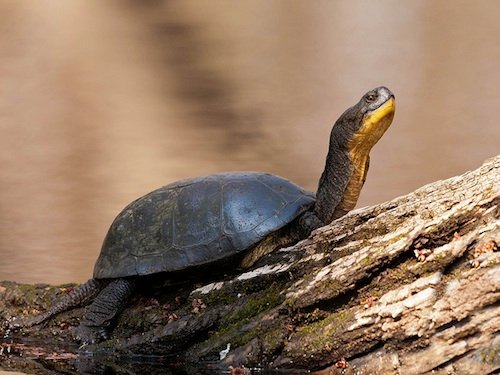
The Blanding’s Turtle (Emydoidea blandingii) is a distinctive semi-aquatic turtle recognised by its bright yellow chin and throat, dark domed shell and pale yellow markings.
Native to North America, it inhabits shallow wetlands, marshes and vegetated ponds. Its varied diet includes crayfish, insects, snails and small fish.
Due to its conservation concerns and legal protections in several regions, verify the turtle’s legal status and documented origin before considering any purchase.
Blanding’s Turtle for Sale – A Unique and Fascinating North American Turtle
The Blanding’s Turtle (Emydoidea blandingii) is a remarkable semi-aquatic freshwater turtle admired for its bright yellow chin, distinctive dark shell and fascinating natural behaviour. Native to parts of North America, this medium-sized species inhabits wetlands, marshes, ponds and shallow freshwater environments with abundant vegetation.
Sometimes recognised by its characteristic yellow throat and helmet-shaped shell, the Blanding’s Turtle has an appearance that distinguishes it from many other freshwater turtle species. Its dark brown or black shell is decorated with yellowish spots and streaks, while its yellow lower shell features contrasting dark markings.
For reptile enthusiasts, the Blanding’s Turtle is an interesting species to learn about because of its semi-aquatic lifestyle, varied diet and remarkable longevity. However, it is not an ordinary pet turtle.
Wild populations face significant conservation pressures, and the species is legally protected in several jurisdictions. Any potential acquisition must therefore be approached responsibly, with particular attention to legal restrictions and the animal’s documented origin.
Why Is the Blanding’s Turtle Special?
The Blanding’s Turtle has several distinctive characteristics that make it stand out among North American freshwater turtles.
- Bright yellow throat: Its vivid yellow chin and throat are its most recognisable features.
- Distinctive shell: The dark, moderately domed upper shell is often covered with yellow or pale tan flecks and streaks.
- Hinged lower shell: Its plastron has a partial hinge that provides some protection when the turtle withdraws its head and limbs.
- Semi-aquatic lifestyle: It spends much of its time in shallow water but also travels over land between wetlands and nesting areas.
- Interesting feeding behaviour: It commonly feeds underwater on aquatic invertebrates and other suitable prey.
- Remarkable longevity: Individuals can live for several decades, with some documented estimates reaching 70 years or more.
These features make the Blanding’s Turtle a fascinating subject for wildlife observation and conservation education. Its specialised environmental needs and protected status, however, must be considered before any captive-care arrangement is contemplated.
Blanding’s Turtle Appearance and Characteristics
The Blanding’s Turtle belongs to the family Emydidae and is scientifically known as Emydoidea blandingii. It is the only recognised living species in its genus.
Its upper shell, known as the carapace, is smooth, moderately domed and generally dark brown or black. Yellow, cream or light tan markings appear across the shell, although their intensity and distribution vary between individuals.
The head is relatively narrow, with a slightly upturned mouth and a conspicuous yellow chin and throat. These bright markings are particularly noticeable when the turtle extends its head above the water.
The lower shell, or plastron, is yellowish and usually features dark blotches along the edges of its individual sections. A partial hinge near the front provides some movement, allowing the turtle to close the front portion of its shell to a limited degree.
Its limbs are adapted for swimming and movement across wetland environments. Although predominantly aquatic, the Blanding’s Turtle is capable of travelling considerable distances on land when searching for suitable habitats or nesting sites.
Natural Habitat and Distribution
Blanding’s Turtles are native to parts of the United States and Canada. Their range includes areas around the Great Lakes, parts of the upper Midwest, sections of the north-eastern United States and southern Canada, although distribution is fragmented in several regions.
Their preferred habitats include:
- Shallow freshwater marshes.
- Vegetated ponds and wetlands.
- Swamps and bogs.
- Slow-moving streams and backwaters.
- Wet meadows and seasonal pools.
- Aquatic environments with soft substrates and abundant vegetation.
These habitats provide feeding opportunities, shelter and suitable places for basking. Nearby terrestrial environments are also important because females travel away from water to find suitable nesting sites.
Blanding’s Turtles may move between wetlands according to seasonal conditions and their biological needs. This movement makes connected habitats particularly important to their survival.
In captivity, their natural ecology highlights the importance of providing both aquatic and terrestrial areas, although any captive housing must comply with applicable wildlife regulations.
Blanding’s Turtle Size and Lifespan
Adult Blanding’s Turtles commonly reach approximately 15–24 cm in shell length, with some individuals growing larger. Size varies according to age, sex, genetics and environmental conditions.
Juveniles are considerably smaller, but they still require suitable environmental conditions and carefully managed nutrition. Their eventual adult size should always be considered when assessing the space and resources needed for long-term care.
The species is exceptionally long-lived. Some individuals may survive for 70 years or longer, making it a significant long-term responsibility wherever lawful captive care is permitted.
Blanding’s Turtles also mature slowly. Females may not begin reproducing until their teens or twenties, depending on the population and environmental conditions. This slow reproductive rate makes adult mortality particularly damaging to wild populations.
Blanding’s Turtle Diet and Feeding Behaviour
Blanding’s Turtles are predominantly carnivorous or strongly animal-food-oriented omnivores, depending on how their dietary habits are described. They commonly feed underwater, searching for prey among vegetation and soft substrates.
Their natural diet can include:
- Crayfish and other suitable crustaceans.
- Aquatic insects and larvae.
- Snails and other molluscs.
- Worms and other invertebrates.
- Small fish.
- Tadpoles and other suitable aquatic prey.
- Limited plant material.
Diet varies with age, season, food availability and local habitat conditions.
For any legally authorised captive-care setting, food should be nutritionally appropriate and sourced safely. A balanced feeding plan should take the turtle’s age, body condition and individual needs into account. Uneaten food should be removed promptly to help maintain water quality.
Wild-caught prey from potentially contaminated water should be avoided because it may carry parasites or pollutants.
Blanding’s Turtle Habitat and Care Considerations
Blanding’s Turtles have specialised environmental requirements. Their natural history provides useful guidance for understanding the conditions they need, but this information should not be taken as permission to acquire or keep a protected animal without the necessary authorisation.
Aquatic Environment
The species spends much of its time in shallow freshwater habitats with abundant vegetation. Its aquatic environment should provide suitable water quality, resting areas and opportunities for natural movement.
In an authorised conservation or specialist husbandry setting, important considerations include:
- Adequate aquatic space for swimming.
- Clean water and effective filtration.
- Suitable water depth and safe access to the surface.
- Aquatic vegetation and sheltered areas.
- Stable environmental conditions.
- Regular water-quality monitoring.
The enclosure should be designed around the animal’s size, behaviour and health rather than a single universal tank dimension.
Land and Basking Areas
Although Blanding’s Turtles are primarily aquatic, they also use terrestrial environments. Females travel over land to nest, and individuals may move between wetlands during the active season.
A suitable managed habitat should therefore provide secure access to land, resting places and basking opportunities. Any terrestrial area should be designed to prevent escape and protect the animal from injury.
Temperature and Lighting
Temperature and lighting should reflect the species’ needs and the requirements of the particular enclosure. As a North American turtle, the Blanding’s Turtle experiences seasonal changes in its natural range.
Heating, lighting and any seasonal temperature management should be planned by experienced professionals. Unsupervised attempts to induce brumation or reproduce natural seasonal conditions can place an animal at risk.
UVB provision and basking arrangements should be selected according to appropriate specialist guidance and the enclosure’s design.
Water Quality and Hygiene
Clean water is important for the turtle’s health. Filtration, routine water changes and removal of waste help maintain a suitable aquatic environment.
Water-quality requirements depend on the enclosure, filtration system, stocking conditions and feeding routine. Monitoring should be regular rather than relying on the appearance of the water alone.
Is the Blanding’s Turtle Suitable for Beginners?
The Blanding’s Turtle is not an appropriate impulse purchase. Its long lifespan, specialised semi-aquatic requirements and conservation status make it unsuitable for people who have not researched the species thoroughly.
Even experienced reptile keepers must consider the legal restrictions that apply to the species. In some jurisdictions, private possession, purchase, sale, collection or transport is prohibited or requires specific authorisation.
For most people interested in this turtle, observing it through reputable wildlife centres, conservation programmes and educational resources is a more appropriate way to appreciate the species.
Buying a Blanding’s Turtle Responsibly
If you encounter a Blanding’s Turtle advertised for sale, verify its legal status before making any payment or arranging transport. Do not assume that an online listing means the animal can lawfully be purchased or imported into your country.
Important checks include:
- Legal authorisation: Confirm whether possession, sale, purchase and transport are permitted in the relevant jurisdictions.
- Documented origin: Request reliable records showing where the animal originated and how it entered the trade.
- Captive-bred status: Seek verifiable information about captive breeding where it is legally permitted.
- Species identification: Confirm that the animal is genuinely Emydoidea blandingii.
- Required permits: Check whether wildlife-trade documents, import permits or other authorisations are required.
- Health information: Where lawful acquisition is possible, obtain the animal’s veterinary and husbandry history.
- Long-term provision: Ensure that appropriate specialist facilities and veterinary support are available.
Never collect a Blanding’s Turtle from the wild or purchase an animal whose origin cannot be established. If the legality of an advertised animal is unclear, contact the relevant wildlife authority before proceeding.
Conservation and Legal Status
Blanding’s Turtles face a range of threats, including wetland loss, habitat fragmentation, road mortality, nest predation and illegal collection.
Their slow maturation and long lifespan mean that the loss of breeding adults can have lasting effects on wild populations. Conservation programmes therefore focus on habitat protection, population monitoring, nest protection and other recovery measures.
The species is protected under different laws in parts of its range. For example, Ontario lists the Blanding’s Turtle as threatened and provides legal protection under its Endangered Species Act. Other jurisdictions apply their own restrictions, and international trade may be subject to additional controls.
The legal position can differ between countries and regions. Before any purchase, sale, possession or import, confirm the current requirements with the relevant wildlife authorities.
Supporting legitimate conservation programmes and protecting wetland habitats are important ways to help safeguard the species.
Frequently Asked Questions
What is a Blanding’s Turtle?
The Blanding’s Turtle (Emydoidea blandingii) is a medium-sized, semi-aquatic freshwater turtle native to parts of North America. It is recognised by its bright yellow chin and throat and dark, lightly marked shell.
How big does a Blanding’s Turtle get?
Adults commonly reach around 15–24 cm in shell length, although some individuals grow larger.
What does a Blanding’s Turtle eat?
Its diet includes crayfish, aquatic insects, snails, worms, small fish, tadpoles and other suitable aquatic prey, with some plant material.
How long does a Blanding’s Turtle live?
It can live for several decades. Some individuals may reach 70 years or more, making it a long-lived species.
Is the Blanding’s Turtle aquatic?
It is semi-aquatic and spends much of its time in shallow wetlands. It also travels over land between habitats and to suitable nesting sites.
Is the Blanding’s Turtle endangered?
Its conservation status varies according to the assessment system and jurisdiction. It is considered threatened or endangered in several regions, and wild populations face significant conservation pressures.
Can you legally buy a Blanding’s Turtle?
The answer depends on your location, the animal’s origin and the applicable wildlife laws. Some jurisdictions prohibit or tightly restrict possession and trade. Check the relevant regulations before considering any purchase or transfer.
Can the Blanding’s Turtle be kept as a pet?
Its specialised needs and protected status make it unsuitable for casual ownership. Private keeping may be restricted or prohibited in some areas, even where other turtle species can legally be kept.
Learn More About the Blanding’s Turtle
The Blanding’s Turtle is a remarkable freshwater species distinguished by its bright yellow throat, patterned shell and semi-aquatic lifestyle. Its long lifespan and slow reproductive development make the protection of wild populations especially important.
Anyone researching a Blanding’s Turtle for sale should prioritise lawful provenance, conservation considerations and specialist care requirements. Before acquiring or transporting one, verify the applicable regulations and ensure that the animal can be legally kept and properly cared for.
| Choose | cb Hatchling |
|---|---|
| Options | No Pref, Male, Female |
Be the first to review “Blandings Turtle for Sale”
Related products
Turtles for Sale
Turtles for Sale
Turtles for Sale
Turtles for Sale
Turtles for Sale
Turtles for Sale
Turtles for Sale
Turtles for Sale
Reviews
There are no reviews yet.