

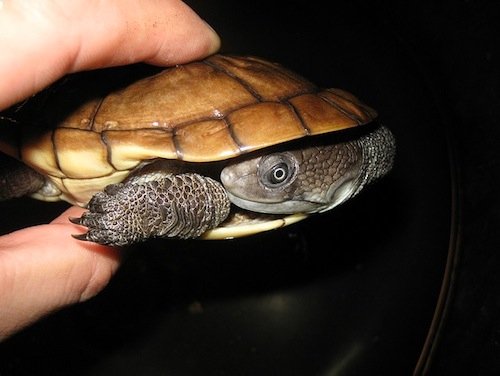
Reimanns Snakeneck Turtle for Sale

€799,99
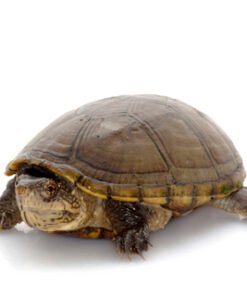
Reimann’s Snake-necked Turtle (Chelodina reimanni) is a distinctive freshwater turtle native to New Guinea, recognised by its elongated neck, broad head and oval, olive-brown to chestnut shell.
It inhabits warm, shallow freshwater pools and marshes, feeding primarily on molluscs, crayfish and insects.
Reaching approximately 21–22 cm in shell length, this unusual species requires warm, clean water, effective filtration, suitable hiding places and a balanced carnivorous diet.
It is best suited to experienced turtle keepers prepared to meet its specialised care requirements.
Reimanns Snakeneck Turtle for Sale – A Unique and Fascinating Freshwater Turtle
Looking for a Reimanns Snakeneck Turtle for sale? Reimann’s Snake-necked Turtle (Chelodina reimanni) is an unusual freshwater turtle admired for its elongated neck, broad head, distinctive shell and fascinating aquatic behaviour. Native to New Guinea, this species is an interesting choice for experienced reptile enthusiasts who appreciate less commonly kept turtles.
Sometimes written as Reimann’s Snake-necked Turtle, this species belongs to the family Chelidae. Its most recognisable feature is its long, flexible neck, which it folds sideways beneath the edge of its shell when necessary. Its oval, olive-brown to chestnut-coloured carapace and broad head give it a distinctive appearance compared with many other freshwater turtles.
Reimann’s Snake-necked Turtles inhabit freshwater swamps, marshes and shallow pools in warm tropical environments. Their natural behaviour and specialised feeding habits make them fascinating to observe, but they also require carefully managed aquatic conditions, suitable temperatures, clean water and an appropriate diet.
Before purchasing a Reimanns Snakeneck Turtle, it is important to understand its adult size, habitat requirements, feeding habits and long-term care needs. Responsible ownership begins with choosing a legally sourced animal and preparing an appropriate enclosure.
Why Choose a Reimanns Snakeneck Turtle?
Reimann’s Snake-necked Turtle stands out because of its unusual anatomy and specialised aquatic lifestyle.
- Distinctive elongated neck: Its long neck allows it to reach towards prey and fold its head sideways beneath the shell.
- Broad head: Its relatively broad head distinguishes it from several other snake-necked turtle species.
- Natural earthy colours: Its oval shell typically displays olive, brown or chestnut tones that blend into muddy freshwater habitats.
- Interesting aquatic behaviour: It spends much of its time in shallow water, resting, exploring and searching for food.
- Manageable adult size compared with larger turtles: Adults generally reach approximately 21–22 cm in shell length, although size varies.
- Specialised feeding behaviour: Its natural diet includes molluscs, crayfish and aquatic insects.
This species can be particularly rewarding for experienced turtle keepers interested in the diversity of freshwater reptiles. However, its specialist requirements mean that it should not be treated as a low-maintenance pet.
Reimanns Snakeneck Turtle Appearance and Characteristics
Reimann’s Snake-necked Turtle has the scientific name Chelodina reimanni and belongs to the family Chelidae, which includes numerous side-necked turtles from Australia, New Guinea and South America.
Its upper shell, known as the carapace, is oval, relatively flattened and usually olive to chestnut brown. The shell surface may appear rough or textured, and its shape is broadest towards the rear of the central section.
The lower shell, or plastron, is relatively large and covers much of the underside. Its head is broad, and its long neck is one of its most prominent physical characteristics.
Like other side-necked turtles, Reimann’s Snake-necked Turtle does not withdraw its head directly backwards into its shell. Instead, it bends its neck sideways beneath the shell’s edge. This adaptation gives the species its characteristic appearance and movement.
Its limbs are adapted for aquatic movement, helping it navigate freshwater habitats. Although its long neck may initially appear unusual, it is a natural feature of the species rather than an indication of a health problem.
Colouration and proportions can vary between individuals. When buying one, confirm the scientific identification with the seller rather than relying on its common name alone.
Natural Habitat and Distribution
Reimann’s Snake-necked Turtle is native to southern New Guinea, particularly the Indonesian region of Papua, with records extending into southern Papua New Guinea.
Its natural habitats include freshwater swamps, marshes and shallow pools. These environments offer warm water, soft substrates and suitable places to forage for aquatic prey.
The species is adapted to warm tropical conditions. Observations of its natural habitat indicate that water temperatures can remain above 30°C for extended periods. Seasonal drying may also influence its behaviour, with reports describing periods of reduced activity in mud during drier conditions.
These natural adaptations are important when planning captive care. A suitable enclosure should provide stable warmth, clean water, safe resting areas and appropriate environmental conditions.
Reproducing natural seasonal changes without specialist knowledge is not recommended. Any attempt to alter temperatures or induce a period of inactivity should be based on reliable species-specific advice.
Reimanns Snakeneck Turtle Size and Lifespan
Reimann’s Snake-necked Turtle is a medium-sized freshwater turtle. Recent specialist references report maximum straight carapace lengths of approximately 21 cm for males and 22 cm for females.
Older sources have reported larger possible sizes, so individual measurements and reliable identification are important when assessing an animal’s expected adult size.
A juvenile may appear small when first purchased, but its enclosure should be planned around its expected adult dimensions. Adequate swimming space and appropriate water quality remain important throughout its development.
A precise captive lifespan is not consistently established in the available species-specific references. Prospective owners should nevertheless prepare for a long-term commitment involving regular feeding, water-quality management and access to veterinary care.
Reimanns Snakeneck Turtle Care Guide
Reimann’s Snake-necked Turtle requires a carefully managed aquatic environment. Its tropical habitat, specialised feeding behaviour and preference for swampy freshwater conditions should guide the enclosure design.
The following care considerations provide a starting point, but exact parameters should be confirmed with a reptile veterinarian or an experienced keeper familiar with Chelodina reimanni.
Aquarium and Enclosure Requirements
A spacious aquatic enclosure is essential for Reimann’s Snake-necked Turtle. The habitat should allow it to move naturally, explore the bottom, reach the surface to breathe and access sheltered resting areas.
A purpose-built aquarium or aquatic enclosure can be suitable when it provides sufficient water volume and safe environmental conditions.
Important enclosure features include:
- Adequate aquatic space for movement and swimming.
- A secure base capable of supporting the filled enclosure.
- A safe bottom surface or suitable substrate.
- Secure submerged resting places and hiding areas.
- Reliable filtration appropriate for the water volume.
- Protected heating equipment where necessary.
- Suitable lighting and a consistent day-and-night cycle.
- A secure enclosure cover to prevent escapes.
The enclosure should be designed around the turtle’s adult size rather than its juvenile dimensions. Avoid sharp decorations, unstable structures and narrow spaces that could trap the animal underwater.
Water Temperature and Heating
Reimann’s Snake-necked Turtle comes from warm tropical freshwater environments and requires appropriately warm, stable conditions.
A water temperature in the region of 26–30°C can be considered an initial reference for a tropical setup, but the appropriate target should be confirmed using species-specific husbandry guidance. Field observations have recorded considerably warmer water in some natural habitats, which should not automatically be treated as a universal captive temperature requirement.
Use reliable thermometers to monitor the water and avoid sudden fluctuations.
If a heater is required, choose equipment suitable for the enclosure and protect it against damage from the turtle’s movements. Ensure that the water does not overheat and that the animal has suitable resting areas.
Water Quality and Filtration
Clean water is essential for the turtle’s wellbeing. Uneaten food and waste can quickly affect water quality, particularly in a relatively small enclosure.
A suitable filtration system should be selected according to the aquarium’s volume and biological load. External filters or other appropriately sized systems may be useful, provided that they maintain suitable water conditions.
Good water management includes:
- Removing uneaten food promptly.
- Monitoring water quality with suitable test kits.
- Performing regular partial water changes.
- Cleaning filter components according to the manufacturer’s instructions.
- Checking that water temperature remains stable.
- Ensuring that filtration does not create excessively strong currents.
Filtration does not eliminate the need for water changes and regular maintenance. A consistent cleaning routine helps reduce the risk of health problems associated with poor water conditions.
Substrate and Resting Areas
Reimann’s Snake-necked Turtle inhabits soft-bottomed freshwater environments, making secure resting places and suitable substrate important considerations.
A carefully selected, turtle-safe substrate may be used where it is compatible with the enclosure and filtration system. It should not create unnecessary ingestion risks or make waste removal excessively difficult.
Provide secure underwater structures where the turtle can rest without constantly swimming. These structures must be stable and should not create gaps in which the animal could become trapped.
Any arrangement should allow easy access to the water surface. Safety and the ability to breathe comfortably should take priority over decorative features.
Lighting and Basking
Lighting should be planned according to the turtle’s needs and the design of the enclosure. Do not assume that all snake-necked turtle species have identical requirements.
Provide a consistent day-and-night cycle and appropriate shaded retreats. UVB lighting should be considered as part of a properly planned captive environment, with the equipment, distance and exposure selected using reliable specialist guidance.
The enclosure should not be exposed to uncontrolled direct sunlight that could cause excessive heating.
If a dry resting area is included, it should be secure and accessible. The need for a particular basking arrangement should be confirmed with an experienced keeper familiar with this species.
Feeding a Reimanns Snakeneck Turtle
Reimann’s Snake-necked Turtle is primarily carnivorous. Specialist species accounts describe a diet that includes molluscs, crayfish and insects. Unlike some other aquatic turtles, it is not reported to routinely eat fish in the cited natural-history account.
A suitable feeding plan may include:
- Appropriate snails and other safe molluscs.
- Suitable crayfish and other crustaceans.
- Earthworms and appropriate worms.
- Aquatic insects and insect larvae.
- Other nutritionally appropriate invertebrates.
- A balanced commercial aquatic turtle food if suitable and accepted.
The diet should be varied rather than relying exclusively on a single food item. Food size, portion size and feeding frequency should be adjusted according to the turtle’s age, body condition and activity level.
Juveniles generally need more frequent feeding than adults. Avoid excessive feeding, which can affect body condition and contribute to deteriorating water quality.
All feeder animals should come from safe, uncontaminated sources. Avoid prey collected from waters that may contain pollutants or parasites.
Calcium and vitamin supplementation should be considered in the context of the overall diet. An experienced reptile veterinarian can help establish an appropriate nutritional plan.
Remove uneaten food promptly to keep the enclosure clean.
Behaviour and Handling
Reimann’s Snake-necked Turtle is best appreciated through observation. Its elongated neck, aquatic movement and specialised feeding behaviour are among its most interesting characteristics.
Individual temperaments vary, and a newly introduced turtle may need time to settle into its surroundings. Provide adequate cover and avoid unnecessary disturbance.
Frequent handling is not recommended. When handling is necessary for cleaning or health checks, support the animal securely and avoid lifting it by the tail or limbs.
Wash your hands after handling the turtle or cleaning its enclosure because reptiles can carry Salmonella bacteria even when they appear healthy.
Monitor the turtle for changes in appetite, breathing, swimming, movement and shell condition. Persistent abnormalities should be assessed by a qualified reptile veterinarian.
Is the Reimanns Snakeneck Turtle Suitable for Beginners?
Reimann’s Snake-necked Turtle is generally better suited to experienced reptile keepers who understand the demands of maintaining a tropical aquatic environment.
Its need for warm, clean water, suitable filtration, appropriate nutrition and secure resting areas requires consistent attention. Its specialised feeding habits may also require more preparation than the care of common pet turtle species.
Before purchasing one, ensure that you have sufficient space for an adult enclosure and the resources to maintain it over the long term.
If you are new to keeping turtles, seek advice from an experienced aquatic reptile specialist before deciding whether this species is appropriate for you.
Buying a Reimanns Snakeneck Turtle Responsibly
When searching for a Reimanns Snakeneck Turtle for sale, choose a reputable seller who can provide accurate information about the animal’s identity, origin, health and feeding history.
Before purchasing, consider the following:
- Species identification: Confirm that the turtle is Chelodina reimanni.
- Captive-bred status: Ask whether it was bred in captivity and request supporting documentation.
- Legal origin: Ensure that the animal has been obtained lawfully and that required paperwork is available.
- Health condition: Look for normal breathing, alert behaviour, clear eyes and a shell without obvious damage.
- Feeding history: Ask which foods it accepts and whether it is feeding consistently.
- Age and size: Request its approximate age and current shell length.
- Previous husbandry: Find out about water temperature, filtration, lighting, diet and enclosure conditions.
- Transport arrangements: Confirm that shipping is suitable for a live aquatic turtle and complies with applicable regulations.
Availability, price, sex and captive-bred status should be confirmed directly with the seller rather than assumed.
Conservation and Legal Considerations
Reimann’s Snake-necked Turtle has a relatively restricted natural distribution in New Guinea. Its conservation assessments have varied between sources and assessment periods, so current status should be checked against reliable specialist references.
Responsible ownership should prioritise legally sourced animals with documented origins. Do not collect wild turtles or purchase animals whose provenance cannot be established.
Before purchasing or importing a Reimanns Snakeneck Turtle, check the requirements that apply in both the exporting and importing countries. Depending on the jurisdiction, wildlife-trade documentation or import authorisation may be required.
Never release a captive turtle into the wild. If you cannot confirm whether an animal can legally be kept or imported, consult the relevant wildlife authorities before proceeding.
Frequently Asked Questions
What is a Reimanns Snakeneck Turtle?
Reimann’s Snake-necked Turtle (Chelodina reimanni) is a freshwater turtle native to southern New Guinea. It belongs to the side-necked turtle family and is known for its elongated neck and broad head.
How big does a Reimanns Snakeneck Turtle get?
Recent specialist references report adult straight carapace lengths of approximately 21–22 cm, although individual size and older published estimates vary.
What does a Reimanns Snakeneck Turtle eat?
Its natural diet includes molluscs, crayfish and insects. Captive feeding should provide a varied selection of suitable animal-based foods and an appropriate nutritional balance.
Does a Reimanns Snakeneck Turtle need warm water?
Yes. It is associated with warm tropical freshwater environments. Water temperature should be monitored consistently and maintained according to reliable species-specific husbandry guidance.
Does a Reimanns Snakeneck Turtle eat fish?
The cited natural-history account reports that this species does not eat fish and instead feeds on molluscs, crayfish and insects. A suitable captive diet should reflect reliable information about the species rather than assuming that all aquatic turtles eat the same foods.
Is a Reimanns Snakeneck Turtle fully aquatic?
It is predominantly aquatic and inhabits freshwater swamps, marshes and shallow pools. Its enclosure should provide sufficient water, suitable resting places and safe access to the surface.
Is a Reimanns Snakeneck Turtle suitable for beginners?
It is generally more suitable for experienced keepers because it requires carefully managed tropical water conditions, reliable filtration and an appropriate diet.
How long does a Reimanns Snakeneck Turtle live?
A precise captive lifespan is not consistently established in the available species-specific sources. Prospective owners should nevertheless be prepared for a long-term commitment and ongoing specialist care.
Can Reimanns Snakeneck Turtles live together?
Cohabitation may create competition, stress or injury. Individual housing is a safer starting point unless an experienced specialist has assessed the suitability of a shared enclosure.
Can I buy a Reimanns Snakeneck Turtle in Europe?
Availability and legality depend on the country, the animal’s origin and the seller’s arrangements. Check current wildlife regulations and verify the animal’s legal provenance before purchasing or importing one.
Find Your Reimanns Snakeneck Turtle
Reimann’s Snake-necked Turtle is a fascinating freshwater species distinguished by its elongated neck, broad head and olive-brown to chestnut shell. Its specialised aquatic lifestyle and unusual feeding behaviour make it an interesting choice for dedicated turtle enthusiasts.
If you are looking for a Reimanns Snakeneck Turtle for sale, research its care requirements, prepare a suitable aquatic enclosure and choose a reputable seller who can establish the animal’s identity and legal origin. Responsible ownership begins with suitable husbandry, lawful sourcing and a long-term commitment to the turtle’s wellbeing.
| Choose | Adult Pair |
|---|---|
| Options | No Pref, Male, Female |
Be the first to review “Reimanns Snakeneck Turtle for Sale”
Related products
Turtles for Sale
Turtles for Sale
Turtles for Sale
Turtles for Sale
Turtles for Sale
Turtles for Sale
Turtles for Sale
Turtles for Sale
Reviews
There are no reviews yet.