

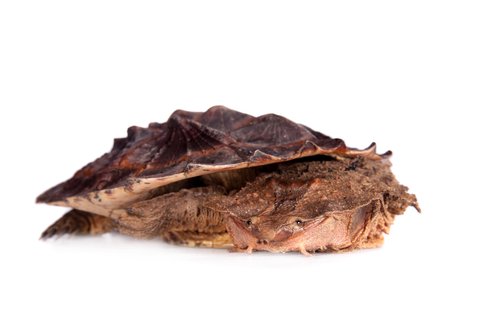
Mata Mata Turtle for Sale
€474,99
The Mata Mata Turtle (Chelus fimbriatus) is an extraordinary freshwater turtle known for its flattened, leaf-like head, rough shell and remarkable camouflage.
Native to South America, this specialised aquatic predator feeds mainly on fish and requires a spacious enclosure with warm, carefully maintained water and suitable filtration.
Its unusual appearance and fascinating suction-feeding behaviour make it an intriguing choice for experienced reptile keepers.
Learn about its habitat, diet and specialised care requirements before purchasing.
Mata Mata Turtle for Sale – A Remarkable and Unusual Freshwater Turtle
Looking for a Mata Mata Turtle for sale? The Mata Mata Turtle (Chelus fimbriatus) is one of the most unusual freshwater turtles in the world, recognised for its flattened, leaf-like head, rough skin, spiky shell and remarkable camouflage.
Native to South America’s Amazon Basin, this fascinating aquatic reptile resembles a piece of submerged bark or fallen vegetation, allowing it to blend into its natural surroundings.
Unlike conventional pet turtles, the Mata Mata is a specialised aquatic predator that spends much of its time resting on the bottom of shallow, slow-moving water.
It uses its distinctive head and wide mouth to capture prey with a rapid suction-feeding action. Its unusual appearance and fascinating hunting behaviour make it particularly interesting to experienced reptile keepers.
If you are considering purchasing a Mata Mata Turtle, it is important to understand its adult size, aquatic habitat, water quality requirements and specialised diet. This is a large, highly specialised species that requires substantial space, stable tropical water conditions and an appropriate feeding routine.
Why Choose a Mata Mata Turtle?
The Mata Mata Turtle is admired for its unusual anatomy, camouflage and distinctive feeding behaviour.
- Remarkable appearance: Its broad, flattened head, pointed skin projections and rough shell create an unmistakable silhouette.
- Natural camouflage: Its irregular skin and shell markings help it resemble leaves, bark and debris on muddy riverbeds.
- Specialised feeding behaviour: It captures suitable prey through a rapid suction-feeding mechanism.
- Aquatic lifestyle: It is adapted to shallow freshwater habitats with soft, muddy bottoms.
- Impressive adult size: Mature individuals can reach approximately 40–45 cm in shell length, with some reports of larger specimens.
- A fascinating specialist species: Its unusual behaviour makes it an interesting subject for experienced aquatic reptile keepers.
The Mata Mata is not a typical beginner’s turtle. Its specialised feeding requirements, large adult size and need for a carefully managed aquatic environment make preparation essential before purchasing one.
Mata Mata Turtle Appearance and Characteristics
The Mata Mata Turtle belongs to the family Chelidae and has the scientific name Chelus fimbriatus.
Its appearance is one of its most distinctive features. The broad, triangular head is covered with fleshy projections and skin flaps, while the long neck and irregular shell markings help the animal blend into its surroundings.
The upper shell, or carapace, is usually brown, greyish or olive, with three prominent rows of raised, knobby ridges. The rough texture resembles submerged bark or decaying vegetation.
The head features small eyes, a wide mouth and sensory structures around the snout. These characteristics support its specialised method of catching prey. Rather than actively chasing fish over long distances, the Mata Mata typically remains still and uses camouflage to approach feeding opportunities.
Its flattened body and relatively weak swimming ability suit a lifestyle focused on walking along soft bottoms and remaining close to submerged structures. It can move through the water, but it is not built for fast, sustained swimming.
Natural Habitat and Behaviour
Mata Mata Turtles are native to freshwater habitats in northern and central South America, particularly the Amazon Basin. Their natural environments include shallow rivers, streams, swamps, marshes and slow-moving pools with soft, muddy bottoms.
These habitats often contain fallen leaves, submerged branches and aquatic vegetation. Such surroundings provide excellent camouflage and suitable places for the turtle to remain still while waiting for prey.
Mata Matas are highly aquatic and rarely leave the water except when females need to nest. They often spend long periods resting on the bottom, using their camouflage to avoid detection.
In captivity, recreating these conditions is important. The enclosure should provide sufficient water depth for normal positioning and movement, a soft substrate, stable tropical temperatures and appropriate filtration.
Because this species relies on a specialised feeding strategy, it is important to understand its diet before buying one.
Mata Mata Turtle Size and Lifespan
Mata Mata Turtles are large freshwater reptiles. Adults commonly reach approximately 40–45 cm in shell length, although individual size varies and some specimens may grow larger.
Their considerable size means they need a much larger enclosure than most small freshwater turtle species. A tank that is suitable for a juvenile will not necessarily be appropriate for a fully grown adult.
Lifespan estimates vary between sources and captive-care conditions. Prospective owners should be prepared for a long-term commitment that may extend over several decades.
Before purchasing a Mata Mata Turtle, consider the space, filtration capacity, heating equipment, food supply and specialist veterinary care that an adult will require.
Mata Mata Turtle Care Guide
Mata Mata Turtles have specialised aquatic care requirements. Their enclosure should prioritise stable water quality, warm temperatures, a suitable bottom surface and sufficient space for the turtle to rest comfortably.
Aquarium and Enclosure Requirements
A spacious aquatic enclosure is essential. Although Mata Matas do not need the same type of open swimming space as some highly active aquatic turtles, they still require a large water volume and enough floor area to move and feed naturally.
A large adult may require an enclosure several hundred litres in capacity, with the final dimensions determined by the turtle’s size, water depth and overall setup. A purpose-built aquarium or indoor pond may be more suitable for a mature specimen.
An appropriate enclosure should include:
- A large, stable aquatic environment.
- A soft, turtle-safe substrate.
- Sufficient space for the turtle to rest on the bottom.
- A reliable filtration system.
- Protected heating equipment.
- Secure electrical installations suitable for a wet environment.
- A suitable method for maintaining and monitoring water quality.
Avoid sharp decorations, narrow gaps and structures that could trap the turtle or obstruct its access to the water surface. The setup should be designed around its large head, long neck and substantial adult size.
Water Depth and Substrate
Mata Mata Turtles naturally inhabit relatively shallow waters and often remain close to the bottom. They do not need an excessively deep aquarium simply because they are aquatic.
Water depth should allow the turtle to rest on the bottom and extend its head comfortably to breathe at the surface without excessive effort. The exact depth should be adjusted to the animal’s size and swimming ability.
A soft, fine, aquarium-safe sand substrate can help recreate the muddy bottom of its natural habitat. Avoid sharp gravel or substrate that could injure the animal or create a risk if swallowed.
Submerged branches and other secure furnishings may provide a naturalistic environment, but they must be positioned so that the turtle cannot become trapped underwater.
Water Temperature
Mata Mata Turtles require consistently warm tropical water conditions. A water temperature around 26–30°C is a commonly used starting range for captive care, although exact requirements depend on the animal and husbandry setup.
Use a reliable aquarium thermometer to monitor conditions. Any heater should be protected against accidental contact, damage or overheating.
Sudden changes in temperature should be avoided. Cold conditions can place stress on tropical aquatic turtles and may increase the risk of health problems.
Because this species spends most of its time submerged, maintaining suitable water temperature is particularly important.
Water Quality and Filtration
Clean water is essential for a healthy Mata Mata Turtle. Its feeding habits and the size of its prey can produce considerable organic waste, making effective filtration and regular maintenance necessary.
Use a high-capacity filtration system suitable for the enclosure’s water volume and biological load.
Good water management includes:
- Removing uneaten food and waste promptly.
- Performing regular partial water changes.
- Monitoring water quality with appropriate test kits.
- Maintaining filters according to the manufacturer’s instructions.
- Avoiding sudden changes in water temperature or chemistry.
Filtration should be powerful enough to maintain good water quality without creating excessive currents that make it difficult for the turtle to rest comfortably.
Lighting and Basking
Mata Mata Turtles are unusual compared with many commonly kept aquatic turtles because they rarely bask. Their care should reflect their highly aquatic lifestyle rather than simply copying the setup used for basking species.
Provide a regular day-and-night lighting cycle and appropriate ambient lighting. UVB provision should be considered as part of a carefully researched husbandry plan, with specialist advice on its suitability and positioning for this species.
The enclosure should not be designed around a large, hot basking platform at the expense of aquatic space. Stable tropical water conditions and an appropriate aquatic environment are the main priorities.
Feeding a Mata Mata Turtle
Mata Mata Turtles are carnivorous predators that feed primarily on fish and may also consume suitable aquatic invertebrates.
Their distinctive feeding method involves opening the mouth rapidly and drawing prey into it through suction. This specialised behaviour means that feeding practices should be adapted to the species rather than copied from the care routine of omnivorous turtles.
Suitable foods may include:
- Appropriate whole prey fish from safe, reliable sources.
- Other suitable aquatic prey recommended by an experienced aquatic reptile professional.
- A carefully planned variety of nutritionally appropriate prey items.
Prey should be appropriately sized and free from contaminants. Avoid relying on a single feeder species, and seek specialist advice on providing a nutritionally balanced diet.
Feeding frequency and portion size should be adjusted according to the turtle’s age, size, body condition and activity. Remove uneaten prey promptly to prevent water quality from deteriorating.
Do not assume that every Mata Mata will readily accept commercial turtle pellets. Its specialised feeding behaviour and carnivorous diet may require a different approach.
Handling and Temperament
Mata Mata Turtles are best suited to observation rather than frequent handling. They are specialised aquatic animals that can become stressed when removed from their environment unnecessarily.
Their long necks and powerful feeding apparatus also mean that handling requires particular care. Never place your hands close to the mouth when the turtle is feeding or responding defensively.
When handling is necessary for veterinary examinations or enclosure maintenance, use safe handling procedures recommended by an experienced reptile professional.
Wash your hands after contact with the turtle or its water and equipment. Like other reptiles, Mata Matas can carry Salmonella bacteria even when they appear healthy.
Observe the animal regularly for changes in appetite, breathing, movement or body condition. Persistent abnormalities should be assessed by a qualified exotic-animal veterinarian.
Is the Mata Mata Turtle Suitable for Beginners?
The Mata Mata Turtle is generally better suited to experienced reptile keepers with the space, equipment and knowledge to maintain a large tropical aquatic system.
Its specialised feeding behaviour, substantial adult size, sensitivity to environmental conditions and substantial filtration needs make it more demanding than many smaller freshwater turtles.
Before buying one, ensure that you can provide suitable long-term housing and access to veterinary professionals familiar with aquatic reptiles.
A Mata Mata should not be purchased solely because of its unusual appearance. Its care requirements should be fully understood before an animal is brought home.
Buying a Mata Mata Turtle Responsibly
When searching for a Mata Mata Turtle for sale, choose a reputable seller who can provide reliable information about the animal’s origin, health, feeding history and current husbandry.
Before completing your purchase, consider the following:
- Legal origin: Confirm whether the turtle is captive-bred or wild-caught and request the appropriate documentation.
- Health condition: Look for normal breathing, clear eyes, appropriate movement and no obvious shell injuries.
- Feeding history: Ask which prey items the turtle accepts and whether it is feeding consistently.
- Age and size: Request its approximate age and current shell length.
- Current housing: Find out about its water temperature, filtration, water quality and enclosure dimensions.
- Veterinary care: Consider an initial assessment by a veterinarian experienced with specialist aquatic reptiles.
- Transport arrangements: Confirm that any shipping method is safe for a large aquatic reptile and complies with applicable rules.
- Legal documentation: Ensure that all permits and documents required for ownership, trade or importation are available.
Availability, pricing, captive-bred status, age and sex should be confirmed directly with the seller. These details should never be assumed for individual turtles.
Legal and Conservation Considerations
Wildlife-trade and import regulations vary between countries. Before purchasing a Mata Mata Turtle, check the current rules governing ownership, sale, transport and international importation in your location.
Ask the seller to establish the animal’s lawful origin and provide any required documentation. If you are buying from another country, confirm the import requirements before arranging shipment.
Never release a captive turtle into the wild. Released animals may suffer in unsuitable conditions and can introduce disease or create ecological risks.
Frequently Asked Questions
How big does a Mata Mata Turtle get?
Adults commonly reach approximately 40–45 cm in shell length, although some individuals may grow larger. Its adult size should be considered when planning an enclosure.
What does a Mata Mata Turtle eat?
It is a carnivore that feeds mainly on fish and may consume other suitable aquatic prey. Its specialised feeding behaviour makes appropriate prey selection important.
Does a Mata Mata Turtle need a large aquarium?
Yes. It requires a spacious aquatic enclosure with stable water conditions, suitable substrate and sufficient room to rest and move naturally. Large adults may need several hundred litres of water capacity.
Does a Mata Mata Turtle need deep water?
Not necessarily. It is adapted to shallow, slow-moving habitats and often rests on the bottom. Water depth should allow the animal to reach the surface comfortably and move without difficulty.
Does a Mata Mata Turtle bask?
Mata Mata Turtles rarely bask compared with many other aquatic turtle species. Their enclosure should prioritise a suitable aquatic environment and stable tropical water conditions.
What temperature does a Mata Mata Turtle need?
Warm tropical water is essential. Approximately 26–30°C is a commonly used starting range, subject to the animal’s individual needs and reliable specialist husbandry guidance.
How long does a Mata Mata Turtle live?
Its lifespan varies according to environmental conditions and care. Prospective owners should be prepared for a long-term commitment that may extend over several decades.
Is a Mata Mata Turtle suitable for beginners?
It is generally better suited to experienced keepers because of its size, specialised diet, water-quality requirements and need for a carefully managed tropical aquatic habitat.
Can Mata Mata Turtles live with other turtles?
Cohabitation requires considerable caution. Differences in size, feeding behaviour and environmental requirements can create risks. Individual housing is often the safest approach unless a suitable arrangement has been carefully assessed by an experienced professional.
Can a Mata Mata Turtle eat ordinary turtle pellets?
This species is primarily a fish-eating carnivore with a specialised feeding strategy. Do not assume it will accept conventional omnivorous turtle pellets; seek expert guidance on an appropriate diet.
Find Your Mata Mata Turtle
The Mata Mata Turtle is one of the most distinctive freshwater reptiles available to specialist keepers. Its unusual head, rough shell, natural camouflage and suction-feeding behaviour make it fascinating to observe.
If you are looking for a Mata Mata Turtle for sale, research its specialised care requirements, prepare a suitable aquatic enclosure and choose a reputable seller who can establish the animal’s lawful origin. With appropriate space, stable tropical water conditions and a suitable diet, this remarkable species can be maintained responsibly by a well-prepared keeper.
| Choose | +/- 4-inches |
|---|---|
| Options | No Pref, Male, Female |
Be the first to review “Mata Mata Turtle for Sale”
Related products
Turtles for Sale
Turtles for Sale
Turtles for Sale
Turtles for Sale
Turtles for Sale
Turtles for Sale
Turtles for Sale
Turtles for Sale
Reviews
There are no reviews yet.