

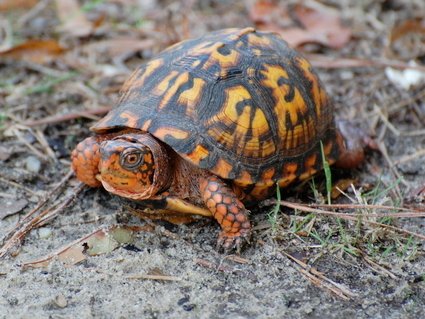
Eastern Box Turtle for Sale
€149,99
The Eastern Box Turtle (Terrapene carolina carolina) is a fascinating terrestrial turtle known for its high-domed shell, vibrant yellow and orange markings, and unique hinged lower shell.
Native to eastern North America, this omnivorous species thrives in a spacious, humid enclosure with suitable substrate, hiding places, UVB lighting and shallow water.
Its distinctive appearance and interesting behaviour make it appealing to dedicated reptile enthusiasts. Discover its diet, habitat and essential care requirements before purchasing.
Eastern Box Turtle for Sale – A Beautiful and Fascinating North American Turtle
Looking for an Eastern Box Turtle for sale? The Eastern Box Turtle (Terrapene carolina carolina) is a distinctive terrestrial turtle admired for its high-domed shell, colourful yellow and orange markings, and fascinating natural behaviour.
Native to eastern parts of North America, this remarkable species is known for its ability to withdraw into its shell and close its hinged lower shell for protection.
Unlike fully aquatic turtles, Eastern Box Turtles spend most of their time on land, exploring woodland habitats, searching for food and sheltering beneath fallen leaves, logs and vegetation.
Their attractive shell patterns and interesting behaviour make them appealing to experienced reptile enthusiasts. However, Eastern Box Turtles require more specialised care than their modest size might suggest.
They need a spacious enclosure, appropriate humidity, suitable temperatures, UVB lighting, shallow water and a varied omnivorous diet. They are also exceptionally long-lived animals, so prospective owners should be prepared for a substantial long-term commitment.
If you are considering purchasing an Eastern Box Turtle, understanding its habitat, feeding requirements and environmental needs is essential before bringing one home.
Why Choose an Eastern Box Turtle?
The Eastern Box Turtle is admired for its colourful appearance, unique shell structure and interesting terrestrial lifestyle.
- Colourful shell patterns: Its dark brown or black shell may feature attractive yellow, orange or reddish markings.
- Distinctive hinged shell: Its hinged lower shell, known as the plastron, allows it to close itself inside its shell when threatened.
- Terrestrial lifestyle: It spends most of its time exploring land-based habitats rather than swimming in deep water.
- Interesting behaviour: Eastern Box Turtles forage, investigate their surroundings and seek shelter among leaves, plants and other natural cover.
- Moderate adult size: Adults commonly reach approximately 11–20 cm in shell length.
- Long lifespan: With suitable care, this species can live for several decades and sometimes considerably longer.
Their distinctive appearance and behaviour make them fascinating to observe. Nevertheless, their long lifespan, specialised husbandry requirements and conservation concerns should all be considered before purchasing one.
Eastern Box Turtle Appearance and Characteristics
The Eastern Box Turtle belongs to the family Emydidae and has the scientific name Terrapene carolina carolina.
Its most recognisable feature is its high-domed carapace, or upper shell. The background colour is usually dark brown or black, with variable yellow, orange or reddish spots, streaks and blotches. These patterns differ between individuals, making each turtle visually distinctive.
The lower shell, known as the plastron, contains a hinge that allows the turtle to close the front section against its upper shell. This defensive adaptation helps protect its head and limbs when it feels threatened.
The skin is generally brown or dark-coloured, often with lighter markings on the head, neck and forelimbs. Mature males may have brighter orange or red eyes, while females often have brownish or yellowish eyes. Males may also have a longer, thicker tail and a more concave plastron, although these characteristics vary.
Young Eastern Box Turtles generally have flatter shells and less pronounced patterns than adults. Their colours and markings become more distinctive as they mature.
Natural Habitat and Behaviour
Eastern Box Turtles are native to eastern parts of North America, including areas of the eastern United States. Their natural habitats include deciduous woodlands, forest edges, damp meadows, marshy areas and locations close to streams or ponds.
They prefer environments that provide shelter, moisture, shade and opportunities to forage. Fallen leaves, rotting logs, low vegetation and loose soil offer places to hide, rest and search for food.
Although they are predominantly terrestrial, Eastern Box Turtles benefit from access to shallow water for drinking and soaking. They may also enter shallow pools or damp areas during hot weather.
These turtles often move around their habitat in search of food and suitable resting places. Their activity can vary with temperature, humidity, rainfall and seasonal conditions.
In captivity, providing an environment that accommodates these natural behaviours is essential. A spacious, secure enclosure with moist substrate, shaded retreats, plants and shallow water is far more appropriate than a small, bare container.
Eastern Box Turtle Size and Lifespan
Eastern Box Turtles commonly reach approximately 11–20 cm in shell length as adults, although individual sizes vary according to genetics, sex, age and environmental conditions.
Their growth is gradual, and young turtles require appropriate nutrition and carefully maintained environmental conditions to develop normally.
One of the most important considerations before buying an Eastern Box Turtle is its lifespan. With appropriate care, individuals may live for 40 years or more, and some have survived for many decades beyond that.
This makes the Eastern Box Turtle a long-term responsibility. Before purchasing one, consider whether you can provide suitable housing, ongoing food supplies, environmental maintenance and veterinary care throughout its life.
Eastern Box Turtle Care Guide
Eastern Box Turtles require a carefully managed terrestrial habitat. Their enclosure should provide enough space to explore, suitable humidity, a range of temperatures, appropriate lighting and access to shallow water.
Enclosure and Housing Requirements
A spacious enclosure is essential because Eastern Box Turtles are active terrestrial reptiles that benefit from opportunities to walk, forage and investigate their surroundings.
For one adult, an enclosure around 2 m long and 1 m wide is a useful starting reference, with additional space preferable where possible. The final dimensions should reflect the turtle’s adult size, activity level and the layout of the enclosure.
A suitable habitat should include:
- A large terrestrial area for walking and foraging.
- Moist, diggable substrate.
- Secure hiding places and shaded retreats.
- Leaf litter and reptile-safe plants.
- A shallow water dish that the turtle can enter and leave easily.
- A warm basking area and cooler retreat.
- Suitable UVB lighting.
- Secure walls or barriers to prevent escapes.
The enclosure should allow the turtle to move freely between warmer and cooler areas. Avoid exposed surfaces that become excessively hot or arrangements that leave the animal without adequate shelter.
Outdoor housing can be an excellent option in an appropriate climate. A secure outdoor pen can provide natural sunlight, vegetation and room to explore. However, the enclosure must be escape-proof and protect the turtle from predators, extreme temperatures and other hazards.
In cooler climates, an indoor enclosure may be necessary for some or all of the year.
Temperature and Heating
Eastern Box Turtles need suitable temperatures to support normal activity, feeding and digestion.
A daytime ambient temperature around 24–27°C can be used as a general starting reference, with a warmer basking area around 29–32°C. Conditions should be adjusted to the turtle’s age, health and enclosure design.
Use reliable thermometers to monitor both the warm and cool areas. This allows the turtle to move between different temperatures as needed.
Heating equipment should be installed securely and positioned to prevent burns. Avoid heating the entire enclosure uniformly, as a temperature gradient helps the turtle regulate its body temperature.
Eastern Box Turtles experience seasonal changes in their natural range. However, brumation, the period of reduced activity associated with cooler conditions, should not be attempted without understanding the turtle’s health, origin and specific husbandry needs. Seek guidance from an experienced reptile veterinarian before making seasonal temperature changes.
Humidity and Substrate
Suitable humidity is essential for Eastern Box Turtles, particularly young individuals. Their enclosure should offer moist areas where they can shelter and maintain hydration without being continuously exposed to waterlogged conditions.
A mixture of reptile-safe topsoil and suitable organic substrate can provide a naturalistic base. Leaf litter, moss in selected hiding areas and safe plants can help maintain local humidity and encourage natural behaviours.
A humidity level around 60–80% is a useful general reference for many setups, but the appropriate conditions depend on the enclosure, ventilation and the turtle’s age.
Monitor humidity with a hygrometer and adjust moisture levels as required. The substrate should retain moisture while allowing appropriate drainage and ventilation.
Remove waste and uneaten food regularly. Persistently dirty or waterlogged substrate can contribute to poor hygiene and health problems.
UVB Lighting and Basking
UVB lighting is an important part of indoor Eastern Box Turtle care. Appropriate UVB exposure supports vitamin D3 production and calcium metabolism, helping maintain healthy bones and shell development.
Choose a reptile UVB lamp suitable for the enclosure and follow the manufacturer’s guidance for distance, positioning and replacement.
Provide a regular day-and-night lighting schedule. The enclosure should also include shaded areas and hiding places where the turtle can retreat from direct light.
A basking area should be warm enough for the turtle to thermoregulate, but it must not become excessively hot. Use a reliable thermometer to monitor the basking surface and ensure that the turtle can move away from the heat source whenever it needs to.
Where outdoor housing is suitable, natural sunlight can provide beneficial UVB exposure, provided shade, water and protection from overheating are available.
Water and Hydration
Eastern Box Turtles are predominantly terrestrial, but they need access to clean, shallow water for drinking and soaking.
Provide a stable, shallow dish that allows the turtle to enter and leave easily. Water depth should be appropriate to the animal’s size, with a safe, non-slip base and gently sloping sides.
The dish should be cleaned and refilled regularly. Many turtles defecate in their water, so daily checks are useful for maintaining hygiene.
Avoid deep water containers in which the turtle could struggle to keep its head above the surface. Although Eastern Box Turtles may enter shallow pools, they are not adapted to living in deep water like fully aquatic turtle species.
Feeding an Eastern Box Turtle
Eastern Box Turtles are omnivorous and consume a wide variety of animal-based foods and plant material. Their diet changes with age, and young turtles tend to consume a greater proportion of animal prey.
A varied diet helps provide the nutrients required for normal growth and long-term health.
Suitable foods may include:
- Earthworms and suitable feeder insects.
- Slugs and snails from safe, uncontaminated sources.
- Other appropriate invertebrates.
- Dark leafy greens and selected edible plants.
- Suitable vegetables.
- Small amounts of appropriate fruit.
- A nutritionally balanced commercial food formulated for omnivorous terrestrial turtles, where appropriate.
The proportions of animal and plant foods should be adjusted according to age, body condition and individual needs. Avoid feeding only fruit, relying on one type of insect or offering wild-caught prey that may contain pesticides or parasites.
Calcium and vitamin supplementation may be appropriate depending on the diet and UVB provision. Supplements should be used according to a suitable nutritional plan rather than provided excessively.
Fresh drinking water should always be available. Remove uneaten food promptly, particularly in warm or humid conditions, to reduce the risk of mould and contamination.
Handling and Temperament
Eastern Box Turtles are generally best observed rather than handled frequently. Individual temperaments vary, and some may become accustomed to their keepers over time.
When frightened, an Eastern Box Turtle may withdraw its head and limbs and close its hinged shell. This is a natural defensive response and should be respected.
If handling is necessary for cleaning, health checks or veterinary examinations, support the turtle securely with both hands and avoid dropping it or restraining it unnecessarily.
Wash your hands after handling the turtle or cleaning its enclosure. Like other reptiles, Eastern Box Turtles can carry Salmonella bacteria even when they appear healthy.
Observe the turtle regularly for changes in appetite, activity, breathing, shell condition or movement. Persistent abnormalities should be assessed by a qualified reptile veterinarian.
Is the Eastern Box Turtle Suitable for Beginners?
Eastern Box Turtles can be rewarding animals for keepers who understand their specialised care requirements. However, they are not necessarily the easiest choice for a first-time reptile owner.
Their need for spacious housing, appropriate humidity, varied nutrition, UVB lighting and long-term environmental management requires careful preparation.
They are also exceptionally long-lived. A prospective owner should be confident that they can provide appropriate care for decades rather than choosing a turtle based solely on its appearance or small juvenile size.
Anyone considering an Eastern Box Turtle should research its requirements thoroughly and confirm that keeping the species is legal in their location.
Buying an Eastern Box Turtle Responsibly
When searching for an Eastern Box Turtle for sale, choose a reputable seller who can provide reliable information about the animal’s origin, health, age and feeding history.
Before purchasing, consider the following:
- Captive-bred status: Ask whether the turtle was bred in captivity and request reliable documentation.
- Legal origin: Confirm that the animal has been obtained legally and that any required paperwork is available.
- Health condition: Look for clear eyes, normal movement, appropriate body condition and a shell without obvious damage.
- Feeding history: Ask which foods the turtle accepts and whether it is feeding consistently.
- Age and size: Request its approximate age and current shell length.
- Sex: If sex is important, ask whether it has been reliably determined.
- Previous husbandry: Find out about its housing, temperatures, humidity, lighting and diet.
- Transport arrangements: Confirm that any shipping method is suitable for a live reptile and complies with applicable regulations.
- Veterinary support: Identify a veterinarian experienced in reptile care before bringing the turtle home.
Availability, price, age, sex and captive-bred status should be confirmed directly with the seller rather than assumed.
Conservation and Legal Considerations
Eastern Box Turtles face threats from habitat loss, road mortality and collection from the wild. Their slow reproductive rate and long lifespan make the loss of adult individuals particularly concerning.
Where legally available, responsibly captive-bred animals with a verifiable origin are preferable to turtles taken from the wild.
Laws concerning ownership, collection, sale and transport vary between jurisdictions. Some regions have strict protections or restrictions on keeping Eastern Box Turtles. Check the rules that apply to your location before purchasing or importing one.
If you are buying from another country, confirm all applicable wildlife-trade and import requirements before arranging shipment. Never release a captive turtle into the wild, as this can expose the animal to unsuitable conditions and create risks for local ecosystems.
Frequently Asked Questions
How big does an Eastern Box Turtle get?
Adults commonly reach approximately 11–20 cm in shell length, although individual size varies. Their enclosure should be designed around their expected adult size.
What does an Eastern Box Turtle eat?
It is an omnivore that eats insects, earthworms, slugs, snails, suitable plant material, vegetables and some fruit. A varied diet adjusted to the turtle’s age is important.
Is the Eastern Box Turtle aquatic or terrestrial?
It is predominantly terrestrial. It needs a land-based enclosure with moist substrate and access to shallow water for drinking and soaking.
Does an Eastern Box Turtle need UVB lighting?
Yes, appropriate UVB lighting is generally recommended for indoor housing to support vitamin D3 production and healthy bone and shell development.
What temperature does an Eastern Box Turtle need?
A daytime ambient temperature around 24–27°C and a basking area around 29–32°C can serve as starting references. Conditions should be monitored and adjusted to the individual turtle and enclosure.
How long does an Eastern Box Turtle live?
Eastern Box Turtles can live for several decades, with some individuals surviving for more than 100 years. Their longevity makes them a substantial long-term commitment.
Can Eastern Box Turtles live with other turtles?
Cohabitation requires careful management because turtles can compete for food, shelter and space. Individual housing is often the safer option, particularly for inexperienced keepers.
Is an Eastern Box Turtle a good pet?
It can be a rewarding pet for a well-prepared keeper who can provide a spacious enclosure, suitable humidity, appropriate lighting, a balanced diet and long-term care.
Can an Eastern Box Turtle live outdoors?
Outdoor housing can be suitable in an appropriate climate if the enclosure is secure, spacious and equipped with shade, shelter, moist ground and shallow water. Protection from predators and unsuitable weather is essential.
Can I buy an Eastern Box Turtle in Europe?
Availability and legality vary by country. Before purchasing or importing one, check local wildlife regulations and ensure the seller can establish the animal’s lawful origin.
Find Your Eastern Box Turtle
The Eastern Box Turtle is a remarkable North American species known for its colourful shell, unique hinged plastron and fascinating terrestrial behaviour. Its attractive markings and long lifespan make it an interesting species for dedicated reptile enthusiasts.
If you are looking for an Eastern Box Turtle for sale, take time to research its requirements, prepare a suitable enclosure and choose a reputable seller who can establish the animal’s legal origin. Responsible ownership begins with correct husbandry, appropriate housing and a commitment to the turtle’s long-term wellbeing.
| Choose Size | cb Hatchling |
|---|---|
| Options | No Pref, Male, Female |
Be the first to review “Eastern Box Turtle for Sale”
Related products
Turtles for Sale
Turtles for Sale
Turtles for Sale
Turtles for Sale
Turtles for Sale
Turtles for Sale

Turtles for Sale
Turtles for Sale
Reviews
There are no reviews yet.